
Original briefings. Zero spin.
Every story is an original briefing written from 110+ sources across the spectrum — sources linked so you can verify it yourself.
 economy
Notable (6/10)
September 9, 2026 at 08:29 AM
economy
Notable (6/10)
September 9, 2026 at 08:29 AM
Public Schools Lost 1.4 Million Students Since COVID While Budgets Grew 34%, and Districts Are Still Fighting Over Why
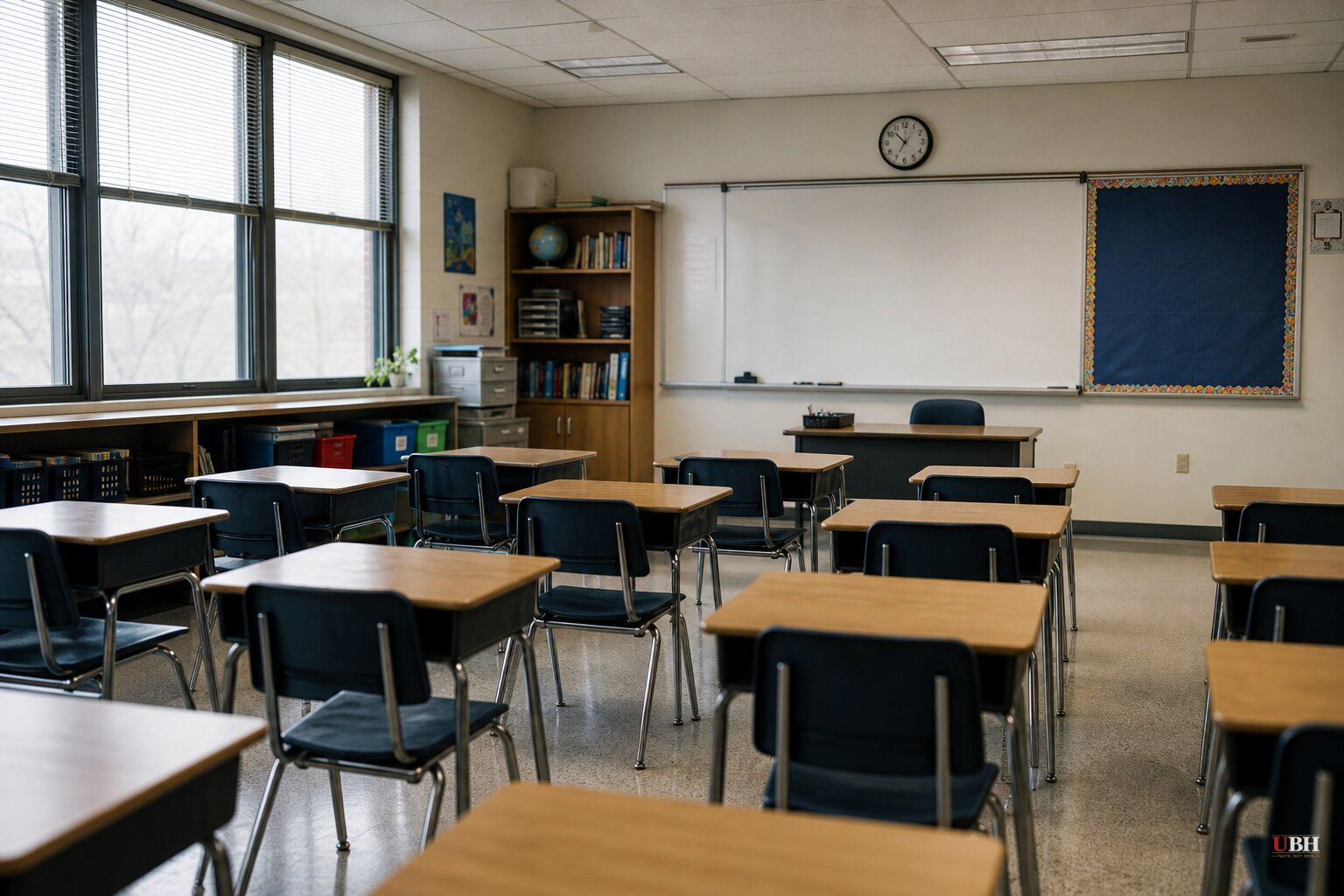
Public school enrollment has been sliding for years, and the fight over why is heating up again.
According to a Reason Magazine analysis by contributor Tosin Akintola, U.S. public schools have lost 1.4 million students since the COVID pandemic began. Over that same stretch, according to the same analysis, public school budgets grew by 34%. Reason's editors, discussing the numbers on their weekly roundtable podcast with Matt Welch, Katherine Mangu-Ward, Nick Gillespie, and senior producer Zach Weissmueller, framed the trend as school choice winning: families leaving for microschools, charter schools, homeschooling, and private options while district budgets keep rising regardless of how many kids show up.
Hawaiʻi: eighth straight year of losses
Hawaʻi's Department of Education enrolled 147,656 students this fall, according to Honolulu Civil Beat reporter Megan Tagami. That's down nearly 2% from last year and marks the first time in at least a decade the state has dropped below 150,000 students. A decade ago, Hawaiʻi's public schools enrolled close to 170,000 kids.
The state education department attributes the decline to declining birth rates and families with young children leaving Hawaiʻi, per Civil Beat, not to families choosing charter or private alternatives. Some individual schools are actually growing fast. Kamaliʻi Elementary in Kīhei jumped 12%, from 327 to 367 students. Waiʻanae Elementary on Oʻahu grew 14%. Hoʻokele Elementary in Kapolei, a fast-growing housing area, grew 11%. Meanwhile Farrington High School in Kalihi and the DreamHouse ʻEwa Beach charter school each lost more than 100 students. Civil Beat's report notes charter school enrollment trends have moved differently than traditional public schools, though it doesn't give a comparable statewide charter figure.
Lawmakers are now pushing for campus closures and consolidations by the end of the decade, according to Civil Beat.
Portland: up to 18 schools on the table
Portland Public Schools is going through what administrators call a "rightsizing" process, according to K12 Dive. The district has had falling enrollment for at least eight years while keeping roughly the same number of buildings, said Margaret Calvert, the district's executive director of school planning and modernization.
If Portland doesn't close any elementary schools, 37 of its 45 current elementary schools are projected to have fewer than 360 students each by the 2031-32 school year, per the district's own board presentation. Thirteen of its 15 middle schools are projected to fall under 500 students in that same window.
"We are now in a place where these essentially stopgap measures, which are short-term adjustments, are becoming the norm and are far more widespread," Calvert told the board. Superintendent Kimberlee Armstrong called the closure discussion necessary but painful: "This isn't an easy conversation. As a matter of fact, it's a conversation that nobody wants to have." No closure decisions have been made yet. The district plans to spend this fall gathering stakeholder input before the board considers recommendations later this year.
Arlington, Virginia: missing its own projections
Arlington Public Schools opened the 2026-27 school year with 27,173 students, down 1.6% from the 27,603 counted at the same point last year, according to arlnow. That's also 2.2% below the district's own spring projection of 27,776. Superintendent Francisco Durán is scheduled to present the figures to the School Board on Thursday, September 10.
Arlington's enrollment history shows how far projections can miss. A decade ago, officials projected the district would hit 30,000 students by 2021 and as many as 39,000 by 2026 under high-growth scenarios. Instead, enrollment has slipped for consecutive years, and district officials now project flat or declining enrollment through 2035, per arlnow.
Two arguments, not one
School choice advocates, including the Reason panel, argue the enrollment drop reflects real dissatisfaction: families leaving underperforming districts for microschools, charters, and private options that spend less per student and, they argue, deliver better results. That's a fair reading of the national 1.4-million-student, 34%-budget-growth gap, and it's consistent with the rise of programs like Florida's microschool sector that Weissmueller has covered for Reason.
But none of the three districts examined here point to school choice as their primary driver. Hawaiʻi blames birth rates and out-migration. Portland cites eight years of demographic decline against a fixed building footprint. Arlington's numbers track a broader Washington-area slowdown in population growth, not a stated exodus to private schools. The available reporting doesn't establish which force is doing more of the work nationally.
What's not in dispute: districts everywhere are now making the same call. Hawaiʻi lawmakers want closures and consolidations by 2030. Portland is weighing up to 18 school closures. Arlington is watching its own five-year-old growth projections fail to materialize. The next concrete marker comes September 30, when Virginia school divisions, Arlington included, report final attendance figures to the state education department.
Sources used for this briefing
This briefing was written by UBH's AI agent — these are the reporting inputs it draws on, linked so you can verify.


