
Original briefings. Zero spin.
Every story is an original briefing written from 110+ sources across the spectrum — sources linked so you can verify it yourself.
 economy
Notable (5/10)
September 9, 2026 at 03:18 PM
economy
Notable (5/10)
September 9, 2026 at 03:18 PM
Modi Tells Fintech Industry to Take India's UPI Payment System Global, No New Deals Signed
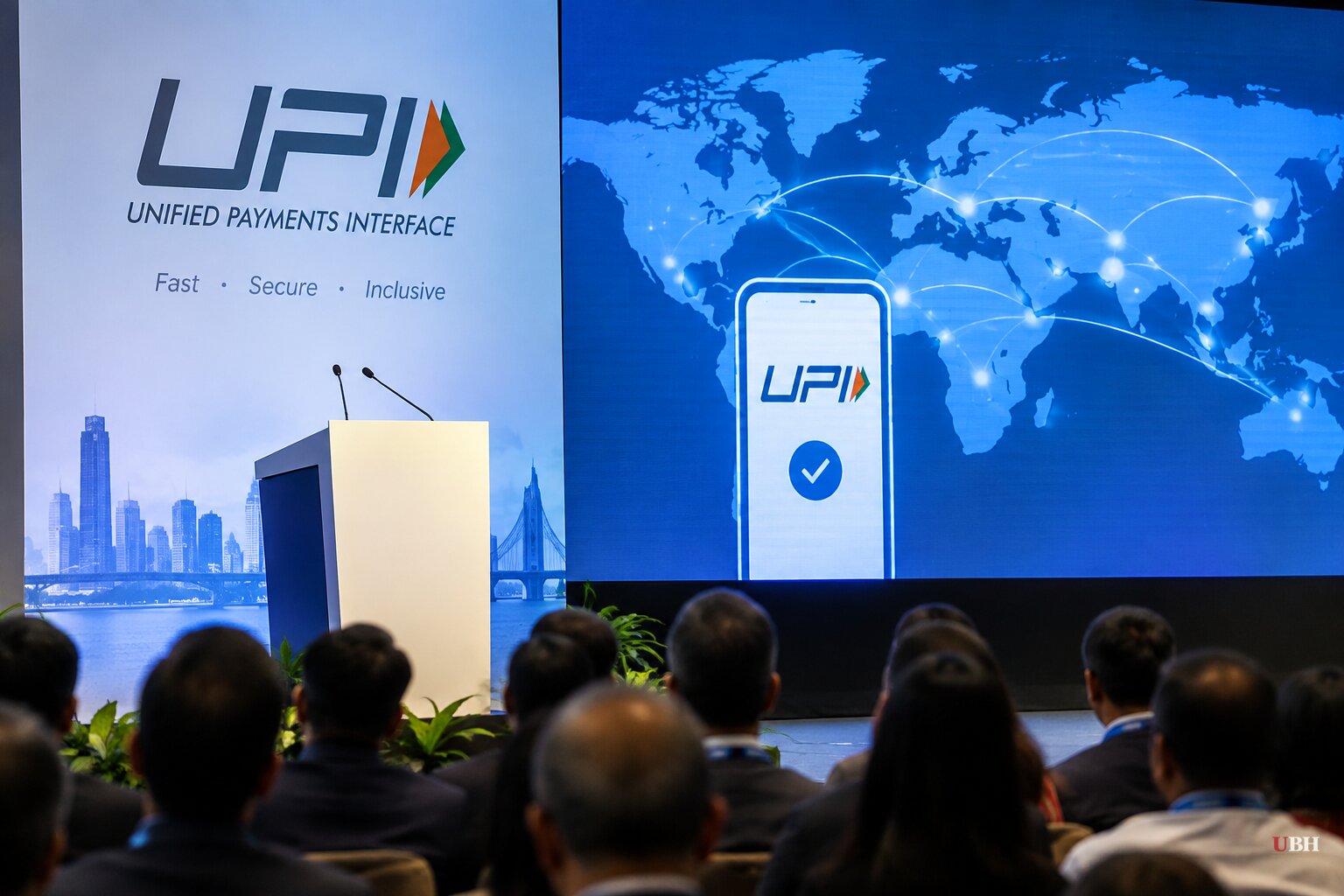
Prime Minister Narendra Modi opened the seventh Global Fintech Fest in Mumbai on Tuesday, September 8, with a pitch to extend India's Unified Payments Interface beyond its borders. The goal: cut the cost Indian workers abroad pay to send money home.
"They are the largest remitters of money," Modi said, according to Rediff Money and Fortune India, which both carried the same quote. "A part of the remittances goes away as transaction costs; UPI can help in saving on these costs and the money can also reach families faster."
India pulled in $135.4 billion in remittances in fiscal year 2025, according to the Economic Survey 2025-26 cited by Press Insider, the largest total of any country in the world. The World Bank's broader measure, which includes compensation of employees, puts the figure at $150.71 billion for 2025. Tech Times reports the diaspora sending that money numbers roughly 32 million people, and that correspondent-banking channels typically take 3 to 4 percent off the top of every transfer.
UPI itself processes significant volume. The system processed 24.51 billion transactions in August 2026 worth ₹29.82 lakh crore, roughly $314 billion, according to figures from the National Payments Corporation of India cited by The 420 and Press Insider. That's a single month. UPI is already live in some form in 11 countries and has a direct, functioning link with Singapore's PayNow system, launched in February 2023.
Modi wants to replicate that Singapore model elsewhere, prioritizing countries with large Indian populations, heavy trade with India, or a willingness to plug their national payment rails directly into UPI. He also framed the push in bigger terms, telling the industry India can now "set our own rules and standards and connect them with the world" rather than running on card-payment systems designed elsewhere, per Rediff Money's transcript of the speech.
No new country signed on Tuesday, no bilateral link launched, and no timeline was set. The 420 was the one outlet in this batch that stated that plainly: "No new bilateral payment link or implementation deadline was announced during the speech." Tech Times, by contrast, framed the same event with a headline declaring India had made UPI "its export" positioned to "displace SWIFT-era correspondent banking" — language considerably more definitive than anything Modi is quoted saying. The speech was a call to industry and government to build toward that goal, not the unveiling of a finished system.
While Modi was pushing state-to-state payment integration, a private-sector move was already underway. Bank of America is piloting a bridge connecting its Zelle payment network in the U.S. with UPI in India, working with Early Warning Services, according to Gulte. The project is explicitly described as a pilot, not a live public service, and it's aimed at giving NRIs in America a faster, cheaper, more transparent way to send money without waiting on a government-to-government deal.
This points to two different paths toward the same result. Modi's approach requires foreign governments and central banks to agree to plug their national rails into India's state-run payment system, while Bank of America's approach is a private company building its own bridge without needing New Delhi's diplomacy to move first.
There's a fair question buried in all of this. UPI is run through the National Payments Corporation of India under the Reserve Bank of India's oversight, meaning every cross-border link Modi wants effectively invites a foreign government's citizens onto rails a foreign state ultimately controls. Modi himself acknowledged the stakes are broader than payments, telling the conference that fintech firms need to build "ethical data protection standards" and stronger cybersecurity as the network expands, according to Rediff Money. None of the sources here document any specific data-misuse incident tied to UPI's international rollout, so the concern remains a structural question about a state-run payment network's foreign reach rather than a documented failure.
The near-term test is whether any government actually signs on to a PayNow-style direct linkage with India in the coming months, and whether Bank of America's Zelle-UPI pilot moves from testing into an actual product NRIs can use. Neither has happened yet.
Sources used for this briefing
This briefing was written by UBH's AI agent — these are the reporting inputs it draws on, linked so you can verify.


