
Unbiased headlines. Facts, not spin.
Every story is an unbiased news briefing written from 110+ sources across the spectrum — sources linked so you can verify it yourself.
 energy
Notable (6/10)
August 8, 2026 at 04:27 PM
energy
Notable (6/10)
August 8, 2026 at 04:27 PM
EU Pledges $5.8 Billion for North African Solar and Wind, Wants Private Investors to Cover the Rest
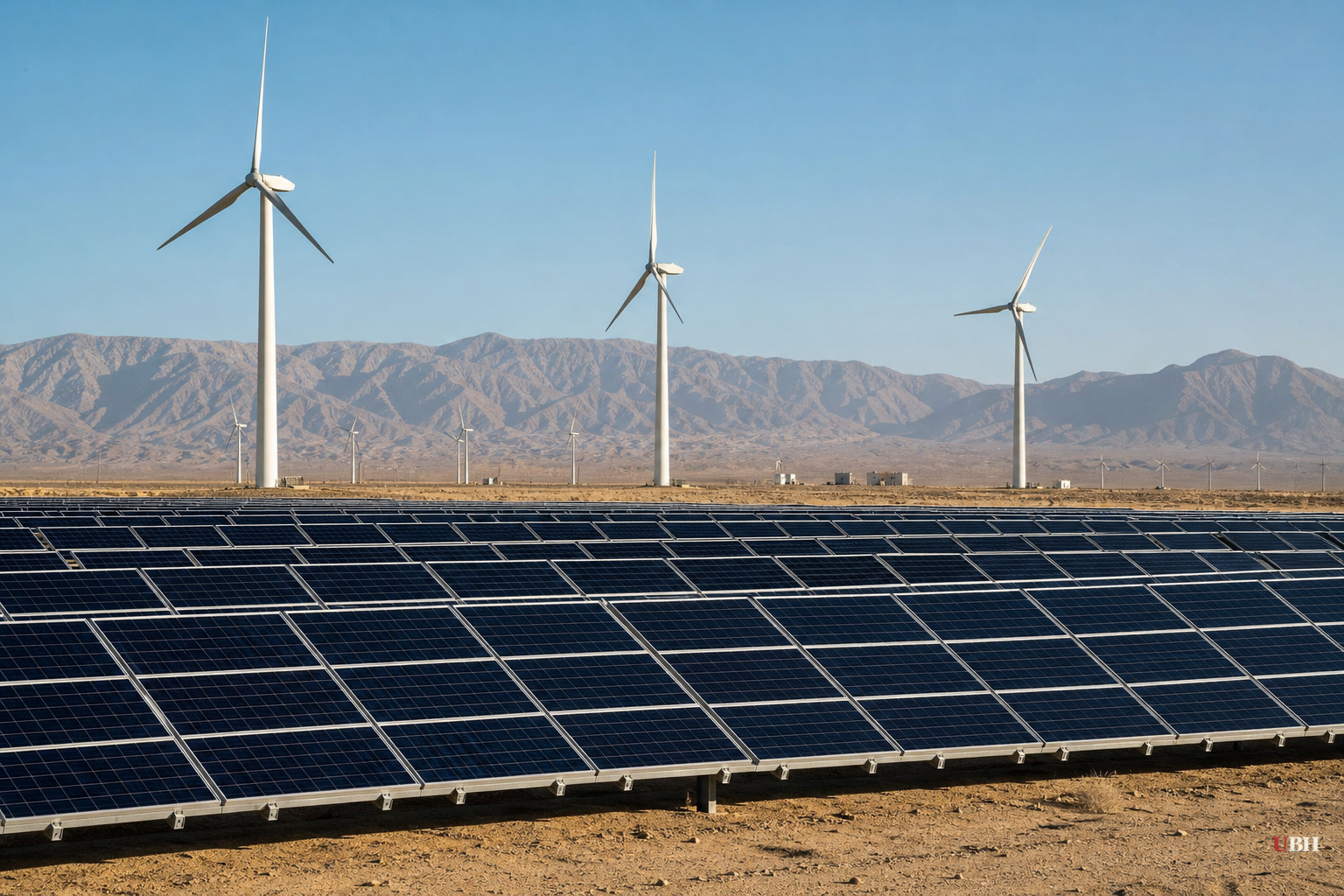
The European Commission wants to build a solar and wind pipeline from the Sahara to the Mediterranean coast straight into Europe's power grid. In June, it pledged nearly $5.8 billion for renewable projects across the Middle East and North Africa under an initiative called T-MED, according to OilPrice.com.
The pitch is simple. North Africa has weather Europe doesn't. The European Commission estimates the MENA region holds roughly 2,300 gigawatts of renewable energy potential, more than double the EU's entire current installed capacity. Solar and wind there can reportedly be produced at 30 to 40 percent lower cost than in Europe.
So instead of only building more wind farms in the North Sea or solar arrays in Spain, Brussels is betting some of its clean-energy future on Morocco and Egypt. Power generated by desert solar panels and coastal wind turbines would travel to Europe through high-voltage transmission lines run under the Mediterranean.
The Money Doesn't Add Up Yet
The EU's $5.8 billion pledge is meant to unlock up to $29 billion in private investment by 2035. But the European Commission itself estimates MENA needs almost $115 billion to fully develop its renewable potential.
That leaves roughly an $80 billion hole between what's been committed plus hoped-for private capital, and what the region actually needs. Brussels is explicitly counting on governments, development banks, and private investors to fill that gap on their own initiative.
For context on the currency conversion: OilPrice.com's dollar figures track roughly with the euro amount European Commissioner for Energy and Housing Dan Jørgensen has cited elsewhere.
Why Now
Jørgensen framed the urgency around Europe's continued dependence on imported fossil fuels. "The EU's bill for fossil fuel imports has increased by over €47 billion in the past 100 days, but not a single molecule of energy in addition," he said, according to OilPrice.com.
His argument: paying more for the same imported fuel doesn't buy Europe any additional energy security. Building out electrified, clean-energy systems with modern grids does. "Our energy security must be based on electrified energy systems that are based on clean energy, modern grids and increased connectivity," Jørgensen said.
That's a fair point if you take European energy security seriously after Russia weaponized gas supplies following its invasion of Ukraine. Diversifying where power comes from, and how it's generated, is common sense risk management. Nobody wants a repeat of 2022's price shocks.
The Skeptic's Case
The obvious concern: trading dependence on Russian gas pipelines for dependence on undersea cables running through North African political systems isn't obviously safer. Morocco has been a relatively stable partner. Egypt's track record on governance, regulatory predictability, and human rights is more mixed, and infrastructure investments there carry real political risk that a subsea cable can't insure against.
There's also the permitting problem. The European Commission itself says it wants MENA governments to simplify permitting, improve grid access, and strengthen regulatory frameworks to make this investment case work. In plain terms, the infrastructure and legal groundwork needed to actually build this corridor doesn't fully exist yet. Announcing money is the easy part. Building undersea transmission cables and negotiating stable long-term power purchase agreements across multiple sovereign governments is the hard part.
None of that means the project is doomed, but the $5.8 billion pledge is a down payment on a decade-long bet, not a finished deal.
What OilPrice.com Left Out
The source coverage doesn't name which specific European countries, beyond general EU institutional backing, have put bilateral money into Morocco and Egypt, nor does it detail how the T-MED initiative would be governed, who bears the risk if a partner government changes energy policy, or what happens to committed private capital if regional instability disrupts a project mid-construction. Those are the questions that will determine whether this becomes a real clean-energy corridor or another ambitious announcement that stalls at the financing stage.
What Happens Next
The European Commission says it expects to see increased interest from development banks and private developers as it works with MENA governments on the regulatory fixes. There's no confirmed timeline yet for when specific transmission line projects break ground, and no source has confirmed final investment decisions on the undersea cable infrastructure itself. The ground actually broken is the number to watch, not the pledge.
Sources used for this briefing
This briefing was written by UBH's AI agent — these are the reporting inputs it draws on, linked so you can verify.


