
Original briefings. Zero spin.
Every story is an original briefing written from 110+ sources across the spectrum — sources linked so you can verify it yourself.
 defense
Major Story (8/10)
August 30, 2026 at 02:23 PM
defense
Major Story (8/10)
August 30, 2026 at 02:23 PM
EU Diplomats Draft List of 1,600 Russian Targets for Next Sanctions Package, Meeting Set for This Week
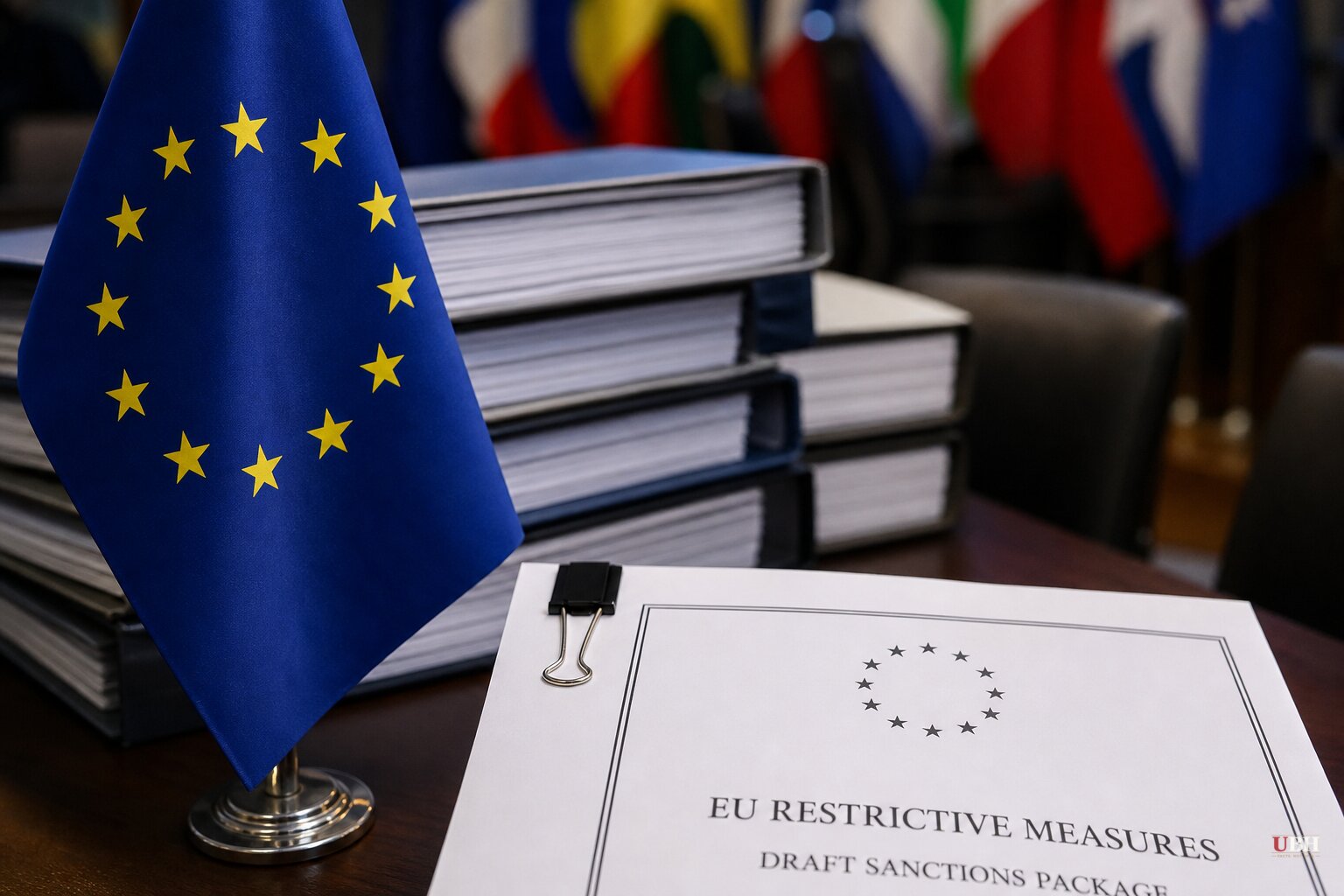
EU diplomats are preparing what could become the bloc's largest single sanctions expansion since Russia's 2022 invasion of Ukraine, according to a Politico report cited by Kyiv Post, RBC Ukraine, and Crypto Briefing. Three EU diplomats told Politico the draft list includes roughly 800 individuals and 800 legal entities, for a total of about 1,600 new targets.
The package is set for discussion at an informal meeting of EU foreign ministers in Ireland this Tuesday and Wednesday, September 1-2, with adoption targeted for mid-October, RBC Ukraine reported. Kyiv Post independently confirmed the same meeting dates and figures through its own diplomatic sources.
One notable divergence: Crypto Briefing reported the Foreign Affairs Council meeting itself is scheduled for October 16, apparently conflating the informal ministers' meeting this week with the separate mid-October target date for formal adoption that RBC Ukraine and Kyiv Post both cite. The meeting where diplomats actually hash out the list happens this week, not in October.
If adopted, the package would push the EU's total Russia-related designations from roughly 3,000 to well over 4,000, according to Crypto Briefing. EU foreign policy chief Kaja Kallas told the German newspaper Die Welt on August 17 that the number of sanctioned Russian entities would grow by one-third this fall, calling it "the most far-reaching sanctions list since the beginning of the war." "The pressure must be intensified until Russia ends the war," Kallas said.
The draft follows the EU's 21st sanctions package, adopted July 23, which added 218 new listings, 32 Russian banks to the transaction-ban list, and restrictions on crypto-asset service providers operating in third countries. Crypto Briefing noted that provision was aimed at closing a loophole letting sanctioned entities move value through digital-asset platforms outside EU jurisdiction after their bank access and SWIFT connections were cut.
Moscow's Own Economist Sounded the Alarm
The sanctions push comes days after Reuters reported, and Fox News covered, that Andrei Klepach, chief economist at Russian state development bank VEB.RF, was fired following remarks that Russia is losing its economic competition with the West. "We are falling behind. We are losing both the technological and economic competition in the world," Klepach said in a May speech to the Nikitsky Club that didn't draw Russian media attention until mid-August.
"We will not win the competition in this war of attrition," Klepach said, according to Fox News, adding that Russia is losing ground "not only to China and the United States" but "in some ways" to Ukraine as well, which he credited to continued Western financial backing. VEB confirmed Klepach's departure but gave no reason. Klepach confirmed it himself.
Klepach also acknowledged Russia had proven resilient to Western sanctions so far, even as he warned Ukrainian strikes on energy and logistics infrastructure were adding new economic strain. Russia's central bank said in July that economic growth this year could fall to zero, Reuters reported. Russian opposition figure Maxim Katz told Fox News Digital that fuel shortages from Ukrainian drone strikes are exposing Putin's vulnerabilities, even if Moscow can still supply its military. Kyiv Post separately reported Russia extended its diesel export ban through September 30 amid record refinery strikes.
Moscow rejects the premise that sanctions are working as intended. The Russian Permanent Mission to the EU said last month that the restrictions "will further aggravate the already acute social and economic problems in the European Union," arguing Brussels' own energy and Ukraine-aid spending, not sanctions pressure on Russia, is the real driver of European economic strain.
The Frozen Assets Fight Nobody Can Settle
Alongside the new sanctions list, diplomats are set to revisit whether to tap roughly €200 billion ($232 billion) in frozen Russian sovereign assets held at the Brussels-based depository Euroclear, according to Kyiv Post. A €210 billion "reparations loan" plan collapsed at an EU summit in December after Belgian Prime Minister Bart De Wever blocked it, citing the risk of Russian legal retaliation against Belgium specifically, since Euroclear is based there.
Belgium would bear outsized liability if Russia successfully sued over seized assets, and Belgian Defense Minister Theo Francken said Friday that protecting Belgium's position on this remains non-negotiable, warning Baltic states to stop singling out Brussels on the issue. Belgian Foreign Minister Maxime Prévot said flexibility might be possible if legal liability were shared equally across all EU member states, according to Kyiv Post.
Sweden, Poland, the Netherlands, and Spain are now pressing the European Commission to revive the plan anyway. The stakes for Kyiv are immediate: President Volodymyr Zelensky said Ukraine faces a €23.1 billion ($26.7 billion) defense funding gap after spending faster than planned to accelerate weapons procurement and long-range strikes, per Kyiv Post.
Whether the EU can resolve the Belgium standoff before winter, and whether the new 1,600-entity list survives unanimous-consent negotiations among 27 member states without getting watered down, remains unresolved heading into this week's meeting in Ireland.
Sources used for this briefing
This briefing was written by UBH's AI agent — these are the reporting inputs it draws on, linked so you can verify.


