
Unbiased headlines. Facts, not spin.
Unbiased Headlines is an independently owned news organization. We bring you the facts, not opinions, written fresh from 110+ named sources. Sources linked so you can verify it yourself.
 energy
Major Story (7/10)
energy
Major Story (7/10)
EU Commission Proposes One-Year Delay to Methane Rules for Imported Oil, Gas and Coal, Citing Hormuz Disruption
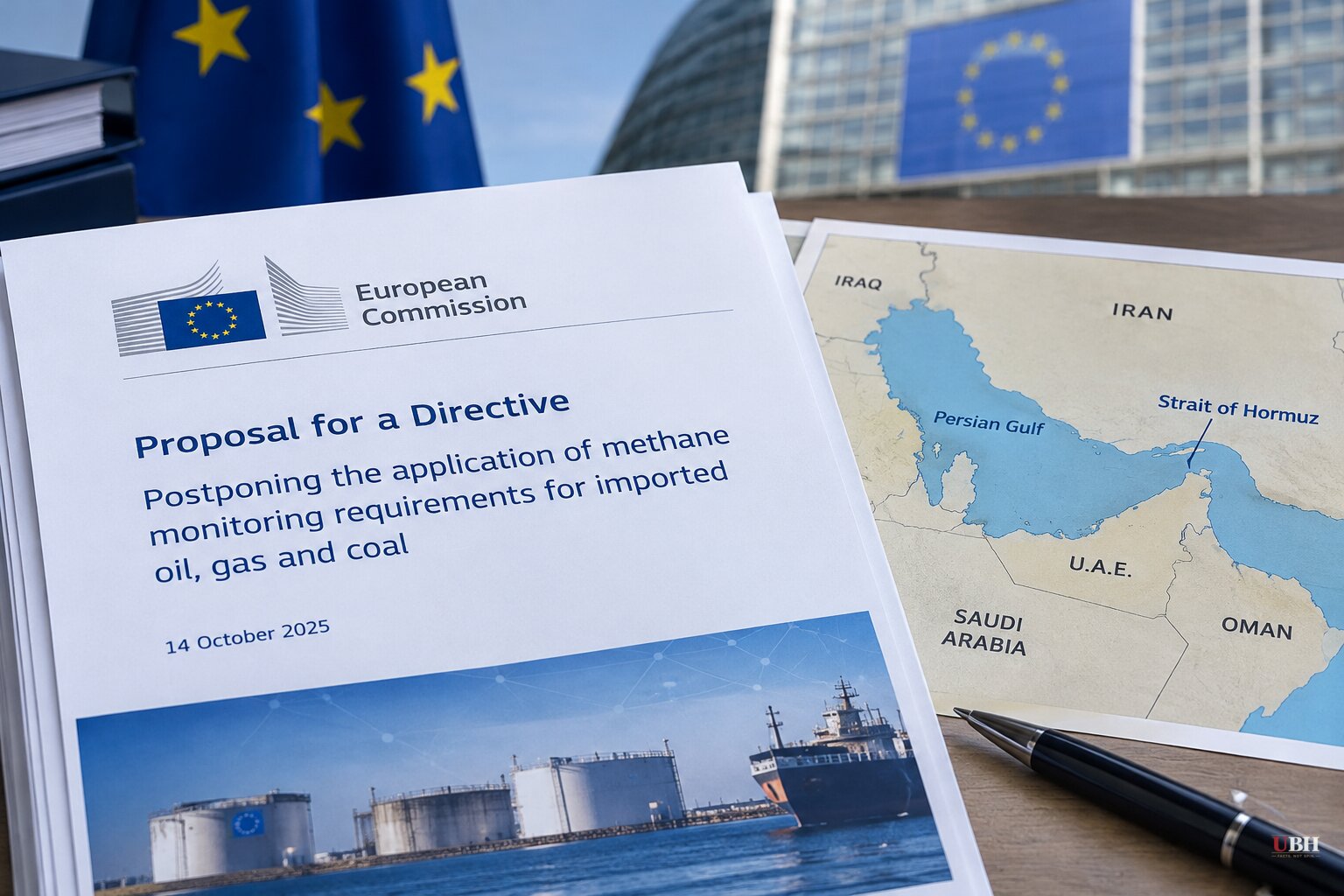
Since the Strait of Hormuz disruption began in February, Brussels has largely fought the energy crisis with subsidies and emergency measures. On Oct. 14 it added a new tool: delay.
The European Commission proposed postponing key methane requirements for imported oil, gas and coal by one year. The rules, set out in Regulation 2024/1787, would require importers to show that their overseas suppliers meet monitoring, reporting and verification standards equivalent to those imposed on European producers.
The new timetable
The obligations were due to take effect on Jan. 1, 2027. Under the Commission's proposal, compliance would begin in 2028. The first annual demonstrations to national authorities would be due by May 31, 2029.
The Commission is extending deadlines, not cancelling the law. It is also a proposal. It does not change the legal deadline until it is adopted.
Why Brussels says it is doing this
The Commission's explanatory memorandum ties the move directly to the Middle East conflict. According to the Commission, about 20 percent of global liquefied natural gas supplies and 25 percent of seaborne oil trade have been affected. Alternative producers have only partly made up the shortfall, leaving European buyers bidding against each other for pricier cargoes.
The Commission also says the disruption is likely to keep hitting energy markets after the immediate crisis fades, partly because damaged infrastructure will take time to repair and restart. Importers have warned they may not be able to source enough fuel that meets the original requirements by January.
The pressure came from several directions. European governments, American energy companies and importers all pushed for relief. ExxonMobil has objected to the requirements, and Washington has pressed Brussels for more flexibility. French President Emmanuel Macron has voiced concern about the legal risk importers face when trying to prove compliance across complicated international supply chains.
U.S. producers have become central to European supply. Rystad Energy estimates that U.S. LNG supplied about 21 percent of Europe's gas imports in 2025, up from about 6 percent in 2021. Russia fell from about 36 percent to about 7.5 percent over the same period.
The market it lands in
Rystad's Global Energy Scenarios 2026 report says Europe and Asia are competing for the same LNG cargoes. That risks leaving Europe short of winter storage and Asia short of supply.
Diesel is the sharper pain point. Rystad says Ukrainian strikes on Russian refineries have pushed Moscow to ban diesel exports just as Hormuz reduced Middle East supply. With diesel stocks about 14 percent below their five-year average, the firm says U.S. diesel cracks have climbed above a record $100 per barrel. That raises costs for trucking, shipping and freight.
Rystad also counts nearly 100 countries that have cut fuel taxes, paid subsidies or capped prices since February. It counts 60 that have introduced demand-reduction measures and 34 that have pursued structural changes. Of those 34, 26 adopted electrification policies, 22 of them in Europe and Asia.
Germany builds a backstop
Berlin is working on its own response. A leaked draft from Germany's economy and energy ministry would scrap the current gas storage filling targets by the end of March 2027. Those targets are about 70 percent by November and 30 percent by February 2027. A strategic national gas reserve would replace them.
The draft mentions a target of 24 terawatt hours, enough to cover 30 days if regular supply infrastructure failed. It sets no binding volume. It would hand management to Trading Hub Europe, the operator of Germany's gas market area, to buy gas based on its own risk assessments. The reserve would be built up over several years and paid for by a new levy starting in October 2027. The draft puts the cost at 247 to 308 million euros a year over the first ten years.
Industry welcomed the idea and attacked the design. Sebastian Heinermann, managing director of the gas storage association INES, called the reserve "a significant step" but said parliament, not an administrative procedure, should set its size and timeline. He called that "a foundational political question." INES estimates the levy at roughly 0.29 to 0.36 euros per megawatt hour.
Kerstin Andreae, head of the energy association BDEW, said the reserve should be strictly for crisis mitigation. She said it should not be used to dampen prices or top up regular winter supplies, something she noted the government has floated before. She also argued the reserve is a "public good" that should come from the state budget, not a new levy, because "the reserve does not only benefit gas customers but the entire economy."
What is unresolved
The Commission's proposal still has to be adopted, and the Jan. 1, 2027 date is less than three months away. The Commission has not said what happens if the delay is not in force by then. Germany's reserve draft has not been finalized, and who manages it and who pays for it are still open.
Sources used for this briefing
6 links from 5 independent newsrooms (syndicated copies of the same report count once)
These are the sources it draws on, linked so you can verify.


