
Unbiased headlines. Facts, not spin.
Unbiased Headlines is an independently owned news organization. We bring you the facts, not opinions, written fresh from 110+ named sources. Sources linked so you can verify it yourself.
 defense
Major Story (8/10)
EU Accuses Russia of Stalling Ukraine Talks While Bombing Power Plants, Sanctions Nearly 50 Banks
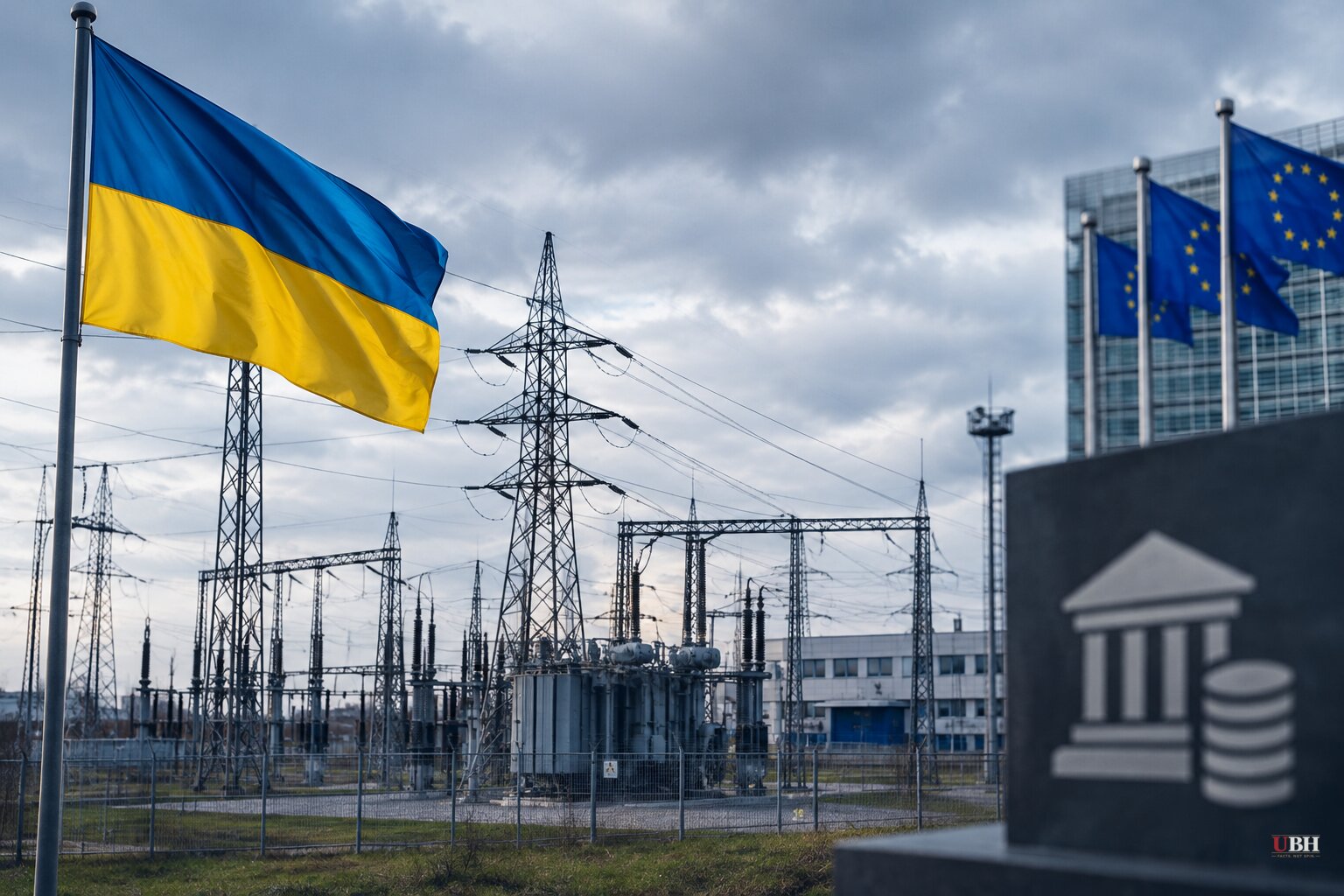
Hours after nuclear regulators from 38 countries warned that Russian strikes on Ukraine's grid are raising the risk of a reactor accident this winter, EU foreign ministers met in Brussels on Monday, Nov. 16, and accused Moscow of stalling peace talks while it keeps hitting power plants.
The ministers also hit Russia's finances. The bloc sanctioned nearly 50 Russian banks and financial institutions and targeted several businesspeople linked to the energy sector and the trade in oil and petroleum products. It also imposed asset freezes and travel bans on dozens of others accused of spreading pro-Russian propaganda and disinformation.
Irish Foreign Minister Helen McEntee, whose country holds the EU's rotating presidency, said the sanctions aim "in particular" at "the financial mechanism by which Russia is waging this war." She said Russia "has clearly not changed its position" and is "continuing its attacks on civilians and civilian infrastructure."
No ceasefire, and a fight over security architecture
EU foreign policy chief Kaja Kallas said the priority is a ceasefire first, then a real peace agreement. "We don't see it at the moment. We see that Russia is really escalating," she said before chairing the meeting.
The sharpest disagreement is over what came out of last week's talks in Abu Dhabi. Afterward, the United States encouraged Ukraine and its backers to accept a Russian demand for a new security framework for Europe, suggesting it might help bring peace. The talks ended with a large prisoner exchange agreed but no major breakthrough.
European governments see the demand as an attempt to weaken NATO. In their reading, it would force the alliance to pull troops and equipment back westward, roughly to where they stood before the Czech Republic, Hungary and Poland joined in 1999.
Kallas called the demand "really absurd." "If we look at the history, none of these countries has ever attacked Russia," she said. She compared it to the "treaty" Moscow offered NATO before the 2022 invasion: "In 2021, Russia's demands were a pretext for war. In 2026, they are a pretext for keeping the war going."
German Foreign Minister Johann Wadephul said: "Europe has a security architecture. We don't need a new one, we just need respect from everyone for the existing security architecture." Lithuanian Foreign Minister Kęstutis Budrys put it more bluntly: "It's not about the rules. Rules are working. The problem is that Russia is breaking them."
U.S. envoys Jared Kushner and Steve Witkoff have been mediating between Moscow and Kyiv for just over a year. No lasting ceasefire has been agreed in that time, and major differences remain over territory and future security arrangements.
The strikes behind the accusation
The EU's charge rests on a steady run of attacks on energy sites. On Nov. 3, Ukrainian President Volodymyr Zelensky said Russia fired 289 attack drones, 17 ballistic missiles and 59 cruise missiles overnight, mainly at power generation and substations in Odesa, Kharkiv, Dnipro and Rivne.
A later barrage, ahead of the Abu Dhabi talks, used 172 drones and 36 ballistic missiles, according to Zelensky, who said some were North Korean-made KN-23s. Ukraine's energy ministry said it left consumers in five regions without power: Dnipropetrovsk, Donetsk, Kyiv, Zhytomyr and Kharkiv. Zelensky said the timing was meant to pressure Ukraine's position at the table, and he pressed Washington on a shortage of Patriot interceptors.
Moscow frames it differently. Russia's Defense Ministry has said its strikes hit energy complexes supplying Ukraine's armed forces and military industry, plus transport infrastructure and military-industrial sites in the Kyiv area.
Ukraine hits back at Russian refining
Ukraine is striking Russian energy too. Russia's Defense Ministry said Monday that its air defenses downed 1,336 Ukrainian drones across 16 regions, topping the previous reported record of 1,254 on Oct. 29. Moscow Mayor Sergei Sobyanin said about 600 drones were launched toward the Moscow region since Sunday, with 191 intercepted on approach to the capital.
Crimea's Russian-installed governor, Sergei Aksyonov, said drones struck the road and rail bridge linking the peninsula to Russia's Krasnodar region. The Kremlin called the damage minor. Road traffic was briefly suspended, and Russia's Transport Ministry said rail service continued normally.
Governor Yuri Slyusar reported fires at four industrial sites in Rostov. Officials said falling debris injured six people, including children, near an oil refinery in Ilsky in Krasnodar region, and three were wounded in Azov.
Industry sources told Reuters last week the reduction is closer to 30%. Russian officials and media report renewed fuel shortages in at least half a dozen regions, though not yet as severe as last summer's.
The nuclear exposure
The grid war carries a risk beyond blackouts. Per Strand, who heads the European and Nordic radiation protection regulator groups HERCA and NORA, told Reuters that Russian drones now carry larger payloads and hit infrastructure more precisely. He said the accident risk will peak this winter.
Strand's worst case is a nationwide blackout cutting power to all nine of Ukraine's operating reactors at once, since reactors need reliable electricity to keep fuel cool. He said the situation is preventable if Russia stops attacking energy infrastructure, and urged European countries to draw up emergency plans in case an accident does occur.
EU ministers said Monday they will also look at ways to help Ukraine endure the winter. Whether Washington will keep pressing Kyiv on Moscow's security-framework demand, which every European minister quoted rejected, is the open question heading into the next round of talks.
Sources used for this briefing
7 links from 7 independent newsrooms (syndicated copies of the same report count once)
These are the sources it draws on, linked so you can verify.
More coverage: Ukraine


