
Unbiased headlines. Facts, not spin.
Unbiased Headlines is an independently owned news organization. We bring you the facts, not opinions, written fresh from 110+ named sources. Sources linked so you can verify it yourself.
 defense
Major Story (7/10)
Event date: November 14, 2026 ·
UN Killer Robots Conference Opens in Geneva as Russia Forces Suspension and Guterres Urges Binding Treaty
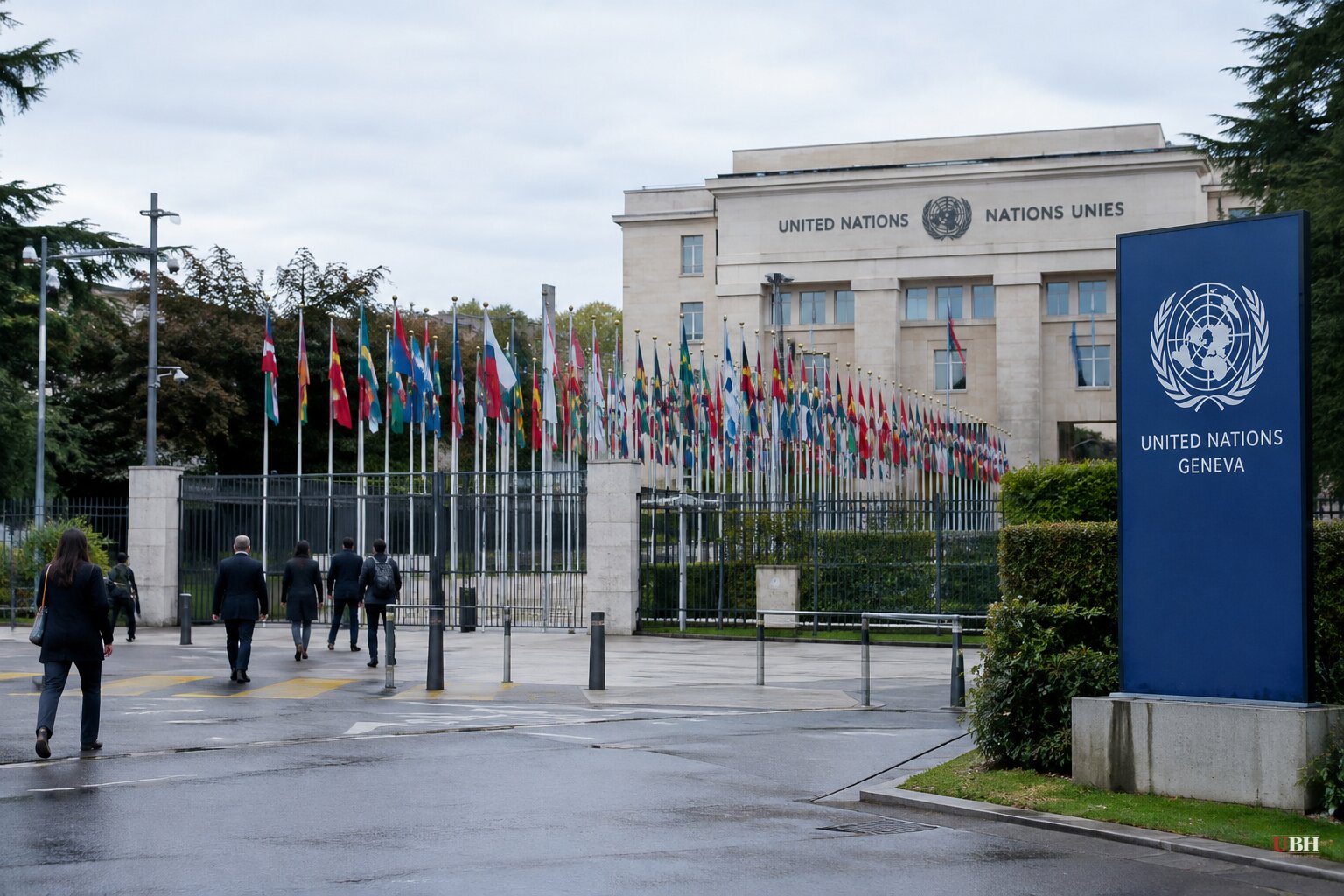
The fight over who controls the kill decision on the battlefield started today, Monday, Nov. 16, in Geneva. It started with a procedural stall.
The Seventh Review Conference of the Convention on Certain Conventional Weapons (CCW) was scheduled to open at 10:00 a.m. Geneva time at the Palais des Nations, under the presidency of Swiss Ambassador Julien Thöni, according to a UN Office at Geneva notice dated Nov. 10. Before debate could begin, Russia's representative objected to observers, including the European Union and civil society groups, taking part. The objection forced a temporary suspension of proceedings.
What the conference can decide
Delegates from the convention's 128 High Contracting Parties are meeting through Nov. 20. The review conference happens once every five years. The CCW is a 1980 framework restricting weapons considered excessively injurious or indiscriminate. Its five protocols do not address autonomy.
Three outcomes are possible: a mandate to negotiate a binding treaty, an extension of the current discussion-only mandate, or a collapse of the process. Any decision needs full consensus, so a single objecting state can block it.
Delegates will consider the final report of the Group of Governmental Experts on Lethal Autonomous Weapons Systems. Amnesty International, Human Rights Watch and Stop Killer Robots said on Nov. 12 that the text gives states a clear pathway to adopt a one-year mandate to negotiate a new protocol that would prohibit some autonomous weapons and regulate others.
Support for binding rules is broad but not unanimous. Tech Times reports that 76 states back negotiations, against 128 parties in total. Stop Killer Robots says 130 countries now back a legally binding instrument, and Digital Watch reports that a group of 50 states led by Ireland has called on the conference to agree a negotiating mandate. At the UN General Assembly last month, 163 states adopted a resolution calling for negotiations on rules governing autonomous weapons. Five countries voted against: the United States, Russia, Belarus, Israel and North Korea. Nine abstained, including Iran, Saudi Arabia and China.
The push for binding rules
Guterres told the conference in a video message: "I call on you to move towards negotiating a legally binding instrument to regulate autonomous weapon systems including clear prohibitions and restrictions."
The International Committee of the Red Cross wants a ban on two categories: unpredictable autonomous weapons, and those designed or used to directly target humans. ICRC president Mirjana Spoljaric said ahead of the conference: "States have a crucial responsibility to ensure that the future of warfare is not handed over to machines."
Council of Europe Human Rights Commissioner Michael O'Flaherty issued a statement on Nov. 13 calling for legally binding rules. He described algorithms that generate large numbers of potential targets, track individuals to their family homes and supply information used to authorize airstrikes. In his words, this is no longer hypothetical.
O'Flaherty also acknowledged that AI-enabled military technology can improve civilian protection and reduce risk to military personnel. His central question is whether humans keep meaningful control over the use of force. He warned that oversight can become a formality when operators trust automated recommendations over their own judgment, and that the speed of AI-enabled operations can leave commanders too little time to verify targets.
Pope Leo XIV, the UN chief and advocacy groups have framed the question as whether robots can be allowed to kill, and whether humans must keep control of and accountability for such systems.
Who is resisting
Campaigners say Russia's procedural move was a bid to dodge criticism of its alleged use of such weapons in Ukraine. Anna Hehir, head of military AI governance at the Future of Life Institute, said states must ensure that Russia, "or any of the handful of governments blocking progress, are not allowed to hold the future hostage."
Russia is not the only holdout on binding language. Washington has proposed a five-year process to develop a nonbinding instrument, while NGOs and the ICRC are advocating a one-year timeline toward binding rules. A report carried by inkl says the UK government has declined to back a legally binding instrument, even though most states support one. Analysis published by JusticeInfo on Nov. 12 says the UK has backed UN resolutions on the risks of autonomous weapons but has resisted a binding treaty. The same analysis says the experts' final text replaced stronger language on human control with "control and human judgement," a formulation that allows control to be exercised directly or indirectly. It says that compromise reflects what states including the UK prefer.
The British position is long-standing. In a 2021 interview with Geneva Solutions, the UK's then ambassador for disarmament affairs said he was not convinced anything was needed beyond existing international humanitarian law. The UK's 2025 Strategic Defence Review, as quoted by UK Stop Killer Robots, treats autonomy and AI as central to future warfare.
The divide is plain. Many states favor tighter rules, while countries that have the technology are reluctant to have their hands tied, and the consensus requirement hands each of them a veto.
What happens next
The conference runs through Friday, Nov. 20. By then, the 128 parties will have either approved a negotiating mandate, extended talks that have run for a decade, or let the process collapse. Whether Russia, the UK and other technology-heavy states accept a mandate is the open question, and with the next review conference five years away, the outcome this week will shape the rules, or the lack of them, for years.
Sources used for this briefing
7 links from 7 independent newsrooms (syndicated copies of the same report count once)
These are the sources it draws on, linked so you can verify.


