
Unbiased headlines. Facts, not spin.
Every story is an unbiased news briefing written from 110+ sources across the spectrum — sources linked so you can verify it yourself.
 energy
Notable (5/10)
July 14, 2026 at 10:29 PM
energy
Notable (5/10)
July 14, 2026 at 10:29 PM
ESS Tech Launches 1.2-MWh Sodium-Ion 'Building Block' Battery as Grid Storage Race Heats Up
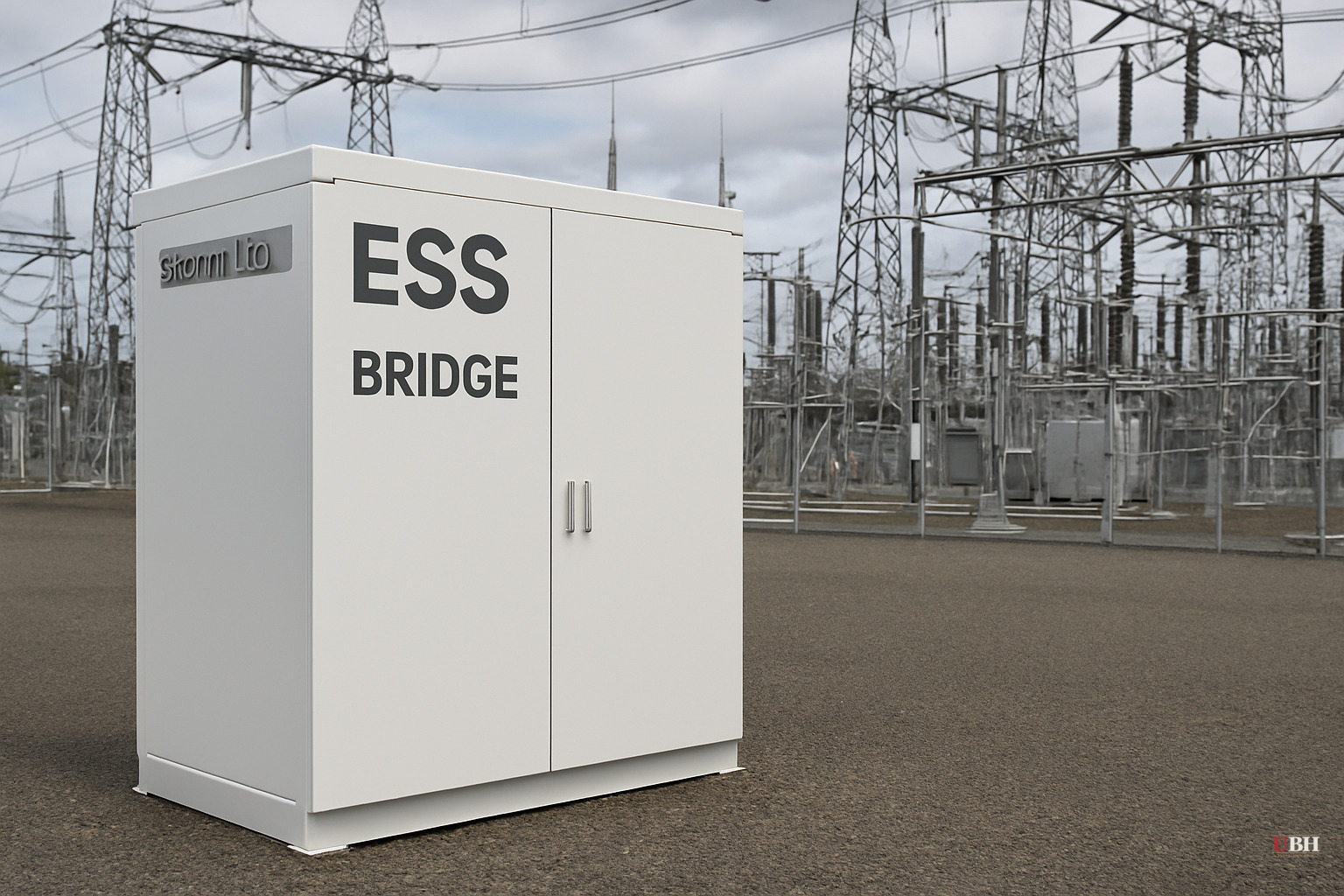
Oregon-based ESS Tech has launched a new sodium-ion battery system called ESS Bridge, built around a 1.2-megawatt-hour "building block" that customers can stack together for larger grid or behind-the-meter installations, according to Utility Dive. The company says the units can be configured to deliver 16 hours or more of continuous discharge.
This is the latest move in a sodium-ion battery push that has been building for months. Colorado's Peak Energy said late last year it would deliver up to 4.75 gigawatt-hours of sodium-based batteries by 2030 to independent power producer Jupiter Power, and Peak Energy announced in June a partnership with General Motors to build a 4-gigawatt-hour manufacturing plant in Sacramento.
ESS Tech's own sodium-ion pivot dates to late April, when the company announced it would procure 8.5 gigawatt-hours of sodium-ion battery cells and modules from Alsym Energy. That deal marked ESS Tech's entry into the short- and medium-duration storage market. The company says it has since attracted more than $1 billion in what it calls "early-stage customer opportunities."
A company betting the farm on a new chemistry
ESS Tech spent 15 years trying to commercialize iron flow batteries, which the company says can deliver eight to 22 hours of capacity over tens of thousands of discharge cycles. That bet hasn't paid off. Since going public via a reverse merger in 2021, ESS Tech has watched lithium-ion competitors scale up deployments while its own stock price fell from nearly $300 a share shortly after listing to less than $1 a share today, according to Utility Dive.
CEO Drew Buckley says ESS Bridge is designed to "meet the demand we're already seeing" from data centers and utilities, calling sodium-ion a "superior" alternative to lithium-ion. "AI workloads are reshaping what data centers need from energy storage, and sodium-ion handles those power needs more effectively than conventional technologies," Buckley said in a statement.
ESS Tech has every incentive to declare sodium-ion the winner given how badly its iron flow business has performed. Investors have already voted with their wallets, and a sub-$1 share price says they're not convinced yet.
Why sodium-ion, and why now
The pitch from sodium-ion backers rests on safety and supply chain, not raw performance. Sodium-based batteries are less prone to thermal runaway, the chain reaction that can turn a battery fault into a catastrophic fire. A 300-megawatt Vistra energy storage facility near Santa Cruz, California, burned down in a fire in early 2025, a disaster that still shadows the lithium-ion industry's reputation.
The International Energy Agency says sodium-ion's thermal stability lets it operate across virtually any temperature found on Earth's surface. ESS Tech argues that stability also means its systems can use air cooling instead of the active, liquid-based cooling that lithium systems typically need, cutting energy use, maintenance, and total cost of ownership.
Sodium is also cheap and abundant in North America, and ESS Tech and other sodium-ion companies argue that reduces exposure to geopolitical risk and restrictions on buying from foreign entities of concern, in contrast to lithium-based supply chains dominated by Chinese companies.
The honest skepticism
Sodium-ion battery production and installed capacity still lag far behind lithium-based systems. Because elemental sodium is more than three times heavier than lithium, sodium-based batteries are generally less energy-dense, requiring a larger footprint to deliver the same energy capacity as lithium. Anyone betting on a chemistry that hasn't yet proven itself at scale in the U.S. market is taking a real risk, and ESS Tech's stock chart is a live demonstration of what happens when a promising battery technology doesn't convert into revenue fast enough.
ESS Tech has not disclosed a signed customer contract for ESS Bridge beyond the "early-stage customer opportunities" figure, and no independent verification of that $1 billion pipeline number appears in available reporting.
What's next
Peak Energy's Sacramento plant and its GM tie-up give one competitor a manufacturing foothold already under construction. ESS Tech will need to show it can convert its Alsym Energy supply deal and its "early-stage" pipeline into actual signed contracts and deployed megawatt-hours before its stock recovers from penny-stock territory. Whether sodium-ion batteries actually out-compete lithium-ion on cost and reliability at grid scale, rather than just on paper, remains to be tested as utilities and large-load customers push to secure more capacity on increasingly power- and transmission-constrained U.S. grids.
Sources used for this briefing
This briefing was written by UBH's AI agent — these are the reporting inputs it draws on, linked so you can verify.


