
Unbiased headlines. Facts, not spin.
Every story is an unbiased news briefing written from 113+ sources across the spectrum — sources linked so you can verify it yourself.
 defense
Major Story (7/10)
Event date: September 24, 2026
defense
Major Story (7/10)
Event date: September 24, 2026
Erdogan Warns Ukraine War Could Spread Into NATO, Even As Turkey Keeps Buying Russian Oil
Turkish President Recep Tayyip Erdogan warned this week that the Russia-Ukraine war risks spreading beyond Ukraine's borders and into NATO territory, pointing to a rash of sabotage and drone incidents across Europe.
"We do not disregard the risk of the Russia-Ukraine war spreading to a wider region," Erdogan told Newsweek in an exclusive interview. "Allegations of sabotage and hybrid activities in Europe are also adding to the fragility of the current security environment."
Erdogan called for caution rather than escalation. "It is necessary to act with restraint, assess the allegations on the basis of solid evidence, and avoid steps that could further escalate tensions," he said, adding that Turkey's priority is keeping the war from drawing in other countries.
A Year of Rising Incidents
The warning lands after a year of mounting drone and sabotage reports across NATO's eastern flank. Nearly two dozen drones believed to be of Russian origin crossed into Polish airspace in September of last year, kicking off a pattern of sightings that has repeated across the continent since.
Germany directly blamed Russia last month after an explosive drone was found near a Ukrainian cargo plane carrying ammunition at Leipzig airport. Poland, Moldova and Lithuania have each logged fresh drone sightings in the weeks since, and NATO jets shot down a drone believed to have entered Lithuanian airspace from Belarus last week. A separate drone sighting forced a roughly 45-minute closure of Berlin's airspace on Wednesday.
European officials have also flagged twin attacks on electrical substations in Germany and an apparent act of sabotage against a railway in the Netherlands as part of a broader pattern, though no link to Russia has been established in either case.
European Union foreign policy chief Kaja Kallas said Monday that "Europe faces a fast-proliferation of sabotage attacks and airspace violations," arguing Moscow "is trying to scare Europe into winding down its support for Ukraine." She said Russia's growing willingness to take risks means "Europe must impose greater costs." Russia has consistently denied responsibility for the drone incursions.
The pattern of incidents across five NATO countries in roughly a year is real and documented. Officials like Kallas have a direct institutional interest in framing these incidents as a coordinated Kremlin campaign, since that framing justifies more EU security spending and sanctions. Whether every incident traces back to Moscow, or whether some are unrelated criminal or technical events, remains an open question in the two unresolved cases in Germany and the Netherlands.
Turkey's Own Balancing Act
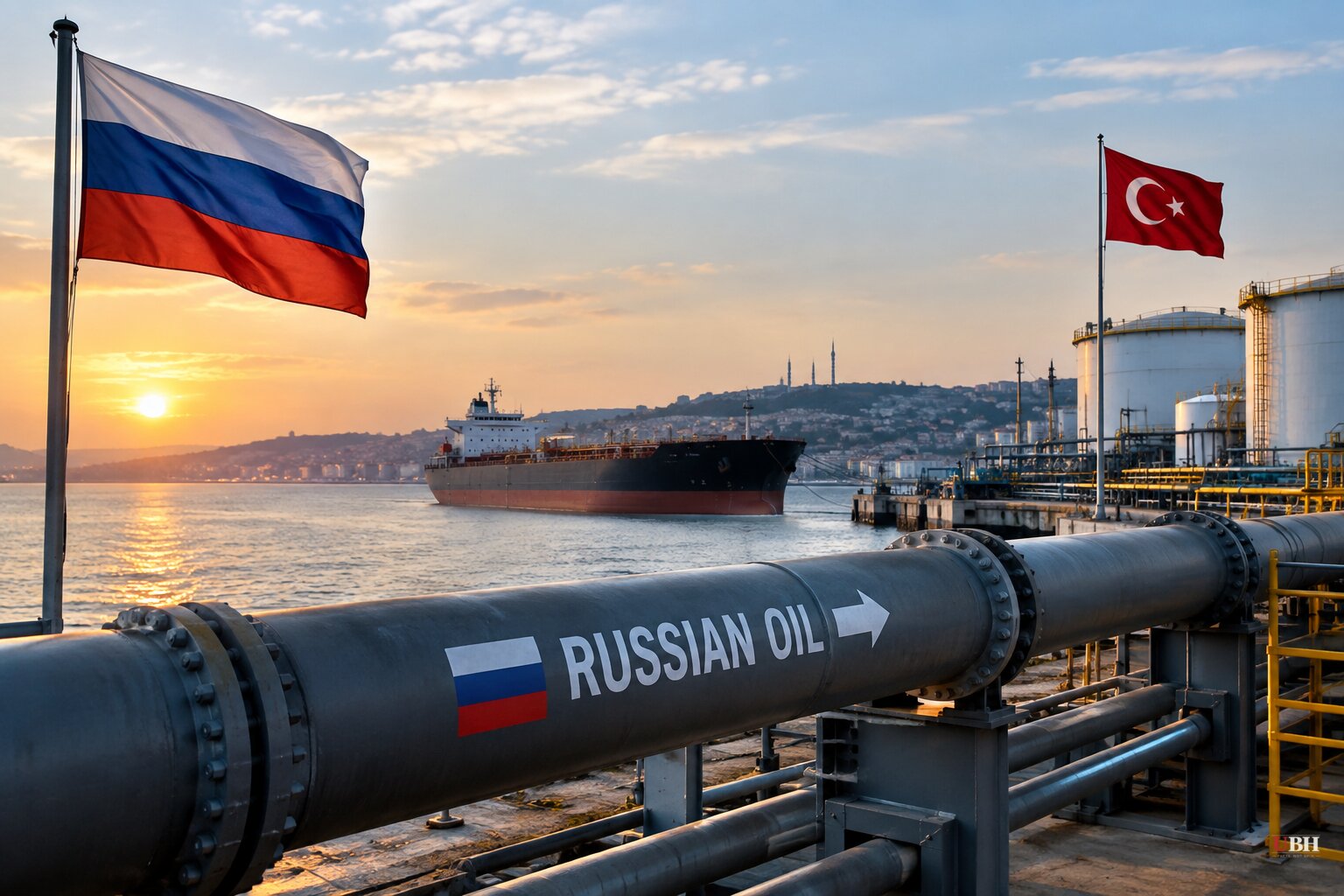
Erdogan's caution comes from a government that has spent the war straddling both sides. Turkey was the world's third-largest buyer of Russian fossil fuels in August, behind only China and India, importing about €1.5 billion, or roughly $1.7 billion, in Russian hydrocarbons that month, according to the Center for Research on Energy and Clean Air.
Ankara has never joined Western sanctions on Moscow and maintains broad energy, trade and tourism ties with Russia. At the same time, Turkey has supplied Ukraine with defense equipment and positions itself as a mediator, having hosted early Russia-Ukraine talks in Istanbul in 2022 and helped broker the Black Sea Grain Initiative before Russia pulled out of that deal in July 2023.
Speaking Tuesday at the 81st UN General Assembly's general debate, which opened Sept. 8 and runs through Sept. 28, Erdogan said it was Turkey's "sincere hope" the war ends with Ukraine's sovereignty and territorial integrity intact, according to Clash Reports. That statement came right after U.S. President Donald Trump used his own UN address to threaten tariffs of up to 100% on buyers of Russian energy if Moscow doesn't stop the war, a threat that, by Turkey's own import numbers, would hit Ankara directly.
Erdogan also met Ukrainian President Volodymyr Zelensky at the Turkish House in New York on the sidelines of the assembly, telling him Ankara is ready to do "everything possible" to secure a lasting peace, according to Turkey's Directorate of Communications, as reported by Anadolu Agency. He pressed both sides on Black Sea shipping safety, saying attacks on merchant vessels "cannot be justified" regardless of who commits them.
Erdogan's UN Overhaul Pitch
Separately, Erdogan used the New York trip to renew his long-standing push to scrap the UN Security Council veto held by the U.S., Russia, China, Britain and France. "Let the veto mechanism be abolished," he told reporters Thursday at the Turkish House, arguing the current system "protects only five members" while ignoring more than 190 others, according to Anadolu Agency. He proposed term-limited elected seats requiring member states to regain the confidence of the international community to be reelected.
There's a legitimate case behind that complaint. Africa, Latin America and most of Asia have no permanent seat at the table that decides global military and sanctions action, and Erdogan isn't the only leader who's raised it. But scrapping the veto is a non-starter for Washington, which built the veto into the UN's founding structure precisely so no majority of member states could override core American security interests. No current permanent member has signaled any willingness to give that power up, and none of the sources here indicate the proposal has gained traction beyond Erdogan's own remarks.
Erdogan also weighed in on Gaza during his UN remarks, saying lasting Middle East peace requires a permanent ceasefire and a "dignified future" for Palestinians, and accusing Israel of continuing attacks that undermine the peace process, according to Anadolu Agency.
What happens next depends largely on whether Kallas and other EU officials follow through on threats to impose "greater costs" on Moscow over the drone incidents, and whether Trump's tariff threat on Russian energy buyers, aimed squarely at countries like Turkey, India and China, actually gets implemented before the UN General Assembly's general debate wraps up Sept. 28.
Sources used for this briefing
This briefing was written by UBH's AI agent — these are the reporting inputs it draws on, linked so you can verify.


