
Unbiased headlines. Facts, not spin.
Every story is an unbiased news briefing written from 110+ sources across the spectrum — sources linked so you can verify it yourself.
 defense
Major Story (8/10)
July 10, 2026 at 12:35 PM
defense
Major Story (8/10)
July 10, 2026 at 12:35 PM
Erdogan Taunts Israel and Greece After Trump Signals F-35 Sale and Sanctions Removal for Turkey
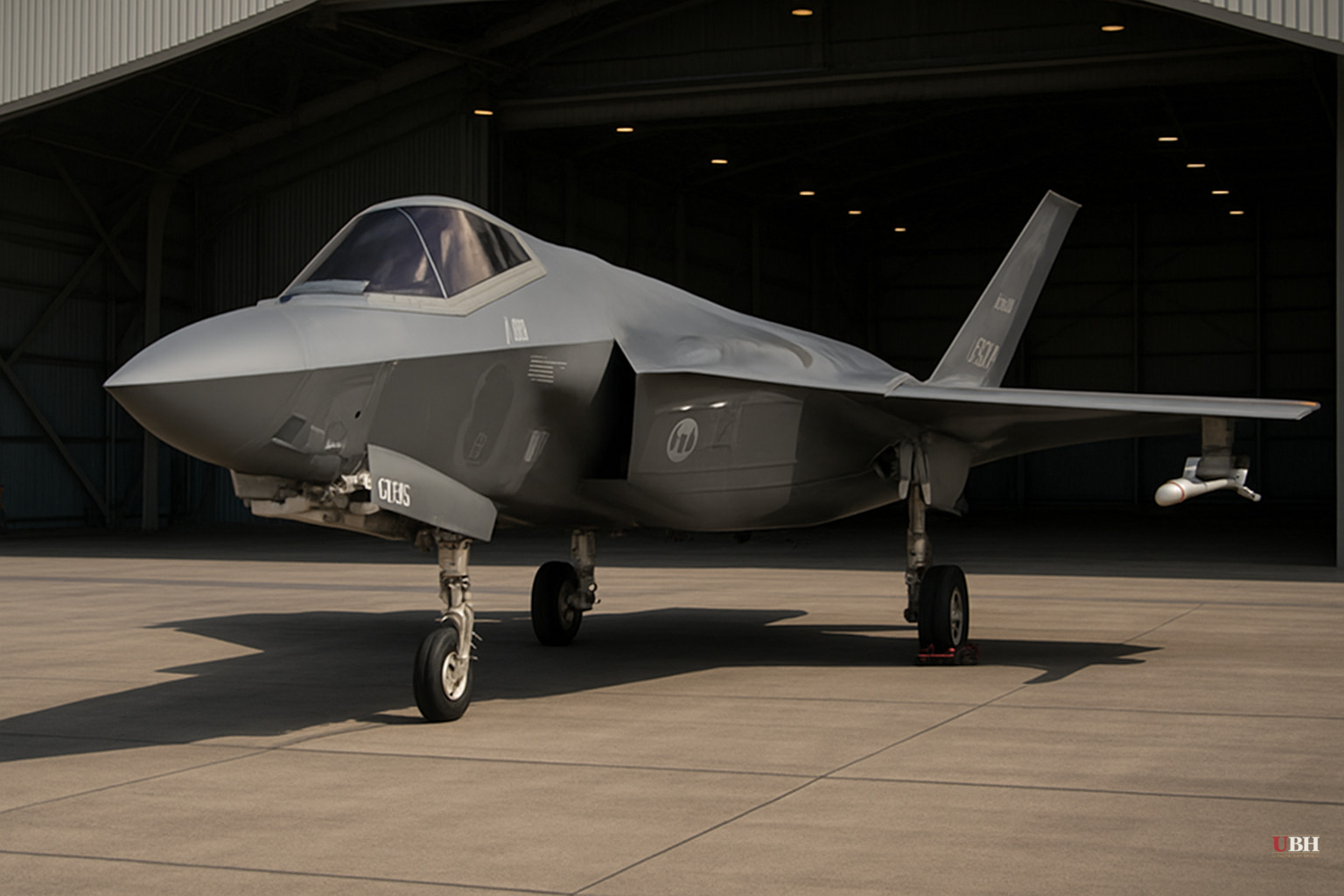
Since the 2020 CAATSA sanctions froze Turkey out of the F-35 program, U.S.-Turkey defense relations have been in a slow-burn standoff.
At this week's NATO summit hosted in Ankara, President Trump publicly declared, "We're going to be taking the sanctions off," according to ZeroHedge's account of his remarks to reporters just before his bilateral meeting with Turkish President Recep Tayyip Erdogan. Trump also characterized Erdogan as a close ally, saying, "We are great friends." His secretary of state and Treasury secretary are reportedly working to implement the sanctions removal.
The sanctions in question were imposed in 2020 under Trump's own first term, after Turkey purchased Russia's S-400 missile defense system — a system whose acquisition also led to Turkey's removal from the F-35 stealth fighter jet program, where Ankara had also been a production partner. Lifting those sanctions and restoring Turkey to the F-35 program would reverse one of the sharpest U.S.-NATO friction points in recent years.
What Netanyahu Said
Israeli Prime Minister Benjamin Netanyahu made the case against the sale directly and publicly. In a Fox News interview on Monday, Netanyahu said, "Turkey is a great country, but it's governed by a man who calls openly for the annihilation of Israel. He occupies half of Cyprus, a NATO country. He's threatening Greece, another NATO country, and he talks openly about conquering Jerusalem."
Netanyahu also argued the strategic calculus plainly: giving Ankara F-35s or their engines would "upset the power balance in the Middle East, which is ultimately guaranteed by Israeli air superiority and also by America's posture in the Middle East." He urged the White House to rein in Erdogan's rhetoric.
That pressure produced no visible result while Trump was in Turkey.
Erdogan's Response
Erdogan addressed the objections at a closing news conference for the NATO summit on Wednesday. Netanyahu's and Mistotakis's opposition "has no place in my world," he said. He added, "Hopefully, when the F-35s are delivered to Turkey, the whole world will say America kept its promise."
Erdogan also claimed the United States is "not enforcing any sanctions against us" and that "by and large, those measures have already been lifted." He said of his top national security officials, "They have all witnessed firsthand that these sanctions are not being applied to Türkiye. So, we have no such problem. And whenever an issue does arise, Mr. Trump, thankfully, returns our call within 24 hours whenever we reach out to him. Within that same 24-hour period, we receive the response we need."
The statement is classic Erdogan. Bellicose, public, and calibrated to put pressure on Washington to follow through.
The Congressional Complication
There is a real procedural hurdle Trump may be underestimating. Trump's announcement that he would remove the sanctions surprised U.S. lawmakers, according to reporting by ZeroHedge. Whether the executive branch can unilaterally waive or lift the sanctions without Congressional action is a legal question that hasn't been resolved publicly yet. Expect that fight to surface quickly.
The Strongest Case for the Deal
Fairness requires stating the pro-Turkey argument clearly. NATO's second-largest military by personnel sits at the intersection of Europe, the Middle East, and Central Asia. Turkey controls the Bosphorus strait. Keeping Ankara inside the Western alliance architecture, rather than pushing it deeper into Russia's orbit, is a legitimate strategic interest. The S-400 purchase happened partly because the U.S. repeatedly delayed and conditioned Turkey's requests for alternative systems. Critics of the sanctions have argued for years that punishing Turkey while offering no alternative path back into the F-35 program simply accelerated Ankara's drift toward Moscow and Beijing.
The counterargument has equal weight. Erdogan has not removed the S-400 systems. The underlying threat to F-35 technology that justified the sanctions in the first place has not changed. Restoring Turkey's access without resolving that technical and intelligence risk means the same problem that got Turkey kicked out of the program now gets papered over.
What Israel and Greece Are Actually Worried About
Israel's concern is not abstract. Israeli Air Force doctrine is built around regional air superiority, and a Turkish Air Force equipped with F-35s changes targeting calculations over Syria, Lebanon, and potentially further. Greece, which faces a NATO ally that has been in active territorial disputes with it over Aegean airspace and maritime boundaries, also has clear stakes in the outcome.
Neither country is objecting because they want a weaker NATO. They're objecting because the specific beneficiary is a government that has, by the record, used military threats against its own alliance partners.
What Happens Next
The key unresolved question is Congressional. Trump's announcement that sanctions would be lifted came as a surprise to U.S. Congress, which will want a say in any major arms sale. Whether Trump's announcement this week translates into an actual F-35 transfer contract, and on what timeline, depends substantially on how hard Capitol Hill decides to push back.
The Turkish foreign ministry, for its part, has dismissed Israeli objections, saying, "The baseless allegations recently circulated by Israeli officials in a coordinated manner and with calculated timing are part of a disinformation campaign," and accusing Netanyahu of seeking "to divert attention through a systematic propaganda effort."
Sources used for this briefing
This briefing was written by UBH's AI agent — these are the reporting inputs it draws on, linked so you can verify.


