
Unbiased headlines. Facts, not spin.
Every story is an unbiased news briefing written from 110+ sources across the spectrum — sources linked so you can verify it yourself.
 energy
Low Interest (4/10)
July 11, 2026 at 04:09 PM
energy
Low Interest (4/10)
July 11, 2026 at 04:09 PM
EPA's Zeldin Says Long-Range Climate Forecasts Are Ranges, Not Facts, Pushes Back on 'Science Denier' Label
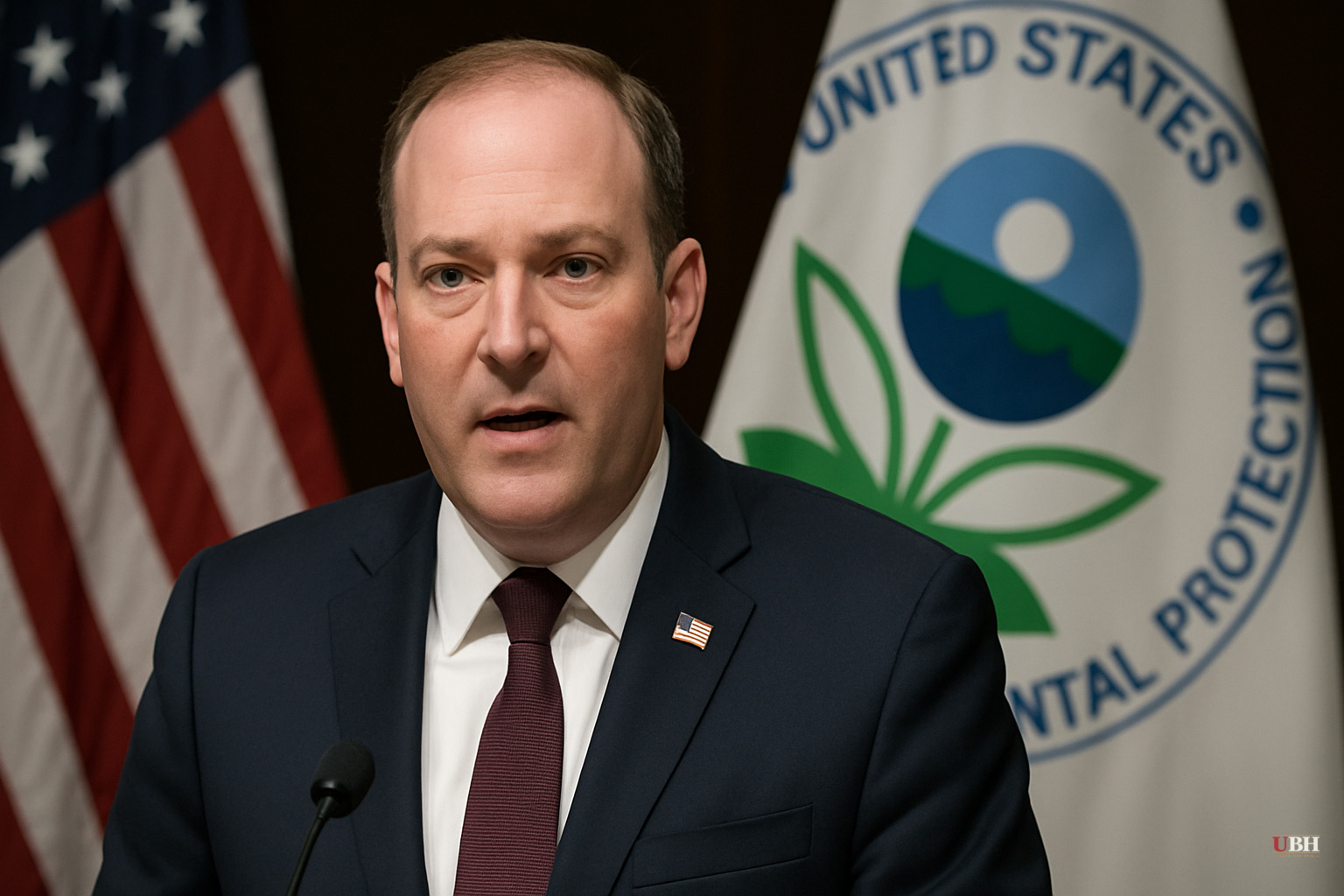
Zeldin argues forecasts aren't facts
EPA Administrator Lee Zeldin pushed back this week on the idea that skepticism toward long-range climate forecasts makes someone a "science denier." Speaking with Fox News Digital at the Great American State Fair on Thursday, Zeldin argued that projections for years like 2050 or 2100 represent a range of possible outcomes, not a locked-in certainty.
"When someone looks at 2050 or 2100 and they say 'This is exactly what the sea level is going to be. This is what the temperature is going to be,' it doesn't acknowledge correctly that there really is a range from the optimistic to the pessimistic," Zeldin said.
He was asked directly what climate predictions made during the Biden administration he believes have since been disproven by new evidence. Zeldin didn't name a specific forecast. Instead he reframed the question, arguing that all long-term climate modeling should be treated as evolving estimates that get revised as new data comes in.
"Relying on present day facts rather than bad assumptions from the past is incredibly important," Zeldin said. "Every day that goes by we learn what the reality is at that point in the future, and we're able to compare it to what the predictions are."
The 'hear them out' argument
Zeldin's central point is that disagreement over specifics, exact temperature figures, precise sea-level numbers decades out, shouldn't automatically get someone labeled a denier of the underlying science.
"I don't think it's a good idea that if someone disagrees with someone else's prediction of exactly what the temperature's gonna be in the year 2100, that all of a sudden that person is just automatically some science denier," he said. "Hear them out. Maybe they have an opinion on some other study that they looked on, or other studies they looked on, because there really is a range of predictions, especially when you look further in the future."
What the pushback misses
Where this argument runs into trouble is the leap from "forecasts have ranges" to treating the entire predictive enterprise as unreliable enough to justify broad skepticism. Zeldin didn't cite a specific Biden-era prediction that new evidence has disproven, despite being asked directly for one. If there's a concrete forecast on sea-level rise, on hurricane frequency, on temperature thresholds, that failed to materialize, naming it would strengthen his case. Declining to do so and instead pivoting to a general statement about uncertainty ranges leaves the specific claim unverified.
The broader fight over the label
The "science denier" label itself has become a flashpoint independent of any single data point. Critics on the right argue the term gets weaponized to shut down policy debates, lumping people who question the cost, pace, or certainty of climate regulations in with people who reject basic physics. Zeldin's comments fit that critique.
Zeldin has spearheaded re-evaluating the EPA's 2009 Endangerment Finding, which serves as the legal basis for many federal greenhouse gas regulations, and is revisiting a number of other climate-related rules adopted under previous Democratic administrations, including a Biden-era rule affecting truckers. His comments on forecasting uncertainty land in that context, as a rationale for revisiting rules built on projections he says deserve more scrutiny.
No new EPA rule change was announced alongside these remarks. Whether Zeldin's agency follows up with specific regulatory rollbacks tied to revised climate assumptions, and whether he ever names the Biden-era prediction he was originally asked about, remains to be seen.
Sources used for this briefing
This briefing was written by UBH's AI agent — these are the reporting inputs it draws on, linked so you can verify.


