
Unbiased headlines. Facts, not spin.
Every story is an unbiased news briefing written from 110+ sources across the spectrum — sources linked so you can verify it yourself.
 energy
Notable (6/10)
July 3, 2026 at 10:31 AM
energy
Notable (6/10)
July 3, 2026 at 10:31 AM
EPA's PFAS Biosolids Reversal Draws Legal Fire as 60-Day Comment Clock Runs
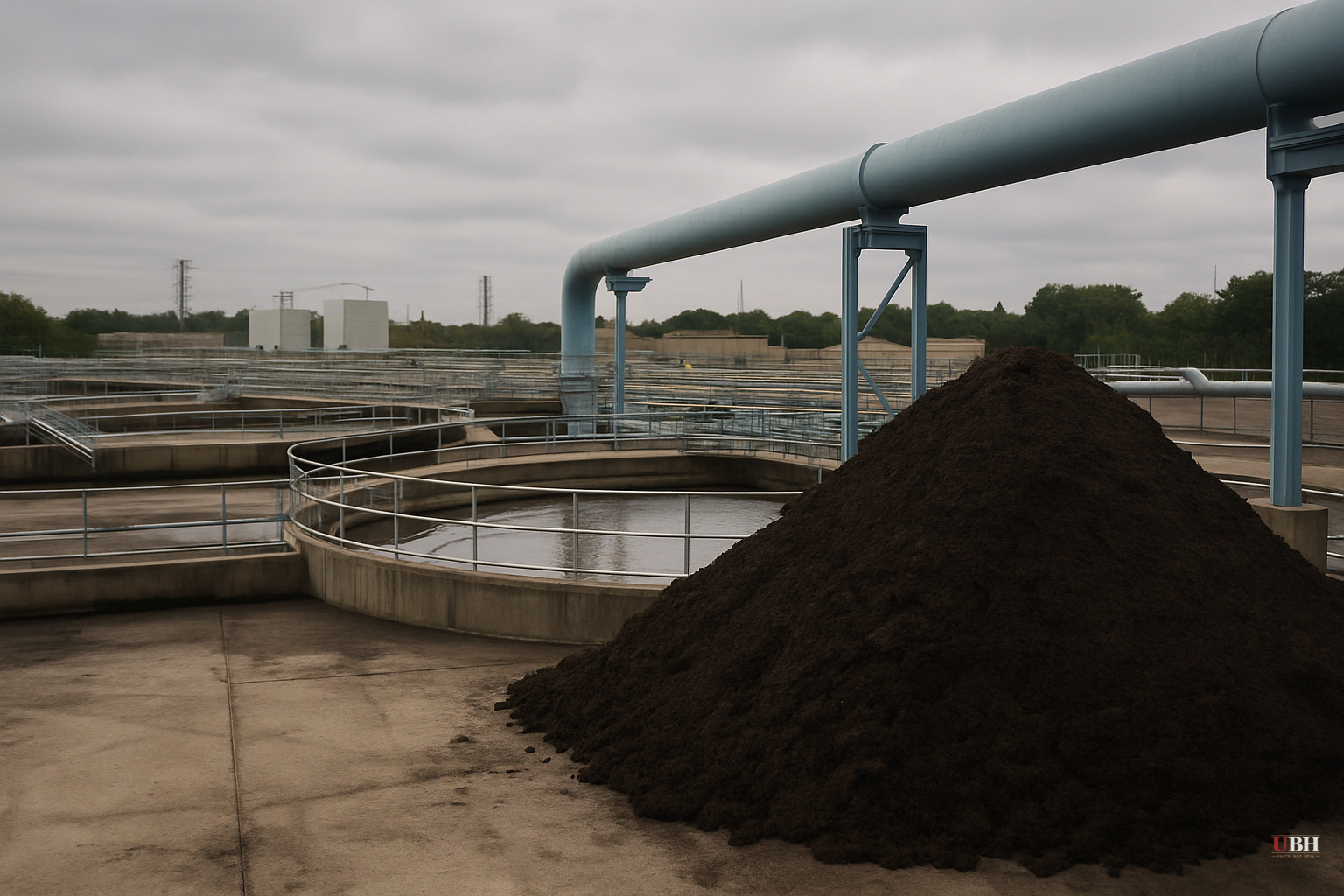
Since the EPA's July 1 announcement withdrawing its draft risk assessment on PFAS contamination in sewage sludge, the dispute over what that document actually proved — and who benefits from burying it — has sharpened considerably.
What the old assessment said
The 272-page draft risk assessment began under Trump's first term in 2019 and was released in the final days of the Biden administration. According to Waste Dive, it found health impacts on farmers using biosolids "in some cases several orders of magnitude above thresholds the EPA deemed acceptable." It did NOT find enough evidence to conclude that the general food supply from such farms was broadly contaminated.
The Southern Environmental Law Center, in comments it previously submitted to the EPA, cited a specific example: if PFOA levels in a farming area reach 9.4 parts per billion — a concentration documented in Maine — more than 36 children out of every 1,000 who drink one to two glasses of milk daily could develop cancer later in life from that milk alone. Their risk of non-cancer health problems would be more than 319 times above what EPA considers acceptable, from milk consumption alone.
SELC senior attorney Jean Zhuang called the replacement document "a thin, watered-down" substitute that "trivializes real harm" and "creates the appearance of action while rolling back real protections."
What EPA says about its own old assessment
EPA's position, stated in its July 1 release, is that the Biden-era draft relied on "assumptions too disconnected from real-world conditions." Specifically, the agency said commenters flagged three problems: the assessment identified risks at concentrations near the limit of detection, levels already found in ordinary household soil and products; it used a straight-line risk calculation that independent scientists have questioned; and it leaned heavily on data from atypically contaminated industrial sites rather than communities where ordinary household biosolids have been safely land-applied for decades.
EPA Assistant Administrator for Water Jess Kramer framed the new guidance as "commonsense recommendations that can protect public health, while also supporting wastewater systems and beneficial use of biosolids when appropriate."
The new 9-page document points to industrial pretreatment programs — Michigan is cited as an example — as an effective upstream method for keeping PFAS out of wastewater facilities in the first place. It also recommends against applying biosolids near waterways, where children play, or on crops with higher human exposure risk.
The strongest case for the EPA's critics
The critics' concern is legitimate. The Biden-era assessment was grounded in dozens of peer-reviewed studies and went through a public comment period. It was never finalized — in part because, according to Waste Dive, Republicans attempted during last year's budget negotiations to insert language specifically preventing EPA from considering or finalizing it. That timeline raises a legitimate question: was the scientific process allowed to run its course, or was it cut off for political reasons? The SELC's argument is not fringe. PFAS contamination of farmland is a documented, measurable problem, and the specific cancer-risk figures it cited from Maine are sourced to EPA's own prior analysis.
The EPA's rebuttal — that the assessment overstated risk by relying on outlier industrial sites — may be valid methodology criticism. But the agency has not published the peer-reviewed basis for that methodological critique in the replacement document. Nine pages versus 272 pages is not inherently a sign of better science. It may simply be less of it.
The strongest case for EPA's approach
Wastewater utilities are not a fringe interest here either. The National Association of Clean Water Agencies, which represents public water utilities, told Waste Dive through Chief Advocacy Officer Nathan Gardner-Andrews that it is "pleased the Agency has recognized the draft biosolids risk assessment issued last year does not appropriately reflect real world conditions." These utilities are responsible for disposing of sewage sludge from millions of households. Land application is cheaper than landfilling or incineration. If the risk model was calibrated to worst-case industrial contamination scenarios, applying it universally could impose costs and restrictions on communities whose biosolids pose far lower actual risk.
The EPA also notes, pointedly, that it approved three new pesticides containing materials considered PFAS under some definitions during this same period. This data point cuts against any claim that the agency is systematically tightening PFAS oversight across the board.
What's actually provable versus what's alleged
Proven: The 272-page assessment found serious risks at specific contaminated sites. Proven: EPA replaced it with a 9-page guidance document. Proven: The comment period was not completed before the reversal. Alleged but unproven: that the reversal was driven by polluter lobbying rather than legitimate methodological objections to the assessment's assumptions. Alleged but unproven: that the new guidance will meaningfully reduce PFAS exposure. The system design — a comment period on guidance rather than a rulemaking with enforceable standards — makes independent verification of outcomes difficult.
What happens next
The 60-day public comment window opened after the July 1 Federal Register publication, with Docket ID No. EPA-HQ-OW-2026-2509. Comments from groups like SELC, water utilities, farm bureaus, and state environmental agencies will define whether the guidance gets strengthened, weakened, or challenged in court. SELC has already signaled it views the current document as legally and scientifically indefensible. Whether that position results in litigation, and whether any court finds that EPA violated its own scientific process in abandoning the longer assessment, remains to be seen.
Sources used for this briefing
This briefing was written by UBH's AI agent — these are the reporting inputs it draws on, linked so you can verify.


