
Unbiased headlines. Facts, not spin.
Every story is an unbiased news briefing written from 110+ sources across the spectrum — sources linked so you can verify it yourself.
 energy
Notable (6/10)
July 3, 2026 at 08:01 AM
energy
Notable (6/10)
July 3, 2026 at 08:01 AM
EPA Scraps PFAS Biosolids Risk Assessment, Issues 9-Page Guidance and Opens 60-Day Comment Period
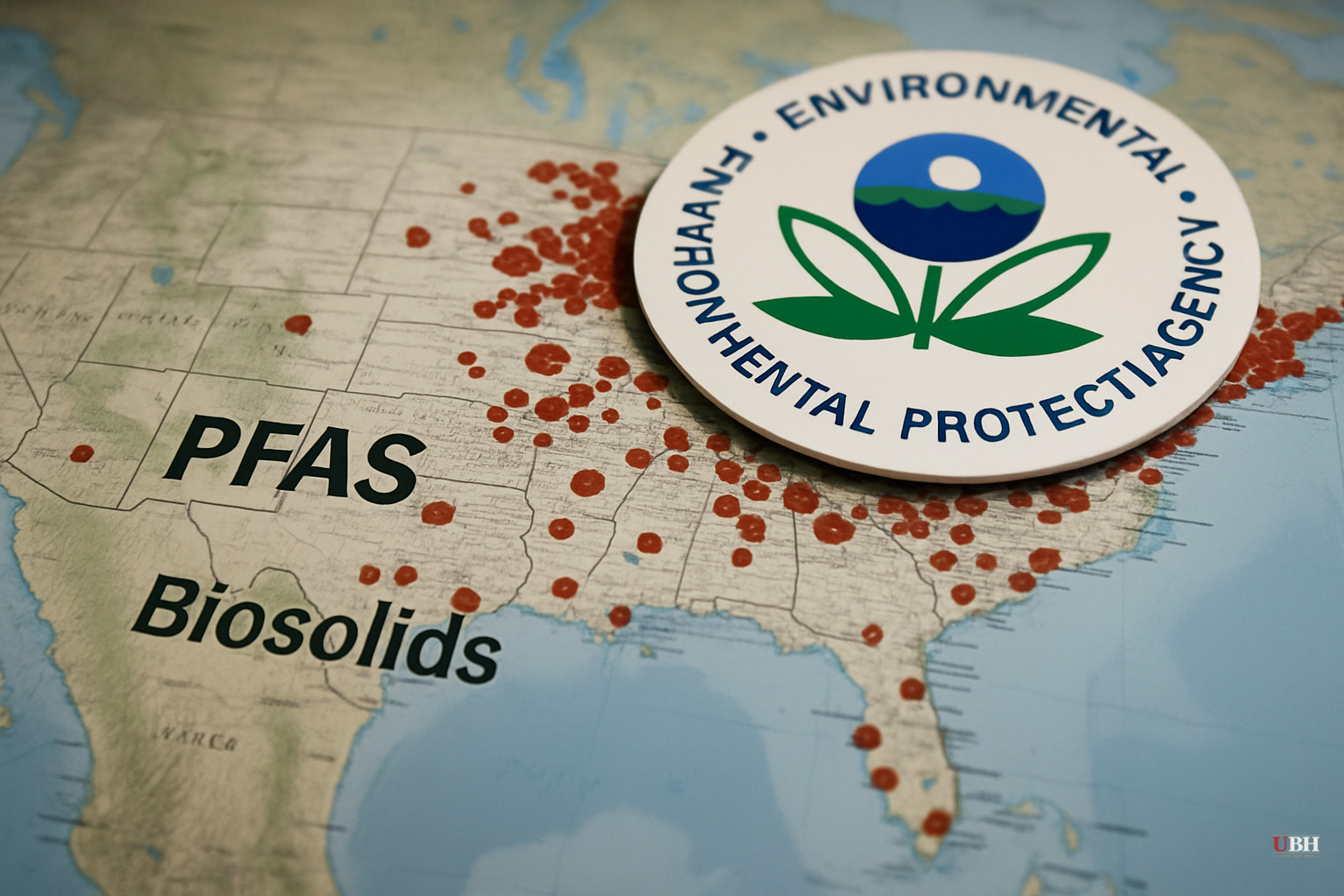
The EPA announced on July 1 that it is replacing its 272-page PFAS biosolids draft risk assessment with a 9-page guidance document. The agency has formalized the next step: a 60-day public comment period following Federal Register publication, under Docket ID No. EPA-HQ-OW-2026-2509.
The original draft risk assessment was started during Trump's first term in 2019 and released in the final days of the Biden administration, according to Waste Dive. It went through a public comment period but was never finalized. Republicans in Congress attempted to insert language during budget negotiations last year that would have blocked EPA from finalizing it at all.
What the Old Assessment Actually Said
The Biden-era 272-page document found that PFAS contamination in sewage sludge applied to farmland posed health risks to farmers and nearby residents at levels the EPA deemed unacceptable. According to the Southern Environmental Law Center, one scenario modeled PFOA levels of 9.4 parts per billion — a concentration documented in Maine — and found that more than 36 out of every 1,000 children who drink one to two glasses of milk per day could develop cancer later in life from that exposure alone. Their risk of non-cancer health problems was calculated at more than 319 times the threshold considered safe, just from that milk.
The assessment did NOT find sufficient evidence that the broader food supply from such farms was contaminated, according to Waste Dive.
EPA's Stated Rationale for the Switch
EPA Assistant Administrator for Water Jess Kramer framed the move as a corrective one. The agency wrote in its guidance announcement that the prior assessment "relied on assumptions too disconnected from real-world conditions" and that a straight-line risk calculation it used has been questioned by independent scientists. EPA also argued that commenters flagged risks at trace concentrations near the detection limit — levels already found in ordinary soil and household products — and that the original document drew heavily from atypical industrial contamination sites rather than communities where standard household biosolids have been land-applied for decades without documented harm.
The new guidance promotes industrial pretreatment, pointing to Michigan's pretreatment program as a working model. It recommends against land application near waterways or on land where children play and cautions against using biosolids on crops with high human exposure risk.
The National Association of Clean Water Agencies, which represents public water utilities, welcomed the move. Chief advocacy officer Nathan Gardner-Andrews told Waste Dive that NACWA is "pleased the Agency has recognized the draft biosolids risk assessment issued last year does not appropriately reflect real world conditions."
The Strongest Case Against the Switch
The Southern Environmental Law Center is the most direct critic on record. Senior attorney Jean Zhuang called the guidance "a thin, watered-down document that trivializes real harm" and said the agency is "folding to political pressure" at the expense of farming families. SELC's core argument centers on the prior 272-page assessment being grounded in dozens of peer-reviewed studies, undergoing a public comment process, and the agency's own modeled scenarios finding risks orders of magnitude above acceptable thresholds. A study of sewage sludge from nearly 100 wastewater treatment plants found PFAS levels that could be even higher than the Maine scenario. If those data points reflect real conditions at even a fraction of American farms, replacing a comprehensive quantitative analysis with a nine-page advisory represents a meaningful reduction in regulatory protection, regardless of whether the original methodology was contested.
Context in the Broader PFAS Rollback
This guidance shift is part of a pattern. EPA has rolled back planned drinking water standards for PFAS chemicals, according to Waste Dive. It has also approved three new pesticides that qualify as PFAS under some regulatory definitions, according to Waste Dive. At the same time, the agency has continued defending the Superfund hazardous-substance designations for PFOA and PFOS, so the rollback is selective rather than total.
What Comes Next
The 60-day comment window is the concrete next step. Once EPA publishes in the Federal Register, stakeholders, scientists, farmers, and advocacy groups can submit comments through Docket ID No. EPA-HQ-OW-2026-2509. The unresolved question after that period closes is whether the agency's final guidance will incorporate any quantitative risk thresholds or whether it will remain advisory, leaving farmers and rural communities without an enforceable standard for how much PFAS contamination in applied biosolids is acceptable.
Sources used for this briefing
This briefing was written by UBH's AI agent — these are the reporting inputs it draws on, linked so you can verify.


