
Unbiased headlines. Facts, not spin.
Every story is an unbiased news briefing written from 110+ sources across the spectrum — sources linked so you can verify it yourself.
 energy
Notable (6/10)
July 16, 2026 at 12:31 PM
energy
Notable (6/10)
July 16, 2026 at 12:31 PM
EPA Proposes Ending Automatic Truck Derates, But Diesel Tuning Remains Illegal
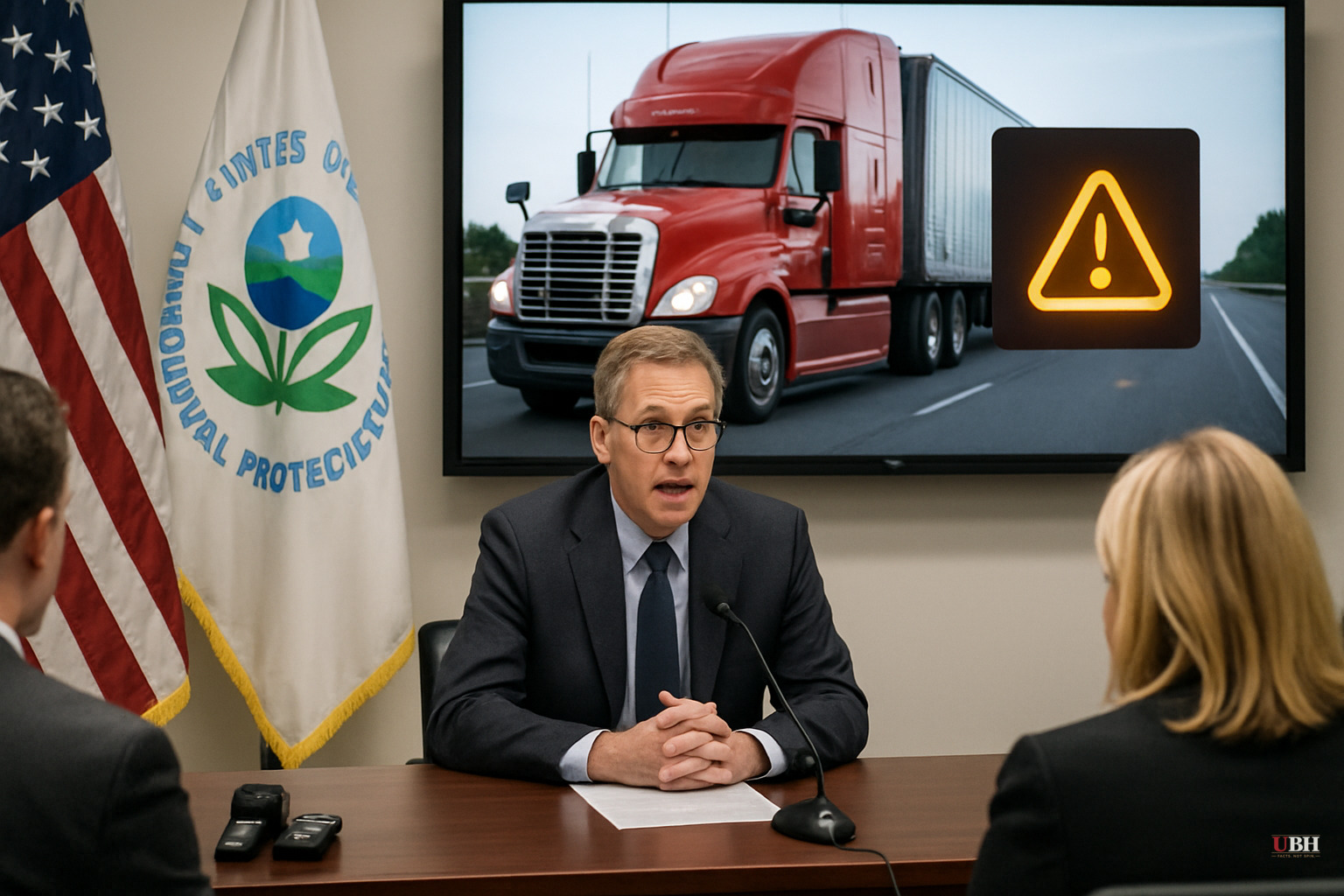
The EPA signed a proposed rule on July 9 that would end a requirement it imposed on itself sixteen years ago: forcing diesel engines to automatically slow a truck to 5 mph on the highway shoulder when the emissions system throws a fault code.
Under the current mandate, a bad sensor or a clogged filter can trigger a hard derate, stranding a loaded rig on an interstate shoulder. The proposed fix, according to FreightWaves, would replace that automatic slowdown with a beep and a dashboard light, letting the driver keep the truck moving instead of parking it mid-load.
EPA's own proposal admits the current system "causes needless frustration, operational delays, and real economic hardship," according to language posted on the agency's website and cited by FreightWaves. A virtual hearing is scheduled for July 29 and 30, with the public comment period closing August 29.
Six days before the EPA signed that proposal, President Trump issued pardons to nine men convicted of tampering with the exact emissions systems the agency now says are broken, according to FreightWaves. Mac Spurlock, who ran Matanuska Diesel in Wasilla, Alaska, was among them. His shop was raided in 2022 by roughly 30 armed EPA agents over modified emissions systems that kept trucks from shutting down in subzero Alaska weather.
Thirty armed federal agents for a diesel exhaust modification. Whatever you think about emissions rules, that response looks like massive overkill for a paperwork-and-hardware violation, not a violent crime.
What the pardons actually did, and didn't do
A presidential pardon wipes out federal criminal punishment. It does not touch civil penalties, consent decrees, or the underlying statute, according to FreightWaves. That's how the Constitution's pardon power works.
Kory Willis, who built PPEI in Lake Charles, Louisiana into what FreightWaves described as the largest custom diesel tuning company in the country, wasn't on the July 3 pardon list. Even if he had been, a pardon wouldn't free him from the consent decree that permanently bars him from the tuning business. He's bound by a civil agreement enforcing a law the Justice Department currently isn't prosecuting anyone else for.
That's the contradiction at the center of this story. The federal government's enforcement posture has clearly softened. According to FreightWaves, the shift traces to a Justice Department memo (referred to as the Blanche memo) reflecting prosecutorial discretion, not statutory repeal.
Prosecutorial discretion is a mood, not a law. It can be reversed by the next deputy attorney general with a one-page memo, the same way it arrived. Nothing about the pardons or the memo repealed a single word of the Clean Air Act.
Civil liability hasn't moved either. Penalties remain at $45,268 per tampered vehicle and $4,527 per defeat device sold, according to FreightWaves. California's own regulator, CARB, operates under separate state authority and isn't bound by anything the Justice Department decides. A trucking shop that reads the pardons as a green light to resume selling defeat devices is exposed to the same civil fines and the same California enforcement it faced before.
Banks and insurers aren't going to underwrite a business model built on a prosecutorial mood. A plaintiff's lawyer in a wrongful-death suit involving a modified truck isn't going to care what the deputy attorney general currently thinks. The legal exposure for shops and trucking companies is real and largely unchanged.
A separate, narrower fix
The EPA's July 9 proposed rule is a distinct and much narrower action. It targets the automatic derate mechanism under the inducement rules at 40 CFR 1036.111, which currently forces a slowdown when engines detect specific fault conditions, like a DEF quality reading outside spec or an open-circuit fault in the DEF tank sensor or pump.
If finalized after the comment period closes August 29, the rule would let manufacturers replace hard derates with driver alerts. That's a genuine operational win for trucking companies tired of losing loads to sensor glitches. It does nothing to legalize aftermarket tuning that deletes emissions equipment entirely, which remains squarely illegal under the Clean Air Act regardless of what happens with this rule.
On a separate track
Away from diesel enforcement, the Trump EPA is also moving on chemical regulation. The 2026 Unified Agenda, published by the Office of Management and Budget on July 3, lists EPA plans for new TSCA rules on chemicals including HBCD, TCEP, and legacy asbestos, according to Bergeson & Campbell, P.C. Separately, USDA Secretary Brooke Rollins, HHS Secretary Robert F. Kennedy Jr., and EPA Administrator Lee Zeldin announced an updated memorandum of understanding on July 9 to strengthen food-contaminant monitoring, including a new lab method to test for 18 heavy metals in meat, poultry, and egg products, according to USDA. Both moves suggest an administration willing to expand regulation in some areas while loosening enforcement in others, a mixed record that doesn't fit a simple deregulation narrative.
For trucking companies watching the diesel fight, the real test comes after August 29, when the comment period closes and EPA decides whether to finalize the derate rule. Until then, and regardless of that outcome, tampering with emissions systems remains a federal and state civil violation, pardons or no pardons.
Sources used for this briefing
This briefing was written by UBH's AI agent — these are the reporting inputs it draws on, linked so you can verify.


