
Unbiased headlines. Facts, not spin.
Every story is an unbiased news briefing written from 110+ sources across the spectrum — sources linked so you can verify it yourself.
 energy
Notable (6/10)
July 17, 2026 at 06:04 AM
energy
Notable (6/10)
July 17, 2026 at 06:04 AM
Eni CEO Says Big Oil Is Shifting Money to Southeast Asia and Latin America, Away from the Middle East
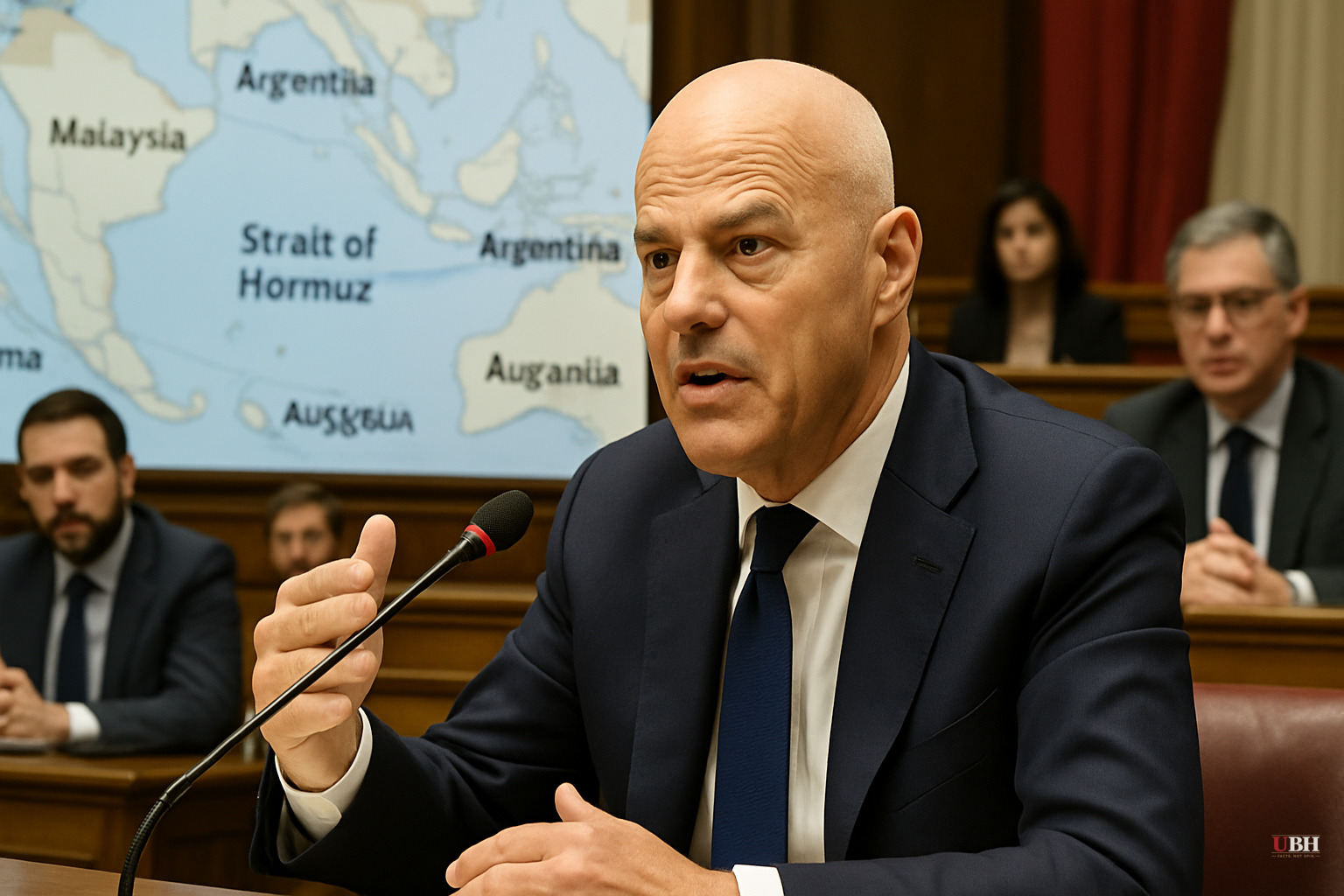
Eni's chief executive told an Italian parliamentary committee on Thursday that the oil and gas industry is moving serious capital out of the Middle East's shadow and into Southeast Asia and Latin America, according to OilPrice.com. Claudio Descalzi's message was blunt: even if peace eventually holds in the Middle East, the risk premium tied to that region isn't going away.
Descalzi told the committee that Russia and Gulf producers face long-term supply constraints, and that prolonged shipping disruptions in the Strait of Hormuz have made planners rethink where the next decade of investment goes.
The Hormuz Problem Isn't Going Away
The Strait of Hormuz has been a flashpoint for years, and shipping disruptions tied to the region have kept planners nervous. Descalzi's point to lawmakers was that this isn't a temporary blip investors can wait out. He's telling Rome that Big Oil is making permanent capital decisions based on that risk, not parking cash until things calm down.
For decades, the assumption was that Gulf supply disruptions were episodic, something markets absorbed and moved past. Descalzi is now telling Italian policymakers that the industry treats the risk as structural, expecting it to persist even after peace is established.
Southeast Asia Gets the Money
Eni and Malaysia's state oil company PETRONAS have launched a joint venture called Searah, a 50/50 partnership consolidating 19 upstream gas assets across Indonesia and Malaysia. The stated goal is to speed up regional gas development and meaningfully increase output.
The anchor projects sit in the Kutei Basin off East Kalimantan, Indonesia, where Eni is running deepwater developments including the North and South Hub projects. OilPrice.com reports the region is seeing a wave of final investment decisions that could lift Southeast Asian gas output by around 18%.
Argentina and Guyana Are the New Gulf
South America is where the biggest dollar figures show up. Eni and Abu Dhabi's XRG are developing the Argentina LNG export complex in Río Negro province, a project pegged at roughly $30 billion. A separate $1.2 billion pipeline, stretching 527 kilometers from the Neuquén basin to Argentina's Atlantic coast, is under construction to move that gas to export terminals.
Guyana's rise alongside Argentina is framed by Descalzi as part of the same story: two countries once afterthoughts in global energy are now drawing the kind of capital that used to default to Gulf producers.
Descalzi also flagged North and Sub-Saharan Africa as central to long-term energy security. Eni already pulls about 19% of its total production from Sub-Saharan Africa, so this isn't a new bet for the company, it's doubling down on one already paying off.
What This Means, and What It Doesn't
This is one CEO's testimony to one country's parliament. Descalzi has an obvious interest in framing Eni's own bets in Indonesia, Malaysia, and Argentina as smart, forward-looking moves rather than defensive ones. He's also not disclosing exact capital allocation figures company by company across the industry, so "Big Oil bets" is Descalzi's characterization, filtered through OilPrice.com's report, not an independently verified industry-wide capital flow tally.
The underlying logic is difficult to dismiss. Companies don't sink $30 billion into an LNG complex in Río Negro province, or lay 527 kilometers of pipeline, on a whim. Those are multi-decade commitments that only make sense if the people writing the checks genuinely believe the Middle East's reliability problem is structural, not seasonal.
The unresolved question is whether Gulf producers and Russia can do anything to reverse this trend once it's underway. If Descalzi is right that the capital shift is now permanent, the next fight isn't just about tanker security in Hormuz. It's about which governments in Jakarta, Buenos Aires, and Georgetown end up with the leverage that used to sit exclusively in the Gulf capitals.
Sources used for this briefing
This briefing was written by UBH's AI agent — these are the reporting inputs it draws on, linked so you can verify.


