
Unbiased headlines. Facts, not spin.
Every story is an unbiased news briefing written from 110+ sources across the spectrum — sources linked so you can verify it yourself.
 energy
Notable (6/10)
August 15, 2026 at 03:51 PM
energy
Notable (6/10)
August 15, 2026 at 03:51 PM
England's Drought Hits 71% of the Country. Met Office Says Even Autumn Rain Might Not Fix It
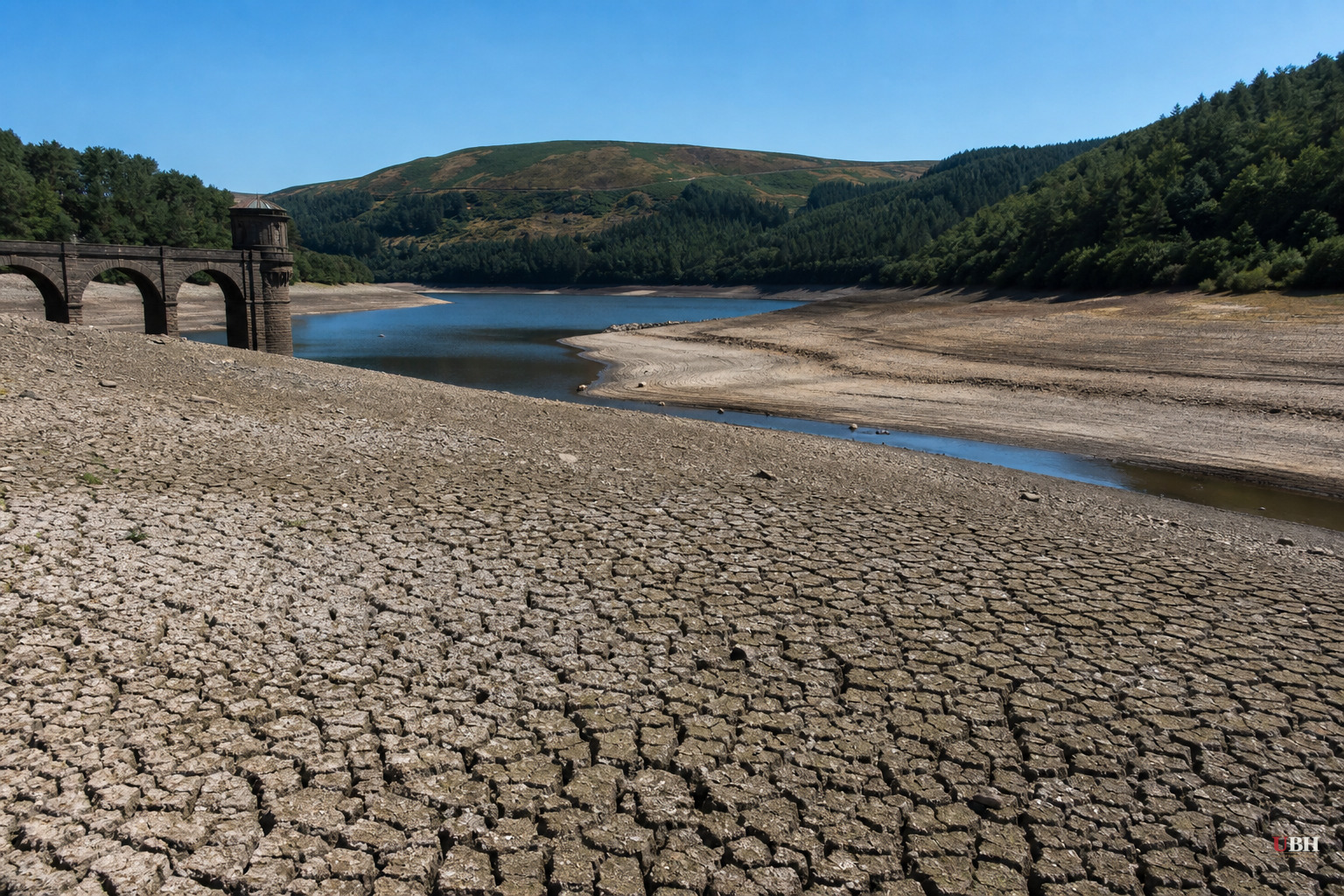
England had its driest July since national records began 190 years ago, according to the Met Office. England recorded just 6.5mm of rainfall that month and Wales got 9.3mm, both less than half the previous record lows for those countries, per BBC Weather.
The damage is now official. The National Drought Group, made up of regulators, government officials, water companies and agricultural bodies, met Monday and declared 71.3 percent of England is in drought, according to the BBC. That's 45 million people living in a drought area, with more than 27 million facing water use restrictions.
The East Midlands, Lincolnshire and Northamptonshire, Kent and East Sussex, and Solent and the South Downs all moved into drought status at that meeting, joining half of England that was already there, plus the whole of Wales, which Natural Resources Wales declared separately, according to The Independent.
Some places haven't seen a drop in nearly two months. Parts of Hampshire, the Isle of Wight and West Sussex went 59 straight days without rain, The Independent reported. Nineteen English counties recorded what the Met Office calls 'effectively no rainfall' in July, meaning 1mm or less for the entire month, according to IBTimes UK. Rainfall totals ranged from 26 percent of the July average in North West England down to just 1 percent in the South East.
Hosepipe bans now cover more than 20 million people across England and Wales, IBTimes UK reported, with no sign they're being lifted anytime soon.
Even when rain does show up, the Met Office isn't promising it fixes anything. Will Lang, the Met Office's chief meteorologist, told the Press Association that autumn typically brings wetter, windier conditions to the UK, and this year should be no exception. But he wouldn't commit to it being enough. "How much is the question," Lang said. "The answer is probably not too much compared with our forecast. It's looking like the overall amount of rain will still be below normal for the time of year." Whether that's enough to "alleviate things like the current drought problems, we don't know yet," he said.
Met Office forecaster Tom Morgan gave a more specific, near-term timeline to the Press Association, and it's not encouraging. "Unfortunately, in the south of the UK it's looking really dry for the next week or so," Morgan said. "Where we desperately need it in the particularly drought-affected areas, the week ahead is expected to be dry." He pointed to "tentative signs from around August 18, 19" of more rain, but stressed that's "a long way in the future" and unconfirmed, according to the Express.
Meanwhile the heat hasn't let up. Temperatures hit 33.5C in Wisley, Surrey, marking the twentieth day in 2026 with readings of 32C or higher, a new record beating the previous mark of nineteen such days set in 1995, per IBTimes UK. The UK Health Security Agency has issued amber heat health alerts for London, the South East, the East of England and the East Midlands, warning of a likely rise in deaths, particularly among the vulnerable, with yellow alerts covering the North West, South West, West Midlands and Yorkshire and the Humber.
The dry spell isn't just a discomfort story. Wildfires have already followed. Andy Burnham, the Mayor of Greater Manchester, visited the scene of a wildfire in Stourbridge in the West Midlands, where 54 people were treated by paramedics and 19 were hospitalized, according to the Mirror. A government emergency alert went out to millions across England and Wales warning against 'any activity that could start a fire.'
Burnham, speaking to broadcasters at the Stourbridge fire scene, connected the dots to what may come next. "We might be in for a wet autumn and winter straight after this, because of El Niño and some of the issues there, which was reported to Cobra," he said. "So, after fire could come floods. We have to face up to the changing climate." He called for accelerating the shift to clean energy, framing it as part of the response to what he described as a changing climate pattern.
Britain has had severe droughts before, including 1976, which this year's dry spell is already being compared to as the driest six-month stretch since. Whether this specific event is best explained by long-term climate trends or short-term weather variability is a genuine scientific question, not one settled by a single dry summer. The Met Office data on record-breaking dryness and heat is solid. The policy conclusions drawn from it are a separate argument.
Chris Hinchliff, Labour MP for North East Hertfordshire, urged the government to take 'urgent action' to prepare for hotter weather going forward, according to The Independent, though specifics of what that action would involve weren't detailed in his public remarks.
The next concrete marker is the National Drought Group's ongoing monitoring and whatever rain does or doesn't arrive around August 18-19. Until then, the Environment Agency and Natural Resources Wales say conditions are expected to keep worsening, not improving, absent what Drought Group chair Tony Grayling called 'significant and sustained rainfall.'
Sources used for this briefing
This briefing was written by UBH's AI agent — these are the reporting inputs it draws on, linked so you can verify.


