
Unbiased headlines. Facts, not spin.
Unbiased Headlines is an independently owned news organization. We bring you the facts, not opinions, written fresh from 110+ named sources. Sources linked so you can verify it yourself.
 health
Notable (5/10)
health
Notable (5/10)
England's Adult Obesity Rate Doubled Since 1993, Despite 14 Government Strategies
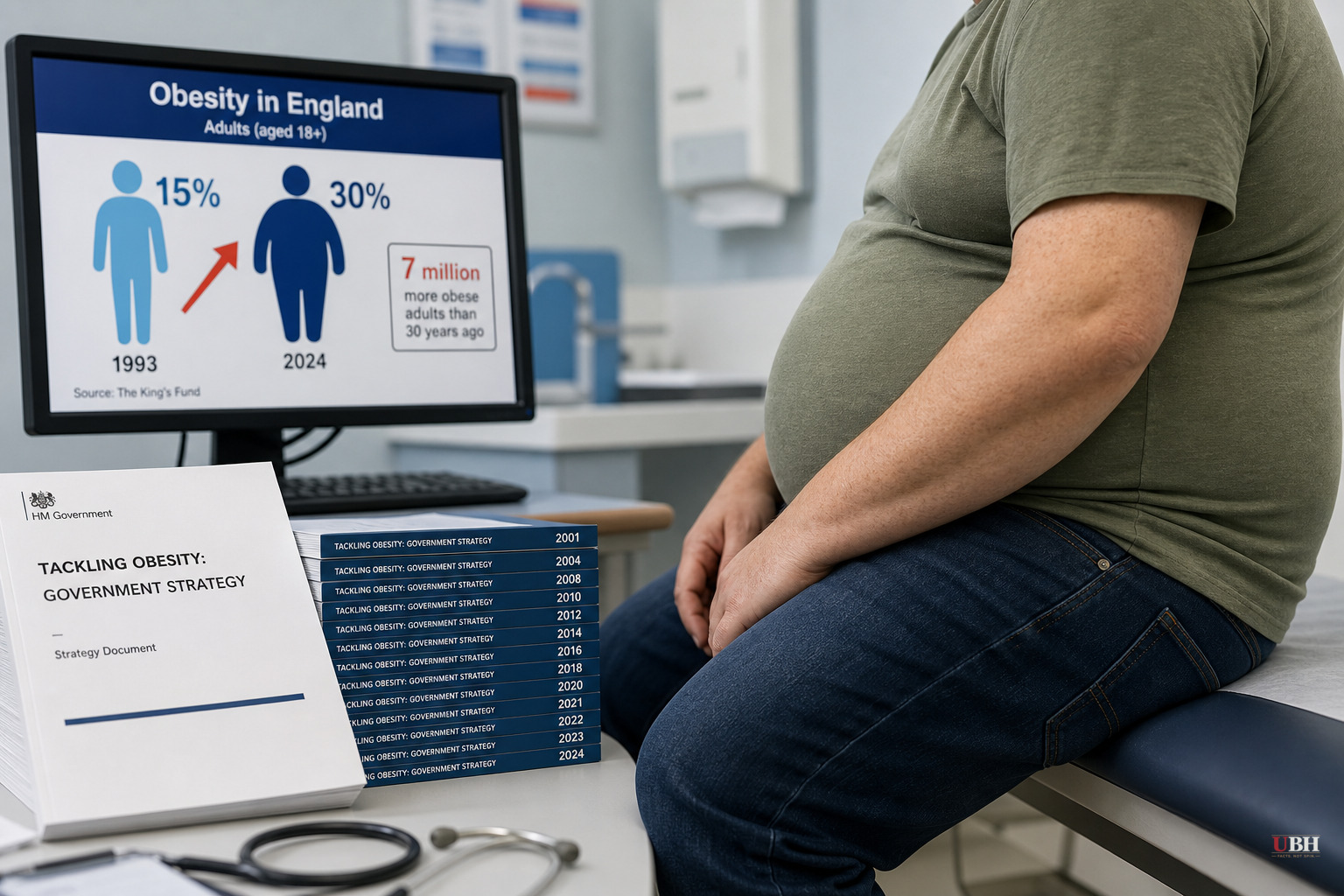
England's obesity rate has doubled in three decades. In 1993, 15% of adults aged 16 and over were classified as obese. By 2024, that number hit 30%, according to new analysis from the King's Fund reported by the BBC.
The numbers are striking. There are now 14 million obese adults in England. If rates had stayed at 1993 levels, that number would be 7 million lower.
Governments knew about this. Fourteen separate national obesity strategies have been launched since 1992, when data collection on obesity began, according to the BBC's reporting. Fourteen strategies, and the rate still doubled.
Dave Buck, senior fellow for public health at the King's Fund, put it bluntly: governments have "talked the talk, but not sufficiently walked the walk" on obesity. He called the trend among young adults "clearly worrying."
That youth trend is the most alarming part of this data. In 1993, just 6% of 16-to-24-year-olds were obese. In 2024, that figure was 18% classified as obese or severely obese. Adjusted for population growth, England now has 1 million young obese adults, 700,000 more than if rates had held steady.
Why This Happened
The King's Fund analysis points to structural economic shifts, not just personal failure. England moved from a manufacturing economy to a service economy. Fewer people work physical, blue-collar jobs. More people sit at desks all day.
Buck told the BBC that convenience is doing real damage: "With things like deliveries, it's very easy and convenient now to click a button and you get a takeaway at your door, so we're making it much easier to have high fat, high salt and high sugar foods."
Food economics matter too. Prices for less healthy food have fallen over the past 30 years, driven partly by supermarket competition and the explosion of fast food and delivery apps, per the BBC. Meanwhile the country has been through multiple cost-of-living crises, which pushes cash-strapped families toward cheaper, calorie-dense food.
The geography here isn't neutral either. Takeaways high in fat, salt and sugar are more concentrated in deprived areas, according to the analysis, and those are the same areas already carrying higher obesity risk. This is an access and affordability problem as much as a willpower problem.
The Money at Stake
This isn't just a public health talking point. Obesity and being overweight cost the UK economy roughly £126 billion a year, according to reports cited by the BBC. Of that, £12 billion lands directly on the NHS, about 7% of its entire annual budget.
That's taxpayer money. Every pound the NHS spends managing type 2 diabetes, heart disease, high blood pressure, osteoarthritis, and obesity-linked cancers is a pound not spent somewhere else. Fourteen government strategies later, taxpayers are still footing a growing bill for a problem that keeps getting worse.
What's Missing From the Conversation
The BBC's piece lays out the economic and environmental drivers well, but it stops short of asking why fourteen strategies failed. Governments have leaned heavily on public awareness campaigns, sugar taxes, and school food guidelines. None of it bent the curve.
There's also a fair point on personal responsibility that doesn't get much airtime in this kind of coverage. Cheap, convenient junk food is a real structural pressure, not an excuse. But individuals and parents still make daily choices about what lands on the plate and how often the delivery app gets opened. Blaming supermarkets and food delivery services entirely lets that go unmentioned.
What's Actually Being Proposed
The King's Fund analysis doesn't detail a fifteenth strategy in what's been reported so far. Buck's comments frame this as a call for tougher, more consistent government action rather than another awareness campaign. Whether that means further restrictions on junk food advertising, changes to school meals, or something more aggressive on food pricing remains an open question that the current data doesn't answer.
What is clear: the £12 billion NHS bill isn't shrinking on its own, and the fastest-growing obese population in England right now is under 25.
Sources used for this briefing
1 link from 1 independent newsroom (syndicated copies of the same report count once)
These are the sources it draws on, linked so you can verify.


