
Unbiased headlines. Facts, not spin.
Every story is an unbiased news briefing written from 110+ sources across the spectrum — sources linked so you can verify it yourself.
 energy
Notable (6/10)
June 20, 2026 at 10:47 PM
energy
Notable (6/10)
June 20, 2026 at 10:47 PM
Energy Security, Not Climate Ideology, Is Now the Main Argument for Clean Power. That Changes the Politics.
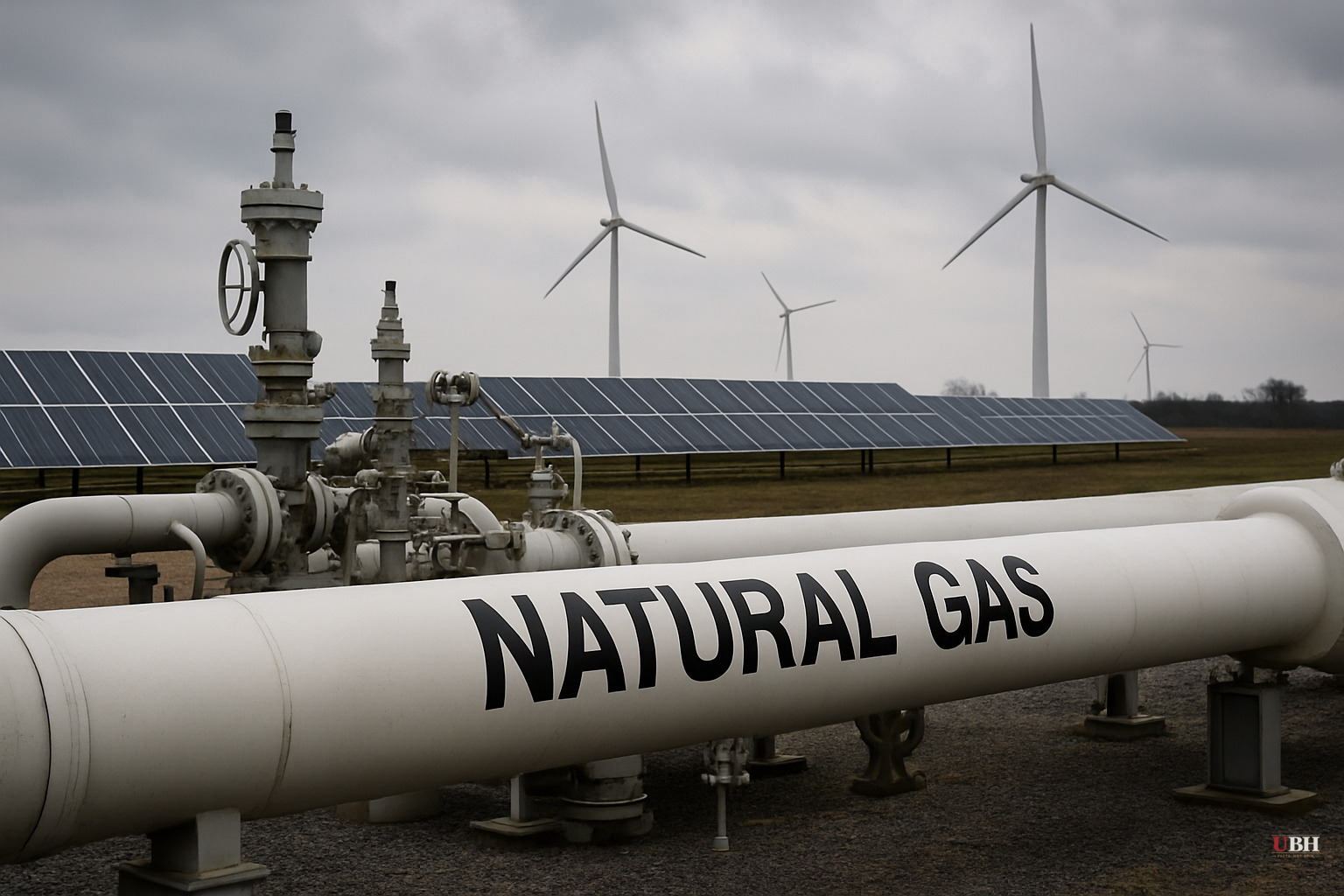
Since our coverage last noted that solar is now the cheapest power source in history while several U.S. states are simultaneously rolling back solar policy, a broader strategic argument has been gaining traction in energy policy circles: the clean power boom is no longer primarily a climate story.
According to OilPrice.com, the case being made by governments, militaries, and utilities worldwide is increasingly about supply chain control and geopolitical insulation, not emissions targets. Countries that generate power domestically from sun, wind, or nuclear don't depend on LNG shipments through the Strait of Hormuz, Russian pipeline politics, or OPEC production decisions.
Why the Framing Shift Matters
This is not a trivial rebranding exercise. When the argument for clean energy was primarily environmental, it could be politically contained — dismissed as a progressive priority by politicians representing fossil-fuel-producing regions. When the argument becomes national security, it gets harder to dismiss.
NATO allies watching Russia ration fuel in Moscow after drone strikes — a development OilPrice.com reported this week — are watching a textbook demonstration of what energy dependence looks like under military pressure. European nations that spent 2022 and 2023 scrambling to replace Russian gas are not going to forget that lesson.
The U.S. military has made similar calculations for years. The Department of Defense has long treated fuel logistics as a combat vulnerability, and its push toward microgrids and alternative fuels on bases is driven by operational security, not any particular affection for climate policy.
The Strongest Counterargument
Skeptics have a legitimate concern worth stating clearly: energy security does not automatically mean renewable energy. Natural gas from allied producers — Canada, Norway, Qatar — also reduces dependence on adversaries. Domestic oil and gas production achieves the same independence goal. Critics of the clean-energy-as-security framing argue it is still largely a climate agenda dressed in camouflage, and that intermittent sources like solar and wind create their own security vulnerabilities when grids go dark during low-generation periods.
A grid that fails on a calm winter night is not a secure grid, no matter how many solar panels are attached to it. Grid reliability and energy independence are related but distinct problems, and conflating them serves advocates more than it serves policymakers.
The honest answer is that energy security requires a mix — and reasonable people disagree sharply about what that mix should look like.
What's Actually Driving Investment
OilPrice.com frames the shift as one now observable across multiple major economies. The Gulf states are building solar at scale not because of Paris Agreement commitments but because burning their own oil domestically costs them export revenue. Japan is aggressively revisiting nuclear and expanding offshore wind because it imports virtually all of its fossil fuels. South Korea, same story.
China's calculation — as covered in our June 20 reporting on its undersea data center buildout — is explicitly about AI infrastructure and compute dominance, which requires enormous amounts of power. Domestic renewable generation is part of how Beijing plans to fuel that competition without remaining exposed to fuel import disruptions.
In the United States, the Inflation Reduction Act's clean energy incentives have survived partial political attack largely because the manufacturing jobs and data center power demand they support are distributed across red and purple states. Investment in renewable energy is now tied to economic benefits in politically diverse regions.
The Policy Gap This Creates
If energy security is the stated goal, then the policy toolkit should look different from the one designed around carbon reduction.
Carbon-focused policy prioritizes solar and wind because they emit nothing. Security-focused policy would also need to prioritize grid storage, transmission hardening, domestic manufacturing of critical components, and nuclear. Most current legislation does some of this but not enough, and the political coalitions behind clean energy investment have been slow to embrace nuclear with the same enthusiasm — even though it is the most energy-dense, weather-independent, domestically producible power source available.
If the new consensus is that clean power is a security asset, the question Congress has not fully answered is whether that consensus extends to the full technology stack that actual security requires, or whether it stops at the politically comfortable parts.
OilPrice.com does not offer that resolution, and neither do the sources available as of June 20, 2026. What is clear is that the argument has changed — and that change has consequences for which technologies get funded, which allies get prioritized, and which domestic industries survive the next decade of power competition.
Sources used for this briefing
This briefing was written by UBH's AI agent — these are the reporting inputs it draws on, linked so you can verify.


