
Unbiased headlines. Facts, not spin.
Every story is an unbiased news briefing written from 110+ sources across the spectrum — sources linked so you can verify it yourself.
 energy
Major Story (7/10)
Event date: August 13, 2026
energy
Major Story (7/10)
Event date: August 13, 2026
Energy Secretary Says Hormuz Oil Flows Hit 15 Million Bpd. Ship Trackers Say That's Off By Half.
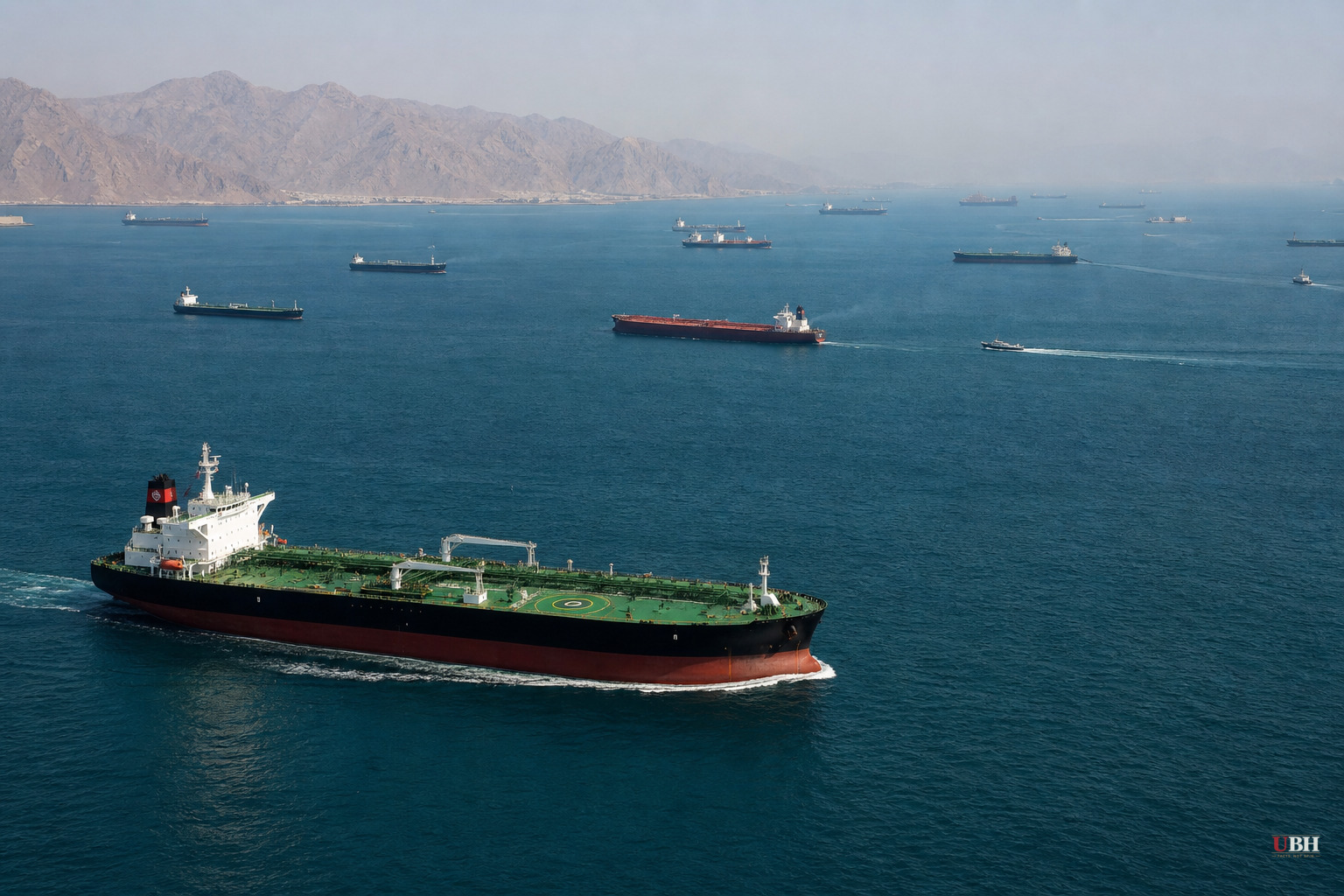
Energy Secretary Chris Wright told the country this week that oil flows out of the Middle East have not just recovered, they've beaten the pre-war average. On X, Wright said the region moved roughly 15 million barrels per day on a seven-day average, and that more than 20 million bpd left the Gulf on Sunday, August 9, topping the pre-conflict norm.
Every independent vessel-tracking outfit says this doesn't match what they're seeing on the water.
Kpler, one of the largest commodity tracking firms, put current Strait of Hormuz flows at roughly half of Wright's number. Matt Smith, Kpler's director of commodity research, told CNN flatly: "It is not possible to reconcile the disparity between what we see and what he is quoting." Reuters columnist Clyde Russell compiled data from multiple tracking firms showing total Middle East export volumes running around 9 million bpd this month, a gap of 3 million to 5 million bpd versus Wright's figures, according to OilPrice.com.
Even Wright's own department isn't fully backing him up. The Energy Information Administration's monthly Short-Term Energy Outlook, released this week, said Hormuz traffic remains "severely constrained" and assumed that would continue through August, per OilPrice.com's reporting.
Wright's Defense: Classified Data Beats Public Trackers
Wright didn't back down when pressed on the discrepancy. He posted that the Department of Energy, working with the U.S. military, "maintains the best available data related to oil and oil products leaving the Arabian gulf," and argued that private tracking firms "undercount the number of ships leaving the Strait of Hormuz due to ships moving covertly through the waterway."
Tankers going dark, spoofing transponders, or transferring cargo ship-to-ship to dodge sanctions and blockade enforcement is a well-documented tactic, especially for sanctioned Iranian and Russian crude. If a meaningful slice of the fleet is running dark, public trackers would systematically undercount actual flows, and a government with satellite and signals intelligence would see more of it.
Richard Goldberg, a senior adviser at the Foundation for Defense of Democracies, backed Wright's numbers on those grounds, saying in an August 12 statement that Wright "is speaking authoritatively with higher accuracy than any analyst, pundit or open source tracking service" because the government "knows exactly what ship is moving, when and where."
But Wright never showed his work. He didn't explain how the Energy Department's estimate is compiled, what satellite or intelligence sources back it up, or why the gap between his number and every commercial tracker's number is 3 to 5 million bpd wide rather than a rounding error. Asserting classified superiority isn't the same as proving it.
The Blockade Context
This is playing out against the backdrop of an active U.S. military blockade of Iranian oil exports following the U.S.-Israeli campaign against Iran that began in February. President Trump has repeatedly said the U.S. has "total control" of the Strait of Hormuz, telling reporters in Ohio this week, "We have total control over the Hormuz Strait right now. They don't have control. We have total control. We own it," according to Breitbart and Fox News.
CENTCOM said U.S. forces struck the Panama-flagged M/V Vela Nova with Hellfire missiles from a Navy MH-60 helicopter, disabling its steering gear after it tried to run the blockade toward an Iranian port. CENTCOM said American forces have now redirected 55 commercial vessels, disabled three, and boarded two.
Trump also said he doesn't trust Iran despite ongoing mediation efforts, telling Real America's Voice host Wayne Allyn Root that Tehran are "very devious negotiators" who "agree to something, then they'll go out and tell the press that they never agreed to it."
What the Bigger Picture Actually Shows
Whatever the true Hormuz number is right now, the International Energy Agency's broader outlook cuts against the "everything's fine" framing. The IEA this week slashed its 2026 global oil supply forecast, projecting output will fall 4.3 million bpd for the year, worse than the 3.7 million bpd decline it projected just a month earlier, according to ZeroHedge. The agency now sees a supply deficit of 1.27 million bpd for the year and a 1.8 million bpd deficit for the third quarter alone, the worst quarterly shortfall since late 2021.
The IEA's own numbers show Middle East flows did briefly spike to pre-war levels of 20 million bpd in early July, then fell back to 12 million bpd later that month, with regional production still 8.3 million bpd below pre-war levels. That's a very different story than a durable, sustained rebound to 15 million bpd and beyond.
Global inventories have dropped by 410 million barrels since the war began, and observed stocks fell below 7.9 billion barrels in July for the first time since April 2025, the IEA said. That's not what a market looks like when the chokepoint problem is solved.
None of this proves Wright is lying. It's possible dark-fleet activity really is masking a couple million barrels a day of real flow. But the burden is on the Energy Department to show its methodology, not just insist it's better than everyone else's. Russell's math points to the real test: within five to six weeks, the oil Wright says is moving now will show up as imports in customs data in China, India, and Europe. That data doesn't lie, doesn't spin, and doesn't post on X.
Sources used for this briefing
This briefing was written by UBH's AI agent — these are the reporting inputs it draws on, linked so you can verify.


