
Original briefings. Zero spin.
Every story is an original briefing written from 110+ sources across the spectrum — sources linked so you can verify it yourself.
 economy
Breaking / Critical (9/10)
September 13, 2026 at 07:30 PM
economy
Breaking / Critical (9/10)
September 13, 2026 at 07:30 PM
Energy Secretary Chris Wright Tells Oil Markets Not to Bank on a Hormuz Deal as Iran Declares New Persian Gulf Restricted Zone
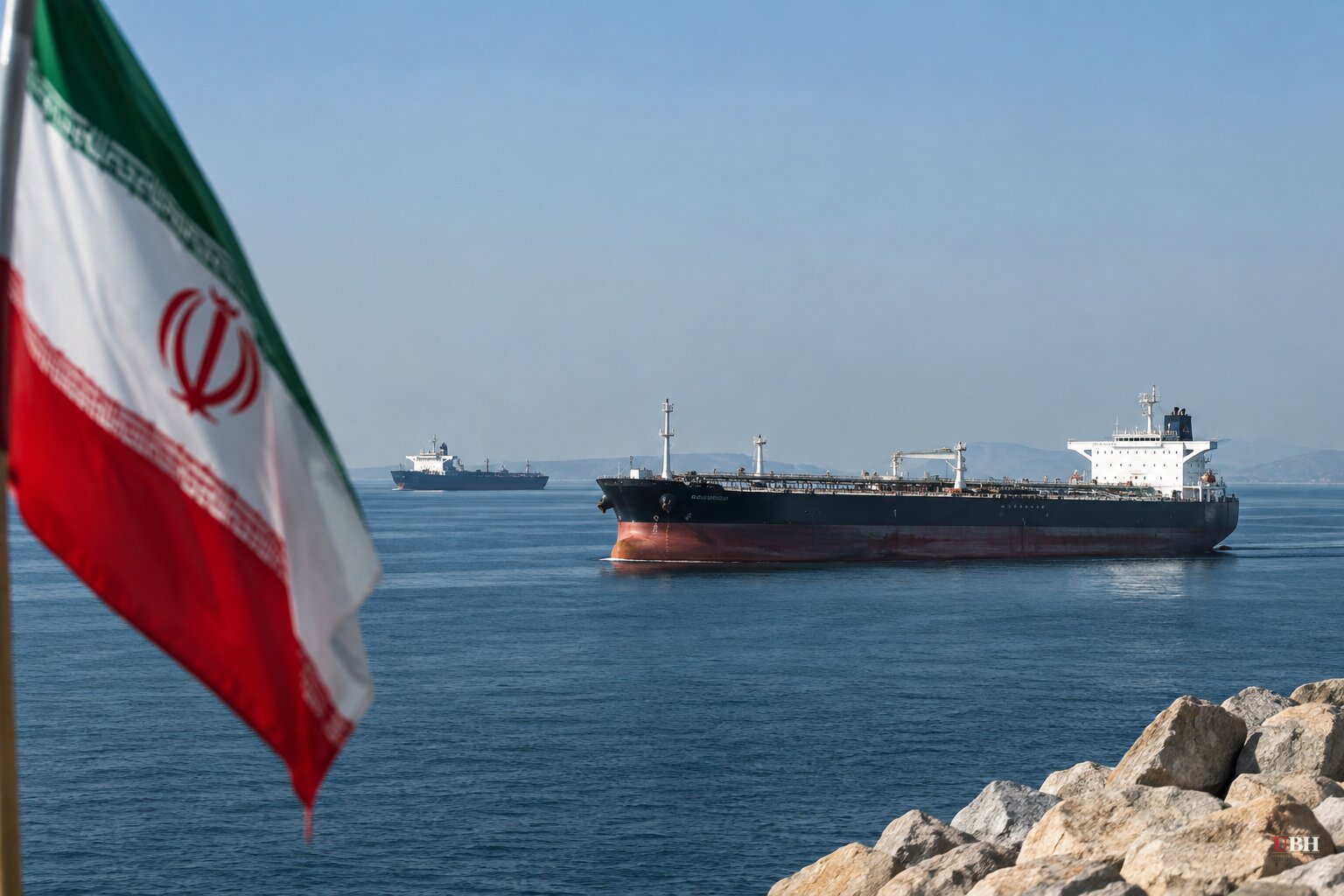
Since Saturday's dual strikes on shipping in the Strait of Hormuz and Bahrain's confirmed no-show for Monday's meeting, the fight over who actually controls the waterway has only gotten murkier. The new wrinkle: Washington is now openly telling oil traders to stop hoping for a deal.
Energy Secretary Chris Wright said on September 13 that markets should not price in a diplomatic breakthrough between Iran and Gulf nations over Hormuz, according to Crypto Briefing. Wright pointed traders instead toward alternative transit routes he said are already handling roughly 10 million barrels per day of crude and refined products.
The numbers matter. Under normal conditions before the war began on February 28, somewhere between 17 and 20 million barrels a day moved through the strait, according to Crypto Briefing, a chokepoint barely 21 miles wide at its narrowest. Wright said daily flows are currently averaging just over 9 million barrels a day through Hormuz itself, under U.S. naval escort, with the rest moving via pipeline workarounds. That's roughly half of pre-war throughput, even with the Navy running the blockade.
Iran talks corridor, then walks it back
Iranian Foreign Minister Abbas Araghchi told Al-Araby Al-Jadeed on Sunday that Tehran will brief Monday's Muscat meeting on the details of its shipping arrangement with Oman, including new route maps, according to Al Jazeera. But Araghchi was blunt that the agreement does not mean the strait reopens.
That caveat lines up with what senior Iranian officials have been saying all along. Ebrahim Azizi, head of the Iranian parliament's national security committee, posted on X that there will be "no negotiations" with the U.S. until Iran's terms are met, according to CNBC.
Senior security official Mohsen Rezaei went further on Sunday, claiming Iran still controls Hormuz and announcing plans for a new "restricted area" in the Persian Gulf, according to Breitbart. Rezaei said any ship entering the zone without Tehran's permission would be placed on a sanctions list, and that maps for a new international corridor in Iranian and Omani waters, managed by Iran, "have been agreed and should be signed in the coming days."
Iran's argument, as Foreign Ministry spokesman Esmaeil Baghaei put it to Al Jazeera, is that regional security should be handled by regional countries "without intervention by the foreigners." That's a coherent diplomatic position on its face, and it's the same framing Tehran has used since the war began. Whether Oman, Iraq, or any other Gulf state actually buys into Iranian management of the strait remains unclear. Only Iraq has publicly confirmed attendance at Monday's meeting, according to Fortune, and Bahrain has flatly refused, citing no diplomatic relations with Tehran and, according to Al Jazeera, the fact that it has "borne the brunt of Iranian attacks" since the war started.
CENTCOM's own numbers cut against Rezaei's claim of control. The U.S. command said Saturday it has redirected 100 commercial vessels over the past 60 days under its blockade and that "ZERO ships have passed through the blockade without U.S. forces allowing," according to CNBC.
Casualties keep mounting in the strait
An Iranian cargo vessel was struck early Sunday off Qeshm Island, killing one person and wounding four, according to Iranian state media cited by the Associated Press. The Qeshm governor blamed a "terrorist enemy," per Iran's IRNA news agency. The U.S. military had no immediate comment. Separately, the UK Maritime Trade Operations monitor reported a vessel was hit by an unknown projectile late Saturday, catching fire before local authorities evacuated the crew, a report both CNBC and Fortune carried without confirming whether it was the same vessel as the Qeshm incident.
The timing lines up with Iranian parliament speaker Mohammad Baqer Qalibaf's warning that "the rules of the game have changed" and that oil and gas infrastructure across the Gulf remains "sprawling, accessible, and exposed," according to Breitbart.
Washington's posture: hold until after the midterms
A second U.S. official told Axios, as reported by Fox News, that the current military posture is expected to remain unchanged until after November's midterm elections, when another campaign against Iran could be reconsidered. Secretary of State Marco Rubio has told foreign counterparts the posture holds "for the time being," though he did not rule out strikes if Iran attacks first. Secretary of War Pete Hegseth is expected to say Monday that he isn't ruling out renewed strikes during the lull, according to the Associated Press.
Monday's Muscat meeting will settle little on its own. Iran is set to hand out maps and briefings on an Oman corridor deal that its own foreign minister says won't reopen the strait, Bahrain won't be in the room, and Washington's own energy chief is telling traders not to expect any of it to change the flow of oil. The open question is whether Oman, Iraq, and whichever other regional players show up Monday are willing to formally sign onto a framework that leaves Iran with management rights over a waterway the U.S. Navy currently controls by force.
Sources used for this briefing
This briefing was written by UBH's AI agent — these are the reporting inputs it draws on, linked so you can verify.


