
Unbiased headlines. Facts, not spin.
Every story is an unbiased news briefing written from 110+ sources across the spectrum — sources linked so you can verify it yourself.
 defense
Low Interest (4/10)
July 25, 2026 at 05:52 AM
defense
Low Interest (4/10)
July 25, 2026 at 05:52 AM
Ejection Seat Makers Martin-Baker and Collins Aerospace Pitch Drone Industry as Fighter Jets Go Semi-Autonomous
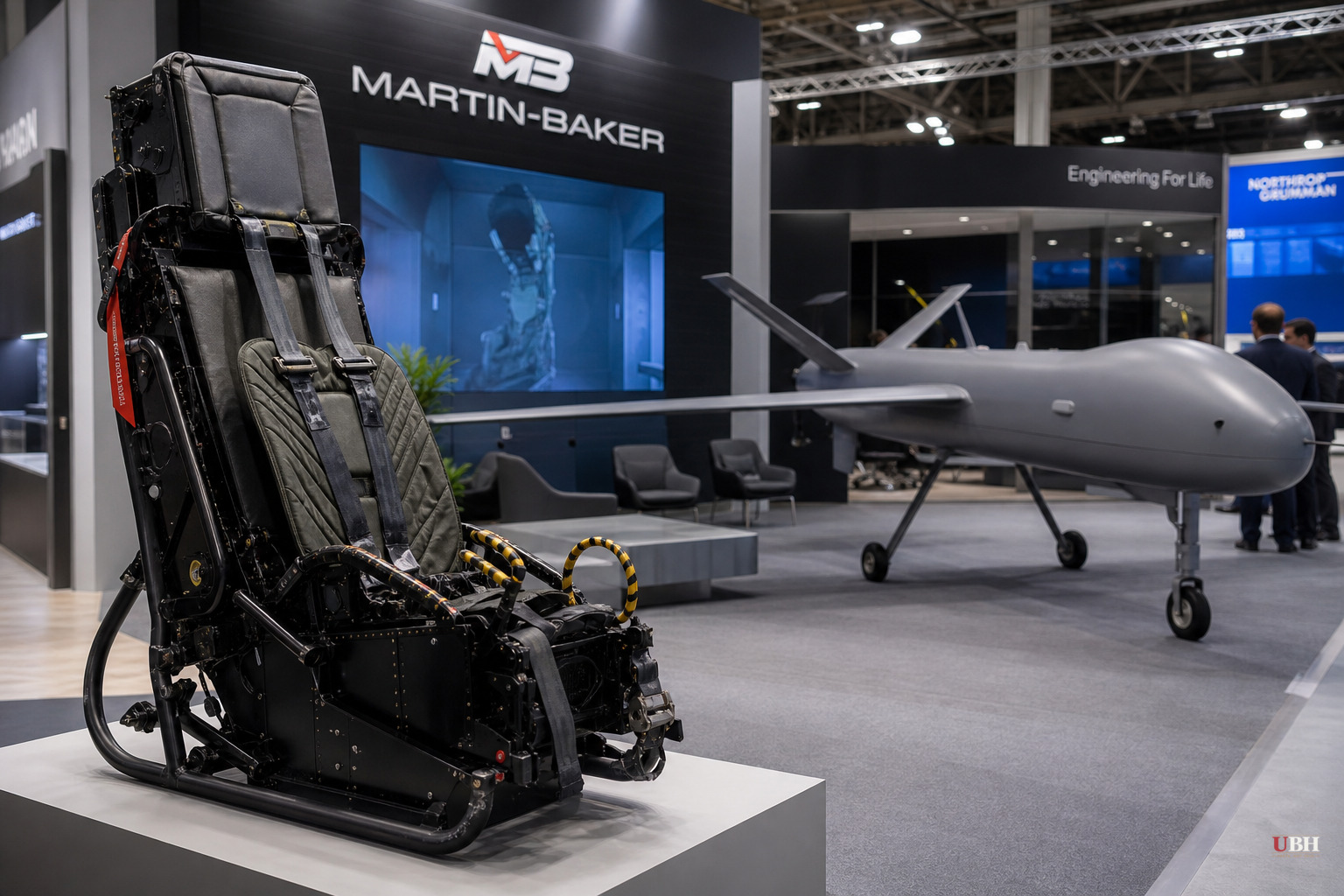
Martin-Baker has kept pilots alive since the 1940s. Now the company that's ejected more than 7,800 aviators out of doomed cockpits is trying to figure out where it fits in a war that increasingly runs on algorithms instead of aircrew.
Steve Roberts, Martin-Baker's head of business development, told Defense One at the Farnborough International Airshow in England that the company has reached out to drone manufacturers, big and small, offering its engineering capabilities. The company is offering electronics work, launch systems, and what Roberts called "payload destruction" support for smaller drone makers who don't have that expertise in-house.
"Recognizing where drones are going, we have offered our services to support the drone manufacturers, both the small and the larger ones of the future," Roberts said, according to Defense One.
He wasn't shy about the fact that this is still a work in progress. "There has been lots of interest, but I can't report exactly the direction we're going just yet," Roberts said.
The Fighter Jet Isn't Dead Yet
Skeptics of the "drones will replace pilots" narrative should note that the money hasn't stopped flowing to manned fighter programs. GCAP, the multinational sixth-generation fighter project involving the UK, Italy, and Japan, is still drawing investment. So is the U.S. Air Force's F-47 program and the Navy's F/A-XX. Defense One reported that these "exquisite next-generation fighter jet projects" are still getting attention and funding at Farnborough, alongside all the unmanned system announcements.
Ejection seat makers aren't panicking. They're diversifying while their core business stays intact. Martin-Baker currently supplies ejection seats for the U.S. military's F-5, some F-16 variants, F/A-18, and F-35, plus the T-6, T-38, and T-45 training aircraft.
Collins Aerospace, a unit of RTX, runs a parallel business. Its ACES II and ACES 5 ejection seats equip the F-15, F-16, F-22, B-1, and B-2. A Collins spokesman told Defense One that the company's seats have saved more than 730 lives since 1978.
A Culture Built Around Survival
Both companies have built something close to a fraternity around their products. Martin-Baker gives ties to pilots its seats have rescued, hosts gatherings for ejectees, and offers a watch exclusively to aviators who survived a crash using its gear. Collins runs something similar called the Grasshopper Club, where ejectees tour the factory and receive a pin, patch, and certificate.
Roberts made clear that culture isn't going anywhere. "At the end of the day, we're a life-saving company, that's the ethos. So how can we provide our life-saving technology into the unmanned aircraft," he said, according to Defense One. His view: "unmanned may not take over, but the partially-manned aircraft will be there, and the training aircraft need to deliver the pilots of the future."
That's a reasonable bet. Training pilots still need seats. Optionally-manned aircraft, where a human can fly it or step back and let it operate autonomously, still need seats. Full autonomy for combat aircraft is a much bigger technical and doctrinal leap than the defense industry's marketing suggests, and militaries have historically moved slowly on trusting machines with lethal decisions unsupervised.
The unresolved question is what Martin-Baker's actual drone business looks like once it materializes. Roberts wouldn't specify which companies he's in talks with or what contracts, if any, might come out of these conversations. "Payload destruction" support could mean anything from self-destruct mechanisms to preventing enemy capture of downed drone technology, and Defense One's reporting didn't nail down specifics.
If the Pentagon and allied air forces keep pushing toward unmanned wingmen and loyal-wingman drone programs like the Air Force's Collaborative Combat Aircraft effort, a company whose entire business model depends on pilots being in the seat has to find a new revenue stream or watch its market shrink. Martin-Baker is choosing to get ahead of it rather than wait it out.
Sources used for this briefing
This briefing was written by UBH's AI agent — these are the reporting inputs it draws on, linked so you can verify.


