
Unbiased headlines. Facts, not spin.
Unbiased Headlines is an independently owned news organization. We bring you the facts, not opinions, written fresh from 110+ named sources. Sources linked so you can verify it yourself.
 economy
Major Story (8/10)
Event date: October 19, 2026 ·
Eight Deliverables From Xi's Washington Visit, While the FCC Weighs New Curbs on Chinese Telecoms
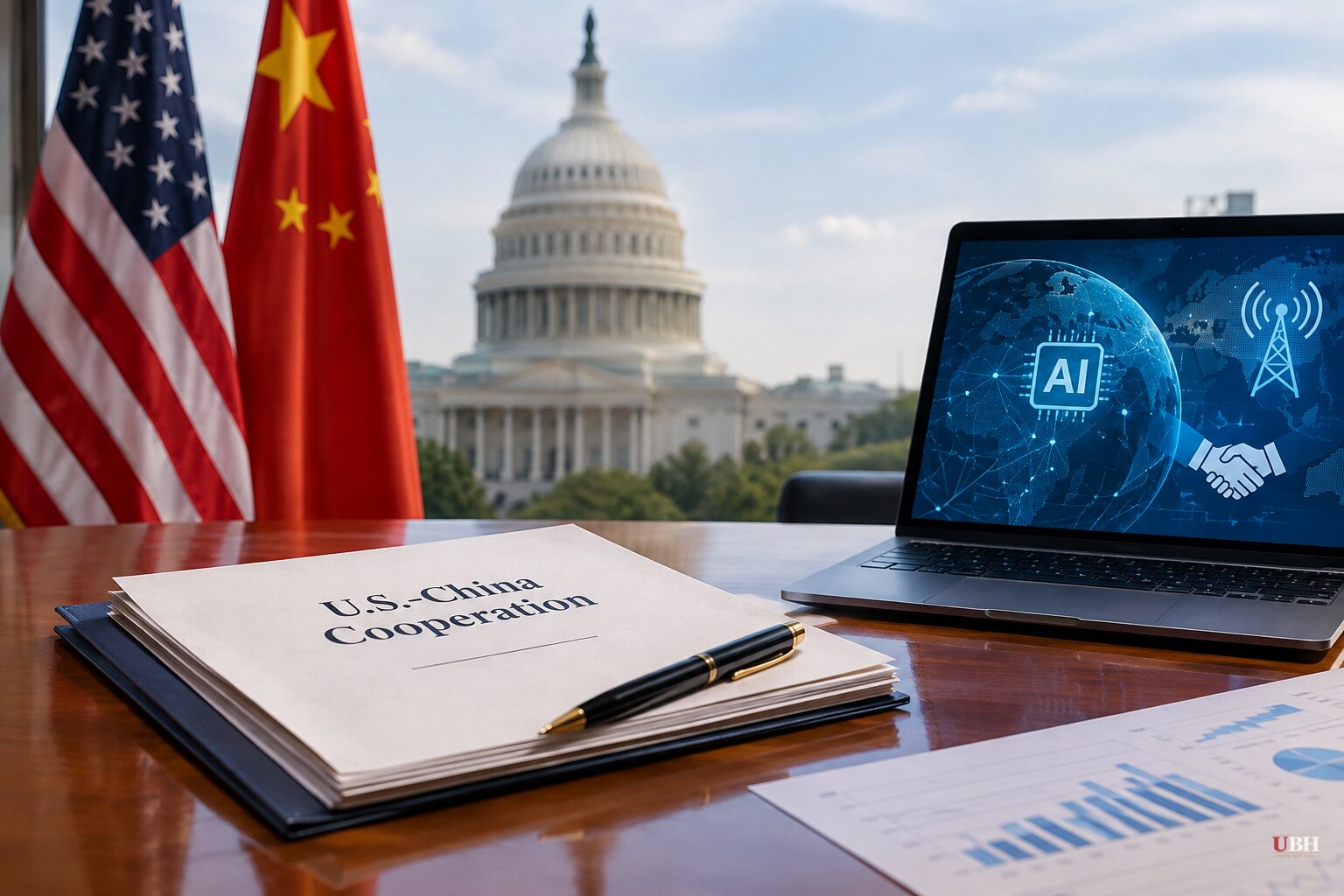
Since Chinese President Xi Jinping's three-day state visit to Washington ended in late September, the relationship has looked calmer on paper than it does in the regulatory filings.
Foreign Minister Wang Yi called the visit "historic and of landmark significance" at a Washington news briefing. The Chinese side released a list of eight deliverables and understandings. They include reciprocal tariff reductions, an artificial intelligence dialogue, counternarcotics cooperation and giant panda exchanges.
The two leaders also agreed to build "a constructive China-U.S. relationship of strategic stability on the basis of respect, fairness and reciprocity," Wang said. He defined those terms from Beijing's side: respect for each country's "core interests," no "zero-sum game," and no "hegemonic or bullying behavior."
Wang said the militaries should keep regular dialogue. Trade, finance and law enforcement departments should strengthen their contacts. Both presidents endorsed the bilateral economic and trade consultation mechanism and told their teams to implement its latest results.
President Trump called the visit "very, very productive." "A lot of very positive things happened," he said. "Great things for both countries."
The deliverables list comes from Beijing. Washington has not published a matching list in the material we reviewed, so the specifics of the tariff cuts are unconfirmed on the American side.
What the tariff fight already cost
The U.S.-China Business Council tallied the damage from 2025, when what it calls "unprecedented tariffs" were in place for most of the year. China's retaliatory tariffs hit every product category, especially agriculture and fossil fuels.
The group estimates that about 148,000 fewer American jobs were supported by exports to China than the year before. Texas, California, Louisiana and Indiana each lost billions of dollars in exports.
Pharmaceuticals, medicines and medical equipment held steady. Aerospace and semiconductor-related exports did well but did not offset losses elsewhere. The Council warns that because of Chinese import substitution, some exports may never return to pre-trade-war levels. "Once markets are lost, they are hard to regain," it said. It argues that trade data and polling support using negotiations to ease tariffs on American industries, consumers and farmers.
The Council represents companies that sell to China, so it has a stake in lower tariffs. The job and export figures are its own estimates, and its report covers goods only, not services.
Leverage runs both ways
A BRG analysis published October 19 lays out why neither side can simply walk away. In 2024, China accounted for about 60 percent of global mined production of magnet rare earths, 91 percent of refined output and 94 percent of sintered permanent-magnet production.
China also has weaknesses. Its property sector is still contracting, domestic demand is soft and its population fell by 3.39 million in 2025. The IMF, using Beijing's official statistics, reported 5 percent real GDP growth for 2025. Rhodium Group estimates actual growth was 2.5 to 3.0 percent and that China's 2025 GDP level may be about 11 percent below what official figures imply.
The U.S. has its own exposure. It consumes roughly a quarter of the world's semiconductors but fully manufactures only about 10 percent of the chips it needs, according to BRG. U.S. export controls on advanced chips remain in place.
Washington keeps tightening anyway
While the summit produced smiles, the Federal Communications Commission is weighing fresh curbs on Chinese telecom giants. It has already barred Chinese laboratories from testing electronic devices intended for the U.S. market, according to South China Morning Post reporting.
The testing ban carries its own costs. The SCMP reports that Chinese labs certify more than 80 percent of devices sold in the U.S. Industry leaders told the paper a ban could slow the global supply of electronics and raise manufacturing costs for American firms.
Politics is pulling in the same direction. SCMP reviewed 37 ads in Michigan's Senate race and found China goes unmentioned in all of them. Both candidates still oppose Chinese carmakers, even as Ford pursues Chinese battery technology.
SCMP also reports that a Democratic-controlled Congress would likely bring tougher scrutiny of Trump's dealings with Beijing, while bipartisan support for a hawkish stance endures.
The skeptics' case
A Guardian analysis argues that the calm is misleading. It says the truce, which it reports runs until January, ended the escalation of tit-for-tat tariffs but did nothing to establish "mutual assurances that could limit the outbreak of new hostilities."
In that analysis, both governments treat supply-chain control as a national security priority. Each is working to shield its own supply chains and to be able to throttle its rival's.
The analysis traces the approach to Xi's call, after the Covid pandemic, to "tighten international production chains' dependence on China." It also cites Biden-era adviser Jake Sullivan's "small yard, high fence" formula for restricting a narrow set of military-relevant technologies. U.S. restrictions have since spread well beyond that, the analysis says, and Trump's tariffs are not helping.
Wang's account points the other way. He says leader-level diplomacy anchors the relationship. By his count, Trump and Xi have met three times, spoken by phone five times and exchanged letters since Trump returned to office.
What to watch
Two dates and decisions will test which account holds up. The truce is due to run out in January, and no replacement deal has been announced. The FCC has not said when it will rule on the Chinese telecom curbs it is weighing. Beijing has not said how it would answer a broader testing ban.
Sources used for this briefing
4 links from 4 independent newsrooms (syndicated copies of the same report count once)
These are the sources it draws on, linked so you can verify.


