
Unbiased headlines. Facts, not spin.
Unbiased Headlines is an independently owned news organization. We bring you the facts, not opinions, written fresh from 110+ named sources. Sources linked so you can verify it yourself.
 economy
Notable (6/10)
Bangladesh Sets Up Garment Wage Board Today After Protests Close Dozens of Factories
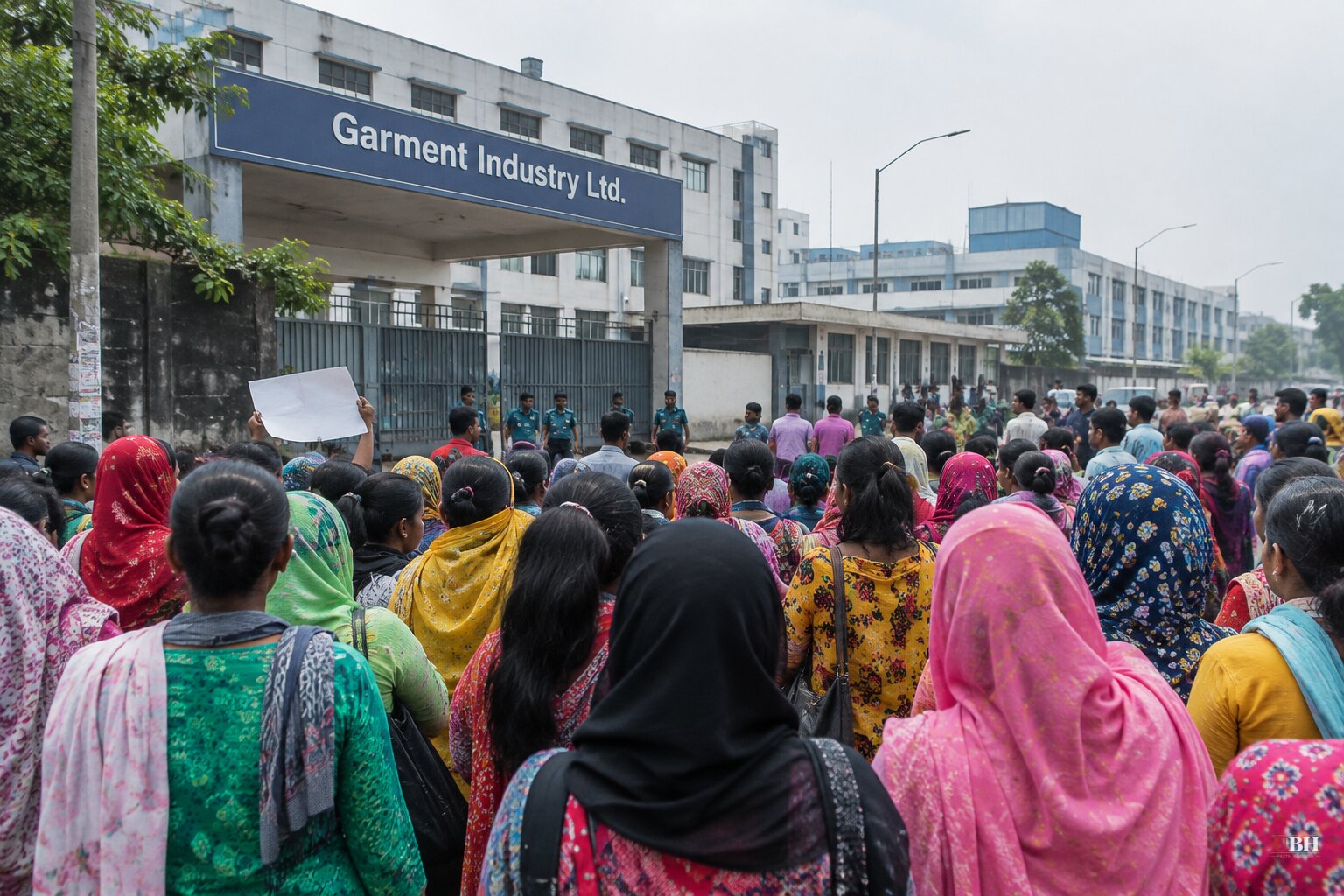
Bangladesh is set to form a wage board today, Sunday, Nov. 1, to review pay in its garment industry. The move follows a day of street protests, road blockades and clashes with police that shut dozens of factories around Dhaka.
Labour and Employment Minister Ariful Haque Chowdhury announced the decision Saturday afternoon. He said the board would be formally constituted after talks with labour leaders and industry representatives, and he urged workers to go back to their jobs. In his words, reviewing the wage structure answers their key demand.
What workers want
The central demand is a minimum monthly wage of Tk 30,000 (about $245). The current minimum is Tk 12,500. That is a raise of 140%.
Workers say food, housing, transport and healthcare costs have eaten away their purchasing power. Protesters also want an end to alleged blacklisting, reinstatement of dismissed colleagues, and a halt to arbitrary firings.
Workers allege that factory owners jointly keep blacklists that stop dismissed employees from getting jobs elsewhere. That allegation comes from the workers and unions. Owners have not been quoted responding to it.
Khairul Mamun Mintu, legal affairs secretary of the Bangladesh Garments and Sweaters Workers Trade Union Centre, said workers can no longer support their families on Tk 12,500. Unless the demands are met, he warned, the protests will continue.
Mintu also said the labour minister had promised the wage board would be formed by October. That did not happen, and he said it fueled the anger.
Saturday's unrest
The protests hit three industrial areas on Saturday, Oct. 31. By one tally, owners declared holidays at 25 factories in Ashulia, 13 in Mirpur and 12 in Gazipur, at least 50 in all. Mohammad Mominul Islam Bhuiyan, superintendent of Ashulia Industrial Police-1, put the Ashulia number at about 30 early in the afternoon and later said 25 were closed.
In Ashulia, workers poured into the streets of Kathgara Bazar, Noyapara, Zirabo and Nischintapur. Police and workers said protesters threw bricks and stones at factories including Continental, AR Jeans and CWA, smashing windows.
Bhuiyan said one police member was hospitalized after being hit in the head by bricks allegedly thrown by protesters. Another police account put the number of injured officers at six, along with several workers and passers-by.
Police fired tear gas and sound grenades. Police in one area also used batons. Protesters occupied the Abdullahpur-Baipail road in Nischintapur.
Industrial police recovered three objects resembling crude bombs from roads outside factories in Nischintapur. Their origin is unknown. Police referred the matter to the Anti-Terrorism Unit.
In Mirpur, workers blocked roads around Mirpur-10 and Mirpur-11 from the morning. Clashes broke out near the Shah Ali shrine and market in Mirpur-1 around noon, after an altercation at Himalaya Garments, and several shops were vandalized.
Mirpur Division Deputy Commissioner of Police Mohammad Naser Rikabdar said those involved in the vandalism would be identified through CCTV footage and face legal action. Commuters were stranded for hours until traffic eased around 3 pm.
In Gazipur, workers blocked the Dhaka-Tangail Highway near Palli Bidyut in Kaliakair. Officer Shahidul Islam said the blockade was still going at 4:30 pm.
A communication gap, and an industry under strain
A garment factory official in Ashulia, speaking anonymously to The Daily Star, said a Friday-night meeting at the Labour Ministry had announced that the wage board process would start by Sunday. Workers kept protesting, he said, because that decision had not been properly conveyed to them.
The stakes for the economy are large. The ready-made garment sector employs about 4 million people, generates more than 80% of export earnings and accounts for roughly 10% of GDP. It is the world's second-largest garment exporter after China and supplies many leading Western brands.
Chowdhury warned that prolonged closures could delay export shipments and payments from international buyers. He said that would add difficulties for manufacturers and workers alike.
Manufacturers say they are already squeezed. They cite rising production costs, periodic gas and electricity shortages, and uncertainty in energy markets tied to tensions in the Middle East.
That sets up the tension at the core of the wage fight. Workers say Tk 12,500 does not cover a household's basic costs. Employers and the government point to an industry with thin room for added costs and orders that depend on factories running.
No figure has been set for a new minimum, and the labour ministry has not said how long the board will take. The immediate test comes this week. Union leaders say workers will stay in the streets unless their demands are met, and factory owners are watching to see whether Sunday's board announcement is enough to reopen the floors.
Sources used for this briefing
7 links from 7 independent newsrooms (syndicated copies of the same report count once)
These are the sources it draws on, linked so you can verify.


