
Unbiased headlines. Facts, not spin.
Unbiased Headlines is an independently owned news organization. We bring you the facts, not opinions, written fresh from 110+ named sources. Sources linked so you can verify it yourself.
 economy
Notable (5/10)
Council of Europe Congress Urges Planned Retreat From Eroding Coasts, Citing Losses Above €1 Billion a Year
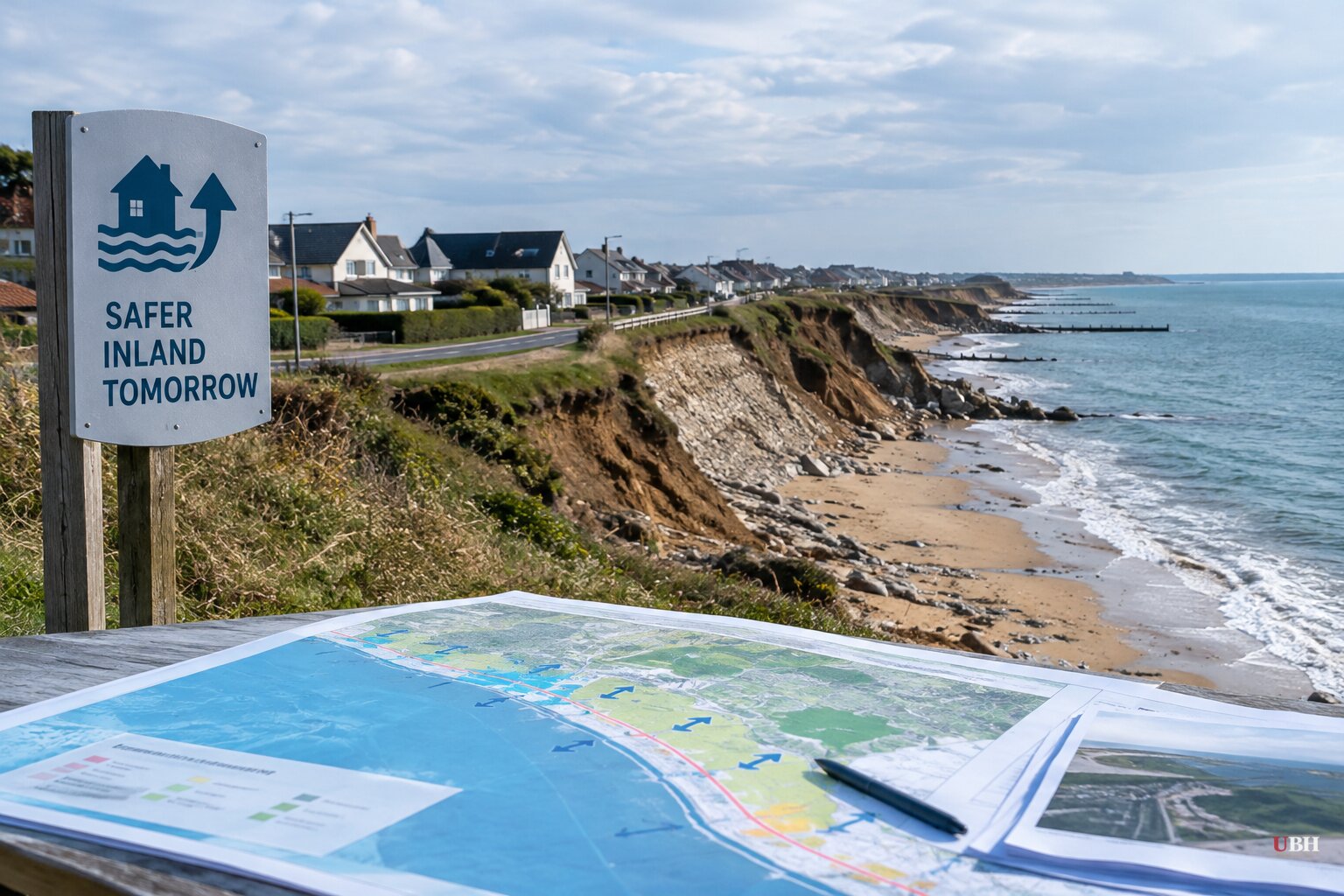
The Congress of Local and Regional Authorities of the Council of Europe adopted a resolution and recommendation on Oct. 27 at its 51st session in Strasbourg. The message: many of Europe's coasts should move toward "planned retreat."
That means banning or restricting new development in hazard zones and relocating existing homes, businesses, roads and rail to higher ground inland.
The numbers behind the call
The Council says coastal erosion already costs the 28 countries covered, the EU states and the United Kingdom, more than €1 billion a year. It says that could reach €800 billion annually by the end of the century if effective action is not taken.
More than a quarter of Europe's coastline is eroding, according to the Congress. Nearly half of Europeans live near a coast, and coastal regions generate about 40% of European GDP.
In France, around 900 kilometres of mainland coastline are receding, affecting more than 500 municipalities, according to French estimates cited in the report.
Co-rapporteur Anthony Buchanan argued that defending coasts with seawalls "is becoming less sustainable." He said sea-level rise has doubled in recent years and is on course to climb another 44 cm by 2100. He also said extreme storm surges are likely to occur 20 to 30 times more often by 2050.
Co-rapporteur Fanis Spanos framed it as a rights issue. "Continued occupation of high-risk zones puts families, livelihoods, and heritage at risk, raising concerns on human rights to life, to private life and property," he said. He also called coastal erosion "a fundamental challenge to territorial balance."
What the Congress is asking for
Local and regional governments are asked to identify places where defenses cannot be sustained and prepare options for moving assets inland. The tools include updated risk maps, no-build and buffer zones reviewed periodically, temporary land-use permits and demountable architecture.
Adaptation plans would have to weigh legal, social and financial consequences. The report calls for transparent consultation with affected residents, alongside measures to protect livelihoods, coastal heritage and vulnerable communities.
The recommendation also leans on national capitals. It asks national governments to provide legal frameworks, expert guidance and money, including buyout schemes, relocation grants and new insurance arrangements.
The Congress still wants protective structures in some places. It recommends pairing them with dune restoration, wetland conservation and better sediment management.
A campsite, and a very large lagoon
The report's showcase example is Quiberville-sur-Mer in Normandy. A €9 million investment moved a public campsite inland, and municipal revenue rose 25% afterward.
A campsite is not a village. The report's own Venice scenarios show how fast the costs climb:
- Engineered dikes may be needed beyond 0.5 metres of sea-level rise, which could occur by 2100 even with low emissions. Cost: up to €4.5 billion, and not a permanent fix.
- A super levee closing the lagoon could protect the city against up to 10 metres of rise. Initial cost: more than €30 billion.
- Relocating the city, residents and landmarks may be necessary beyond 4.5 metres of rise, projected after 2300. Cost: up to €100 billion.
The competing estimates
The €800 billion figure is a worst-case end-of-century number, and the European Commission's research arm puts the danger much lower with defenses in place. The Commission's Joint Research Centre projects annual coastal-flood damage across the EU and UK of almost €240 billion by 2100 without mitigation and adaptation. Its analysis says moderate emissions cuts combined with higher flood barriers around populated and economically important districts might avert about 95% of that damage.
The Commission's EU Blue Economy Report 2025 estimates annual coastal-flood damage of €137 billion to €814 billion by 2100 across the EU-27. The upper end assumes high emissions and no increase in coastal protection.
Those are flood-damage projections. The Council's €1 billion-plus figure measures erosion. The estimates cover different areas and rest on different assumptions, so they are not interchangeable.
The JRC finding sits directly against the Congress's argument that hard defenses are fading as an option. Spanos and Buchanan say barriers are getting harder to sustain. The JRC analysis says well-placed barriers plus emissions cuts could prevent most projected damage.
Who pays, and what comes next
A planned retreat means governments buying out owners, banning construction on land people own, and paying to rebuild infrastructure elsewhere. The Congress puts that bill on national governments, and no price tag for the whole program appears in the resolution.
No national government has announced it will adopt the recommendation. Delegates invited further discussion at COP31 in Antalya, scheduled for Nov. 9-20. It remains unclear whether any capital will commit money for buyouts and relocation grants.
Sources used for this briefing
7 links from 6 independent newsrooms (syndicated copies of the same report count once)
These are the sources it draws on, linked so you can verify.


