
Unbiased headlines. Facts, not spin.
Unbiased Headlines is an independently owned news organization. We bring you the facts, not opinions, written fresh from 110+ named sources. Sources linked so you can verify it yourself.
 economy
Major Story (7/10)
Event date: October 28, 2026 ·
Russia Sends First Grain Shipment Through Arctic Port of Murmansk as Black Sea Trade Stalls
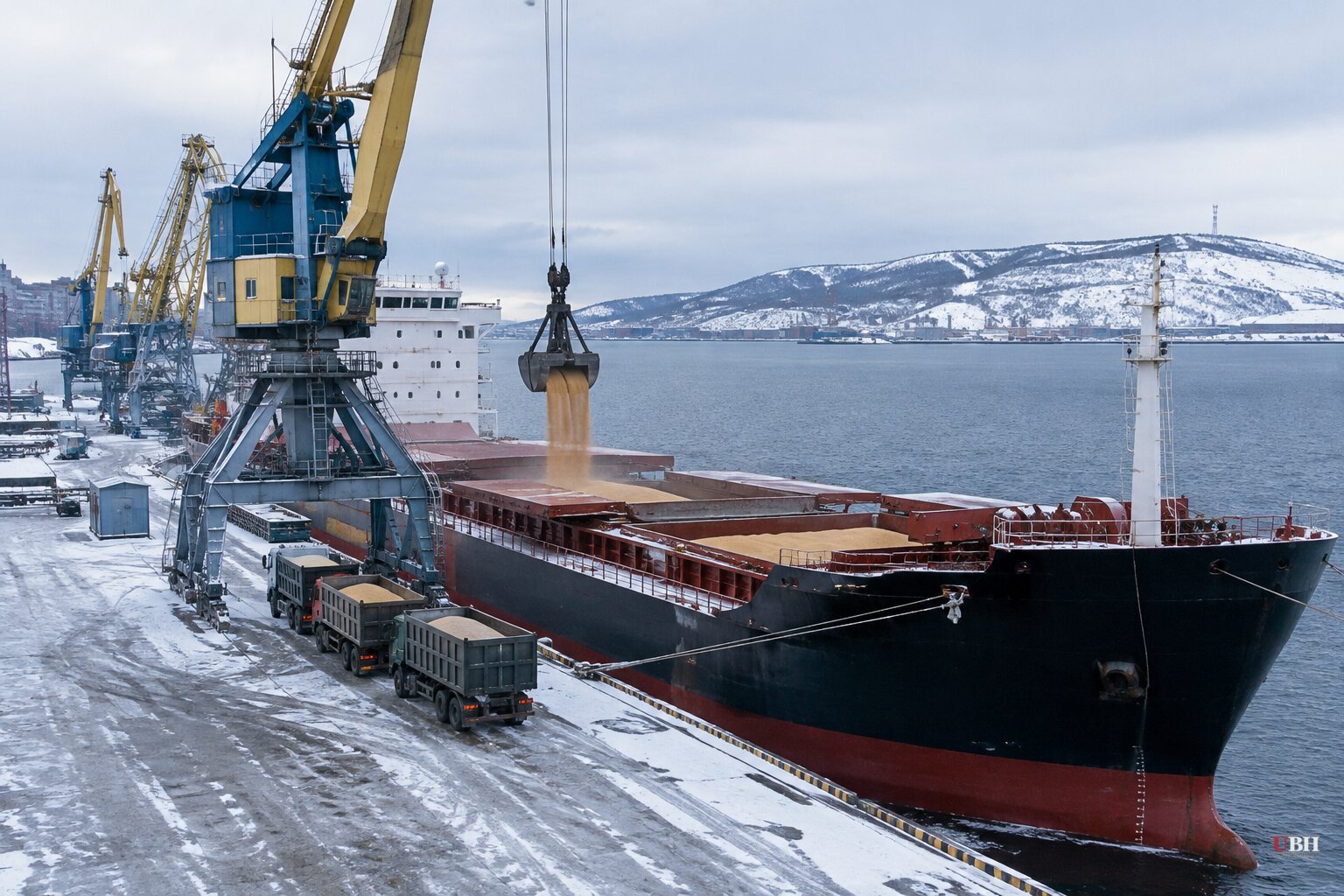
Russia has started moving grain through the Arctic port of Murmansk. The port operator and the trading firm Demetra Holding announced the first shipment on Wednesday, Oct. 28.
It is a small start. The first batch is 3,400 metric tons, which arrived in 47 railcars, according to the port and Demetra. A bulk carrier, the New Born, is scheduled to take on roughly 28,000 to 29,000 metric tons of wheat bound for Casablanca, Morocco.
Why Murmansk
Russia and Ukraine have been hitting each other's ports and ships since the new grain marketing season opened in July. The once-booming Black Sea agriculture trade has been at a standstill since.
Murmansk Commercial Seaport said it is "swiftly opening up an alternative route to foreign markets for Russian farmers" at a time when traditional routes face restrictions. The port sits almost 2,000 km (1,240 miles) north of Moscow, near the Norwegian border, and can be approached through neutral waters. Allied convoys delivered goods to the Soviet Union there during World War II.
The terminal had to be rebuilt for the job. Equipment previously used for mineral fertilizers and coal was reconfigured to handle wheat.
The Baltic Is Carrying Most of the Load
Murmansk is a sideshow next to the Baltic. Russian Baltic ports handled 1.2 million metric tons of grain in September, over 60% of all seaborne grain exports that month. Moscow has been subsidizing rail transport from the fertile southern regions to get the grain there.
That route has its own problem. Every country with Baltic access except Russia is a NATO member. Some Kremlin officials have warned of possible hostile actions by European NATO states in the area.
Russia's relations with Europe have worsened in recent months. The Kremlin has accused European countries of direct military involvement in the war. European governments reject that and say their military and financial support is meant to help Kyiv defend itself.
The Murmansk cargo also tells you something about scale. The first rail batch of 3,400 metric tons is a fraction of the roughly 28,000 to 29,000 metric tons the New Born is scheduled to load. Moving meaningful volume north will take far more trains.
Azov Opens a Crack
Russia is also loosening one bottleneck closer to home. Seven industry sources told Reuters that authorities issued permits for grain vessels to leave the Sea of Azov for the first time since July 10, when Russia closed traffic there over Ukrainian drone attacks. Bloomberg, citing three sources, reported the clearance came Oct. 26 and that at least one vessel had already crossed the Kerch Strait. The commercial ports of Temryuk and Kavkaz were named.
Permits run through Nov. 15. Two of Reuters' sources said the ships would travel through the Black Sea under a Russian naval convoy.
The timing overlapped with a local ceasefire for humanitarian deliveries to Oleshky, in the Kherson region. U.S. first lady Melania Trump, who mediated it, said it had expanded to all of Kherson, which has access to the Sea of Azov. Russia and Ukraine both said it was holding.
No Grain Deal in Sight
Turkey, a buyer of Russian grain, has led efforts to restart Black Sea shipping. Russian officials have said they are not interested in a ceasefire that leaves out targets in other sectors, and Reuters reports Russia has said it is no longer interested in a new Black Sea grain deal.
Ukraine's agriculture minister, Taras Vysotsky, told Bloomberg that Russia has rejected every grain-deal option put to it. He said Kyiv got that account from countries that had tried to open a dialogue with Moscow.
The last such arrangement, the Black Sea Grain Initiative, was brokered by Turkey and the UN in July 2022. Russia pulled out in 2023, saying its own food and fertilizer exports faced obstacles.
Putin has also ordered grain purchases from farmers to cope with the export disruption, according to Ukrainian reporting. Russia has looked at the small port of Ochamchire in Abkhazia as another outlet.
A More Crowded Black Sea
The water is getting more militarized. NATO said Oct. 20 it will send radar systems, drones and patrol aircraft to the Black Sea, plus intelligence personnel and teams to examine the explosives used against merchant ships. NATO spokeswoman Allison Hart said the assets will support surveillance, reconnaissance and forensic work.
That followed a string of drone strikes on cargo vessels. Several ships were hit off Bulgaria's coast in one week in October. On Oct. 15, drones set two chemical tankers ablaze near Romania's Sulina Canal, a major Ukrainian export route.
Romanian President Nicusor Dan said: "Commercial ships are being attacked and sunk. Seafarers killed, injured, and missing, very close to the shores of Romania and Bulgaria." NATO has not attributed the attacks to any country.
Moscow sees the alliance's buildup differently. Vladislav Maslennikov, director of the European Affairs Department at Russia's Foreign Ministry, told Izvestia on Oct. 20 that with NATO's increased reconnaissance, "the risk of incidents, including unintentional ones, is indeed increasing."
What Comes Next
The Azov permits expire Nov. 15. Whether Russia extends them will show if it judges the Kerch Strait and the convoyed passage safe enough to keep grain moving south, or whether more cargo gets pushed onto the Baltic and Arctic routes.
Sources used for this briefing
6 links from 6 independent newsrooms (syndicated copies of the same report count once)
These are the sources it draws on, linked so you can verify.


