
Unbiased headlines. Facts, not spin.
Unbiased Headlines is an independently owned news organization. We bring you the facts, not opinions, written fresh from 110+ named sources. Sources linked so you can verify it yourself.
 economy
Major Story (7/10)
Gen Z Protests in 34 German Cities Turn Violent After Dark, With Shops Looted in Frankfurt and Molotov Cocktails Thrown at Emergency Crews
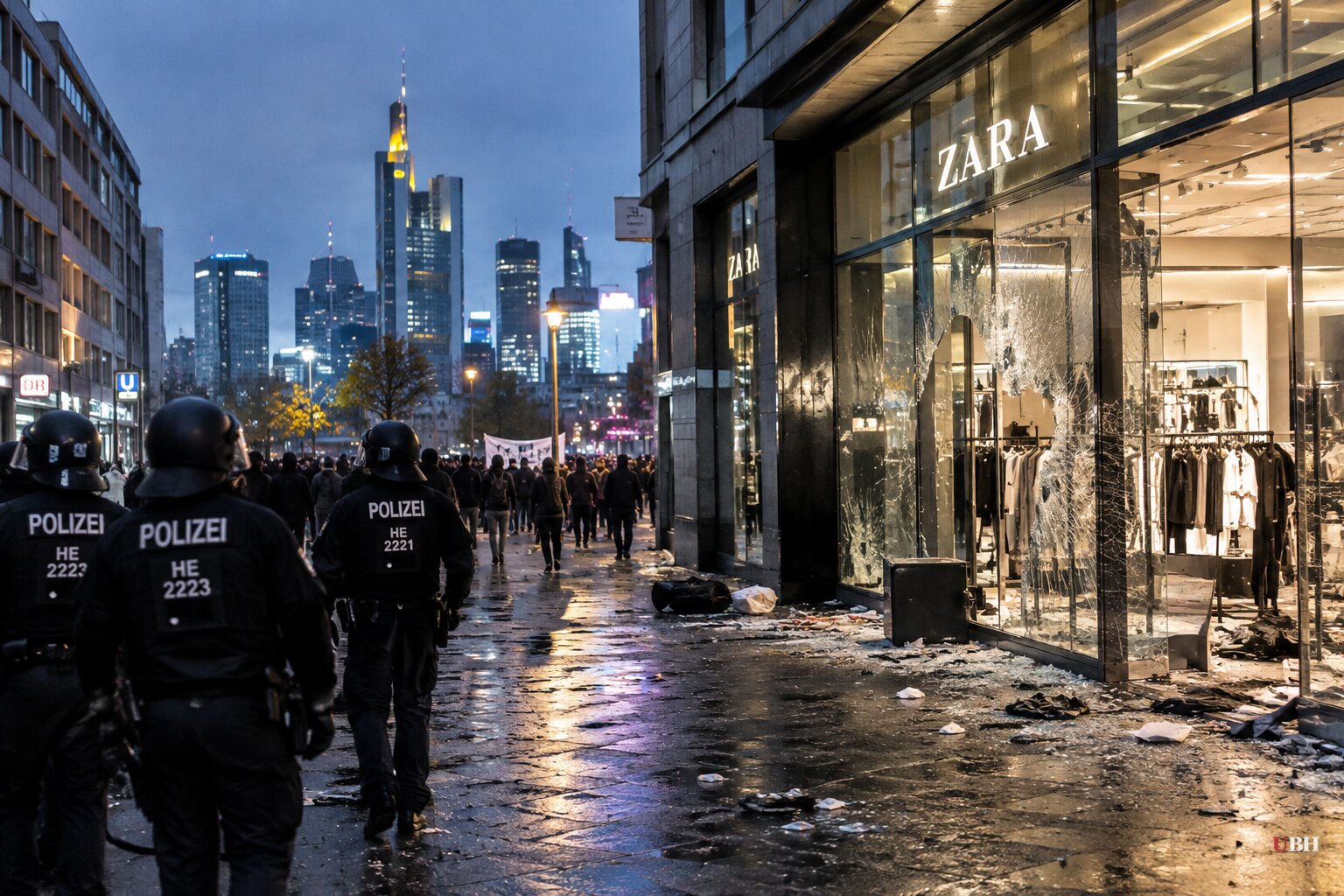
The daytime marches in Germany on Saturday, Oct. 31, were mostly festive. The nights were not.
The youth campaign group "GenZ regelt!" ("Gen Z has got this!") organized demonstrations in 34 cities, including Berlin, Frankfurt, Cologne, Munich and Hamburg. As darkness fell, violence broke out in several of them. Police reported injured officers, petrol bombs, looted shops and dozens of arrests.
Frankfurt: the worst of it
Frankfurt police described "violent riots" in a statement. "Windows have been smashed at several shops. Molotov cocktails are also being thrown at emergency personnel," they said.
Police used water cannon and pepper spray. A large part of the Zeil shopping street was sealed off. A gun store had its windows smashed. Police said they arrested a suspect and seized two weapons.
The daily Bild reported that a trainer shop and a perfume store were also targeted. Police confirmed at least one injured officer in Frankfurt, though Bild reported more injuries were expected. Several dozen people were arrested there.
Roman Poseck, interior minister of Hesse, said "around 100 clearly identified left-wing extremists" had infiltrated the Frankfurt protest. "It is shameful how this event here in Frankfurt has ended," he said.
Social media accounts circulating videos of the Frankfurt looting have made claims about the ethnic background of those involved. No police statement or official quoted so far has said that. Poseck's description is of left-wing extremists.
Other cities
In Hamburg, rioters set barricades on fire in the city center. Police said emergency workers were pelted with pyrotechnics and construction material. Two men were arrested during the afternoon march, one apparently carrying a fake firearm.
Cologne police used water cannon after protesters set off fireworks during a march. "Our measures are directed against troublemakers and violent individuals, not against peaceful participants," police said.
Two officers were injured in Stuttgart when objects were thrown at them. In Karlsruhe, fireworks left one officer with acoustic trauma. Police used pepper spray in Leipzig, and an officer in Bonn suffered minor injuries.
In Berlin, the main march appeared peaceful. A separate evening protest that police said was not organized by "GenZ regelt!" saw officers pelted with eggs and bottles.
Turnout is disputed
Organizers said between 100,000 and 120,000 people took part nationwide. They had expected 182,000.
Official figures from Saturday afternoon were far lower. Police in Frankfurt, Munich and Berlin counted about 6,000 protesters, against roughly 36,000 claimed on the organizers' website. Those were afternoon counts, not final totals.
What the protesters want
The movement cites high living costs, underfunded schools and universities, environmental concerns and a possible reintroduction of mandatory military service. Its website says: "We are young people who no longer want to watch decisions being made about our future without us."
Organizers say the demonstrations are meant to be peaceful and told participants to keep their faces visible, even in Halloween costumes. They say the government has offered nothing in response to their concerns beyond "continuing making cuts and piling further burdens upon us."
The police union draws the same line between the marchers and the rioters. Andreas Rosskopf, who heads the union's Federal Police division, told the Rheinische Post that the protests "turned out to be very peaceful." The escalation came afterward, he said, from "autonomous and, in some cases, masked individuals." Police intervened "very decisively and on a large scale," he said. The union said it remained "on full alert."
The federal interior ministry had warned before the day that parts of Germany's far-left scene and some groups linked to foreign extremist movements had joined efforts to mobilize support.
The French backdrop
The German movement drew inspiration from youth-led protests in France and Italy. Hesse's Poseck pointed to the French example before the marches. "We all have those images from France in our minds, looting, burning houses, burning police vehicles, and attacks on police officers," he said. "France must not be held up as a model in this regard."
France held its third straight Saturday of mass protests the same day. The government estimated 320,000 people marched nationwide, down from more than 500,000 on Oct. 17 and 410,000 on Oct. 24. Those estimates are the government's. Organizers' figures are much higher.
About 70,000 police and gendarmes were deployed. Authorities reported about 300 arrests so far, compared with 800 at the same point the previous weekend. Interior Minister Laurent Nuñez had warned of a "very high risk" of disorder after dark.
Paris's main march, about 70,000 people by government count, was rerouted to the capital's eastern edge after a last-minute court fight. It was peaceful for hours. Clashes later broke out near Porte de Charenton, where protesters threw bottles and fireworks and police responded with stun grenades and tear gas.
What comes next
Organizers have announced further protests in Germany for Nov. 20. Police have not released a final injury count or the total number of arrests from Saturday night. Prosecutors have not said what charges the arrested people will face, including the suspect held after the gun store break-in.
Whether the organizers can keep their marches separate from the masked groups that emerged after dark will be the test for Nov. 20.
Sources used for this briefing
7 links from 7 independent newsrooms (syndicated copies of the same report count once)
These are the sources it draws on, linked so you can verify.


