
Unbiased headlines. Facts, not spin.
Every story is an unbiased news briefing written from 110+ sources across the spectrum — sources linked so you can verify it yourself.
 defense
Notable (6/10)
July 19, 2026 at 11:08 PM
defense
Notable (6/10)
July 19, 2026 at 11:08 PM
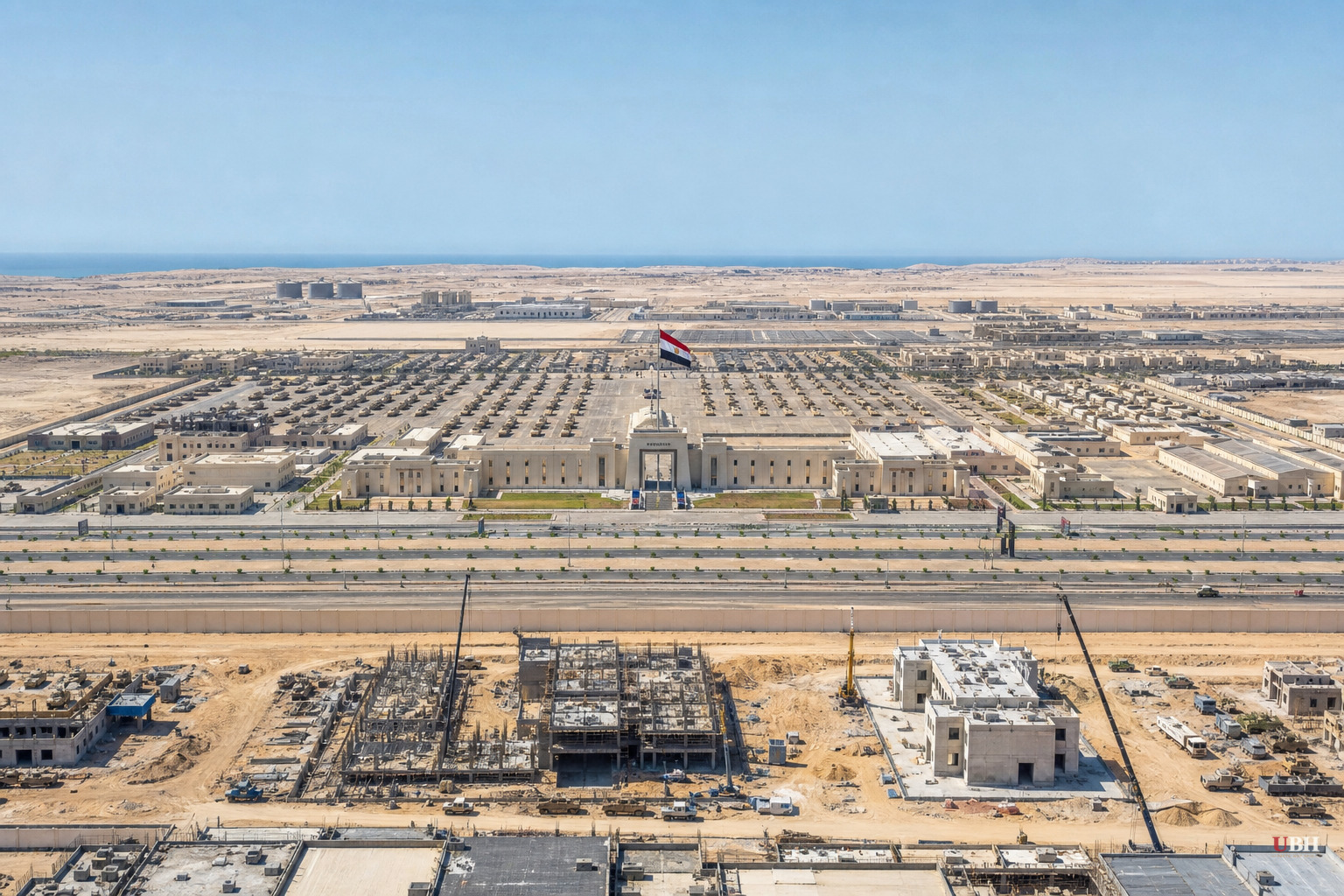
Egypt Builds Massive New Military Base as Middle East Powers Hedge Their Bets After the Iran War
A New Base and a New Posture
Egypt is building out large new military facilities, part of a broader pattern of Middle Eastern states beefing up their own defense infrastructure rather than leaning entirely on outside patrons, according to Breaking Defense's Middle East Bureau Chief Agnes Helou. The outlet's Middle East Defense Digest flags the project as one of the region's biggest current military construction efforts, though exact costs and a completion timeline were not detailed in the reporting.
This comes after the US and Israel carried out a joint military campaign against Iran, an operation that rattled assumptions across the region about how conflicts involving Tehran might play out and who would be expected to respond.
Turkey's Turn Hosting NATO
Turkey hosted NATO's annual summit this year in Ankara, and Breaking Defense reports there are specific takeaways for Turkey from playing host. Ankara has spent years balancing NATO membership against its own independent defense ambitions. Hosting the summit gives Turkey a chance to reassert its relevance inside the alliance while continuing to build out its own domestic defense industry.
Breaking Defense doesn't spell out every specific lesson Ankara is drawing, but the framing is clear: Turkey wants to be seen as an indispensable NATO partner and an independent regional power at the same time. Those two goals don't always point in the same direction.
South Korea and the UAE Team Up
One concrete data point in this digest is a partnership between South Korean defense firm Hanwha and Emirati firm Generation 5 Holding. Breaking Defense frames this as part of a bigger trend of Gulf states looking to diversify who they buy weapons and defense technology from, rather than depending on a single supplier.
This isn't new behavior for the UAE, which has spent recent years cutting deals with multiple countries specifically to avoid being boxed in by any one nation's export restrictions or political conditions. A tie-up with an Emirati firm extends Hanwha's reach into the Gulf.
The Iran War's Ripple Effects
The centerpiece of Breaking Defense's digest is an interview Helou conducted with Bilal Saab, senior managing director at TRENDS US research agency and a nonresident senior fellow at the Atlantic Council. Saab's focus: how Middle Eastern nations are recalibrating after the US and Israel's military campaign against Iran.
Countries across the region watched a major US-Israeli operation unfold against Iran and drew a practical lesson: even when Washington acts decisively, regional security still depends heavily on each country's own capabilities and its own web of alliances. Depending on one guarantor, even a powerful one, is a risk.
The counterargument, which Breaking Defense doesn't fully flesh out in this piece, is that the US-Israeli alliance in the region remains the backbone of Gulf security architecture, and diversification moves like the Hanwha-Generation 5 deal are additive, not a sign of declining confidence in Washington. Gulf states have bought American weapons systems for decades and continue to do so at scale. A partnership with a South Korean firm doesn't necessarily mean the UAE is walking away from US defense ties.
What's Still Unclear
Breaking Defense's digest format means a lot gets summarized rather than fully explained. The size, cost, and specific purpose of Egypt's new facilities aren't detailed. Neither is the exact substance of what Turkey is taking away from hosting NATO's summit in Ankara, beyond the general observation that there are lessons to be learned.
The bigger open question is whether this round of regional hedging outlasts the immediate aftermath of the Iran conflict, or whether it fades once the dust settles, the way past rounds of Gulf diversification talk sometimes have. Saab's comments to Breaking Defense suggest the shift is structural, not a temporary reaction. Whether Cairo, Ankara, and Abu Dhabi keep building out independent capacity, or quietly settle back into old patterns once Iran stops making headlines, is the thing to watch over the next year.
Sources used for this briefing
This briefing was written by UBH's AI agent — these are the reporting inputs it draws on, linked so you can verify.


