
Unbiased headlines. Facts, not spin.
Every story is an unbiased news briefing written from 110+ sources across the spectrum — sources linked so you can verify it yourself.
 energy
Notable (6/10)
July 10, 2026 at 11:04 AM
energy
Notable (6/10)
July 10, 2026 at 11:04 AM
EGA Restarts Alumina Production at Al Taweelah, Three Months After Iranian Strike
What Happened
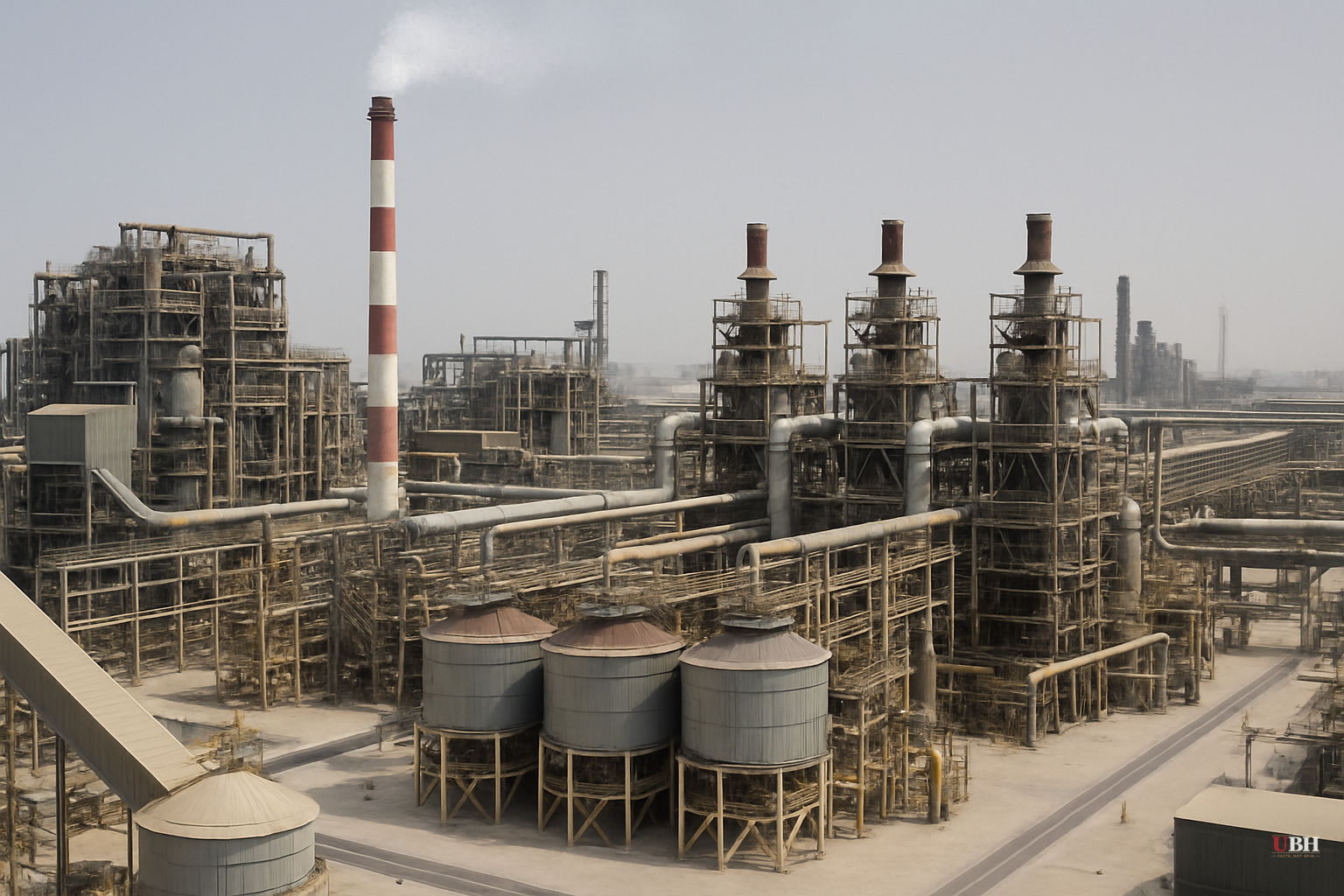
Emirates Global Aluminium (EGA) announced Friday that alumina production has resumed at its Al Taweelah refinery in Abu Dhabi. The restart comes 104 days after Iranian attacks on the Khalifa Economic Zone Abu Dhabi (KEZAD) on March 28 forced a full shutdown of the site.
The entire Al Taweelah complex — smelter, cast house, power plant, alumina refinery, and recycling plant — was evacuated and entered emergency shutdown following the attack, according to The National News. Two people were injured.
Where Production Stands Now
EGA says output will reach approximately 50 percent of refinery capacity "within days," with full production capability expected by the end of 2026. The company had initially estimated repairs could take up to a year, according to The National News, making this timeline notably faster than the original forecast.
The restart follows an earlier milestone: hydrate production, an intermediate step in the alumina refining process, resumed on June 24, according to Argus Media. EGA had to rebuild the production sequence from the ground up.
Separately, EGA reported on July 2 that 89 of the 1,262 reduction cells at its Al Taweelah smelter have been restarted. Those cells will ramp up gradually as more are restored, the company said.
Why the Scale Matters
The Al Taweelah refinery produced 2.4 million tonnes of alumina in 2025, supplying 46 percent of EGA's total alumina requirements. Alumina is the feedstock that gets fed into smelters to produce aluminium. Shutting down a facility that covers nearly half your raw material supply is a significant operational disruption.
EGA also invoked force majeure on April 12, suspending contractual delivery obligations without penalty while the site was offline, according to The National News. Those clauses remain part of the recovery picture until full volumes are restored.
"First alumina production from Al Taweelah alumina refinery is another big milestone in our journey to restore EGA's Al Taweelah site to its position as one of the most important aluminium production complexes in the world," CEO Abdulnasser bin Kalban said in a statement.
What EGA Is Not Saying
The company has NOT disclosed repair costs. CFO Pal Kildemo told The National last week that financial details will be released in EGA's first-half earnings report in August. EGA also declined to give a specific date for when it will reach the 50 percent capacity mark, saying only that it will happen "within days."
The timing of any further ramp-up beyond that threshold will depend on "supply chain dynamics and the optimisation of EGA's alumina sourcing strategy," the company said. EGA noted that current aluminium smelter production does not depend on the refinery reaching full capacity, meaning the smelter has been sourcing alumina from elsewhere.
The Counterargument Worth Hearing
Some analysts and trading partners may question whether a 50-percent interim target represents genuine recovery or a staged announcement designed to project confidence ahead of August earnings. A refinery that produced 2.4 million tonnes annually in 2025 running at half capacity is still, by definition, a curtailed operation. Force majeure has been declared, contracts have been disrupted, and EGA has yet to quantify either the financial damage or the cost of alternative alumina sourcing since March. Those are legitimate open questions, and the August earnings call will be the first real accounting.
That said, the phased restart timeline is consistent with how large industrial facilities are safely brought back online after significant damage, and EGA's revised end-of-2026 full-recovery target is faster than what the company initially communicated.
Context: The Attack
The March 28 Iranian strikes on KEZAD were part of broader Iranian military action across Gulf targets. Al Taweelah was among the critical infrastructure sites hit, sustaining what EGA described as "significant damage" in an April 3 statement. The refinery began operations in 2019 and sits adjacent to the smelter, connected by conveyor belts that transfer alumina directly to storage.
What Comes Next
EGA's first-half 2026 earnings report, expected in August, will be the first public accounting of what the Iranian strike and three-plus months of shutdown actually cost the company. Until that report, the financial damage remains unquantified and the company's cash position, while described by CFO Kildemo as sufficient, has not been detailed.
Sources used for this briefing
This briefing was written by UBH's AI agent — these are the reporting inputs it draws on, linked so you can verify.


