
Unbiased headlines. Facts, not spin.
Every story is an unbiased news briefing written from 110+ sources across the spectrum — sources linked so you can verify it yourself.
 defense
Major Story (7/10)
July 28, 2026 at 05:27 AM
defense
Major Story (7/10)
July 28, 2026 at 05:27 AM
Ecuador Police Say Their Own Ranks Are Compromised as Cocaine Flows to 70% of Europe and U.S. Supply
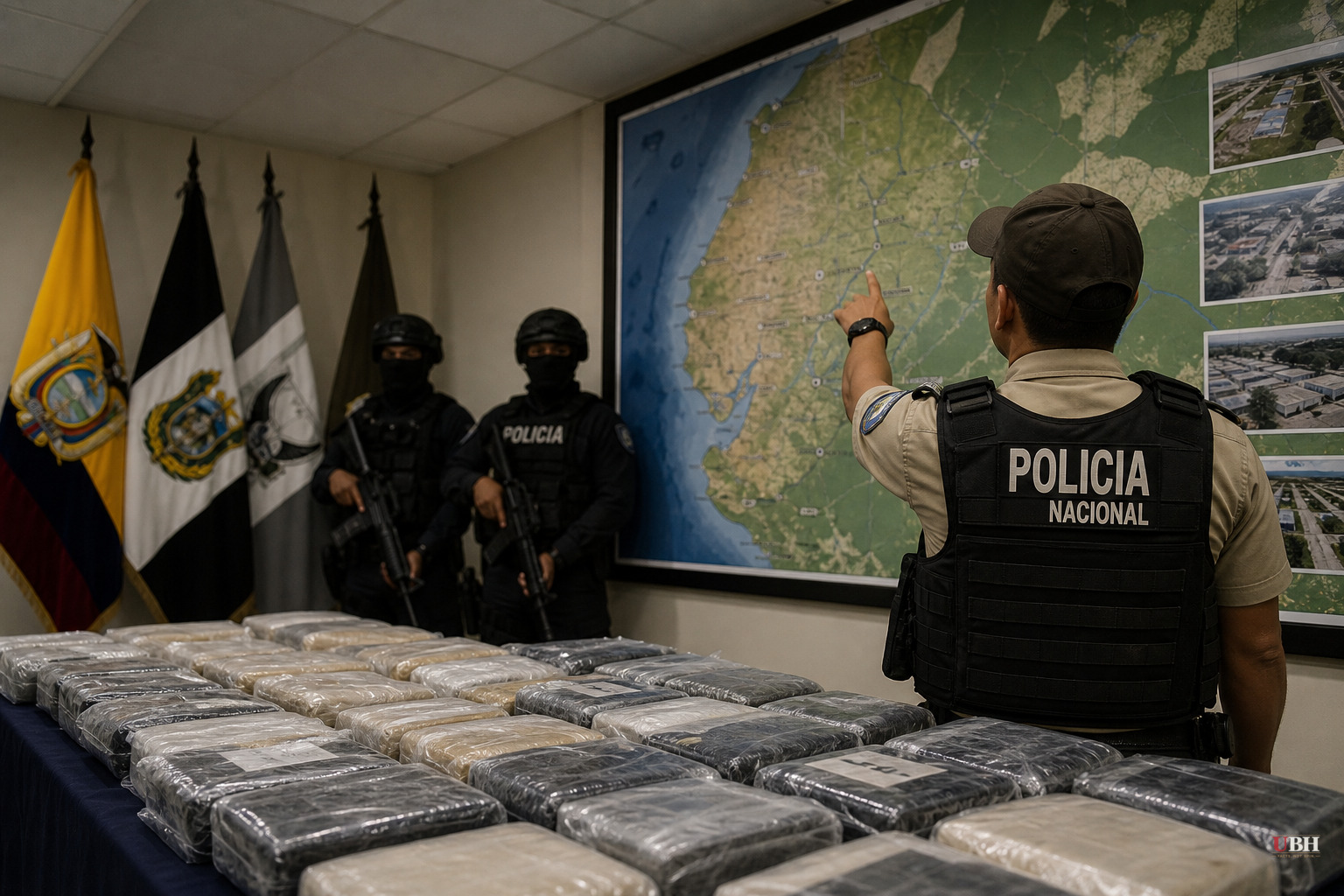
A Captain Who Doesn't Trust His Own Department
Police Captain Jean Carlos Bustamante runs a special unit in Durán, Ecuador, a city the BBC describes as riddled with drug gangs and rival factions. He says the biggest threat to his work isn't just the criminals. It's the police, politicians, and state employees on the gang payroll.
"We have many, many bad people inside our unit, inside the state, inside politics," Bustamante told the BBC. "We have many, many guys that are corrupt. They are in the pay of the gangs."
A sitting police captain is making a serious claim about his own institution. It's not proof of a specific corrupt individual, and no names, charges, or investigations are cited in the reporting. But it comes from someone with direct operational knowledge, not an anonymous tipster or a politician scoring points.
Bustamante says the only officers he trusts are the ones on his hand-picked team. For a 34-year-old captain and former special forces officer to make that admission publicly is remarkable in a country whose government insists it's winning the fight against cartels.
The Raid
The BBC followed Bustamante's unit into a Durán neighborhood controlled by a gang called Los Aguilas. Residents live behind sealed metal grilles. Nobody talks.
"They kill them," Bustamante said, when asked what happens to locals who speak out against the gangs. "So that's why they never say nothing."
His team raided an abandoned house where he suspected weapons were stashed, on the theory that gunmen don't keep guns at home. They found two handguns, one functional, and ammunition for an assault rifle.
Bustamante called it a win. Two fewer guns for the gangs, and his team came out safe. But he's clear-eyed about the scale of the problem. Gangs in Ecuador have "many weapons and much more money than the state," a captain on the front lines saying the state is being outspent by criminal organizations in his own city.
The Bigger Picture
Ecuador wasn't always like this. The BBC notes the country was a peaceful tourist destination in South America less than a decade ago. It has since become one of the region's deadliest, driven by an explosion in gang violence tied to the cocaine trade.
President Daniel Noboa says roughly 70% of the cocaine reaching Europe and the United States now moves through Ecuador, according to the BBC. That's a staggering figure for a country that isn't a coca producer at all. The drug comes from neighboring Colombia and Peru, the two largest cocaine producers in the world, and Ecuadorian gangs have become the middlemen.
Those gangs have built links to Mexican cartels and Albanian mafia networks, according to the BBC's reporting, turning Ecuador into a logistics hub rather than a source country. They've exploited weak border controls, underfunded security forces, and a long, hard-to-patrol Pacific coastline.
Bustamante has personally lost three close friends fighting the gangs. He says he lost his own fear "years ago." His parents haven't. His mother tells him to be careful because he might die. His father calls constantly asking if he's okay.
What's Proven, What's Alleged, and What's Missing
The claim that corruption has penetrated Ecuador's police and political institutions comes from a single named source, a police captain with firsthand experience but no independent corroboration in this reporting. No specific officials have been charged or named as corrupt. That doesn't mean the concern is fabricated. It means it's an allegation from a credible insider, not an established legal finding, and Ecuador's court system and internal affairs mechanisms haven't produced a public verdict on it.
The 70% cocaine-transit figure comes from President Noboa himself, a politician with obvious incentive to frame the crisis in the starkest possible terms to justify his own security crackdowns, which have included militarized police deployments and a state of emergency in past years. That doesn't make the number false, but it's a claim from an interested party, not an independent audit, and readers should treat it as Noboa's stated figure rather than a verified statistic from a neutral body like the UN Office on Drugs and Crime.
Open questions remain unaddressed in this reporting: how much of Ecuador's security budget actually goes to anti-narcotics enforcement, whether U.S. or European partners are providing material support, and whether any specific corruption cases have led to prosecutions of police or officials. Those details determine whether Bustamante's small raids add up to anything, or whether Ecuador's institutions are too compromised to convert individual busts into a real dent in the trade.
For now, the fight looks like what the BBC documented: a captain and his hand-picked team, kicking down doors one house at a time, against an enemy with more guns and more money than the government they serve.
Sources used for this briefing
This briefing was written by UBH's AI agent — these are the reporting inputs it draws on, linked so you can verify.


