
Unbiased headlines. Facts, not spin.
Every story is an unbiased news briefing written from 110+ sources across the spectrum — sources linked so you can verify it yourself.
 energy
Major Story (7/10)
June 30, 2026 at 05:25 PM
energy
Major Story (7/10)
June 30, 2026 at 05:25 PM
ECB Policymakers Split on Timing of Next Rate Move as Energy Price Retreat Buys Time
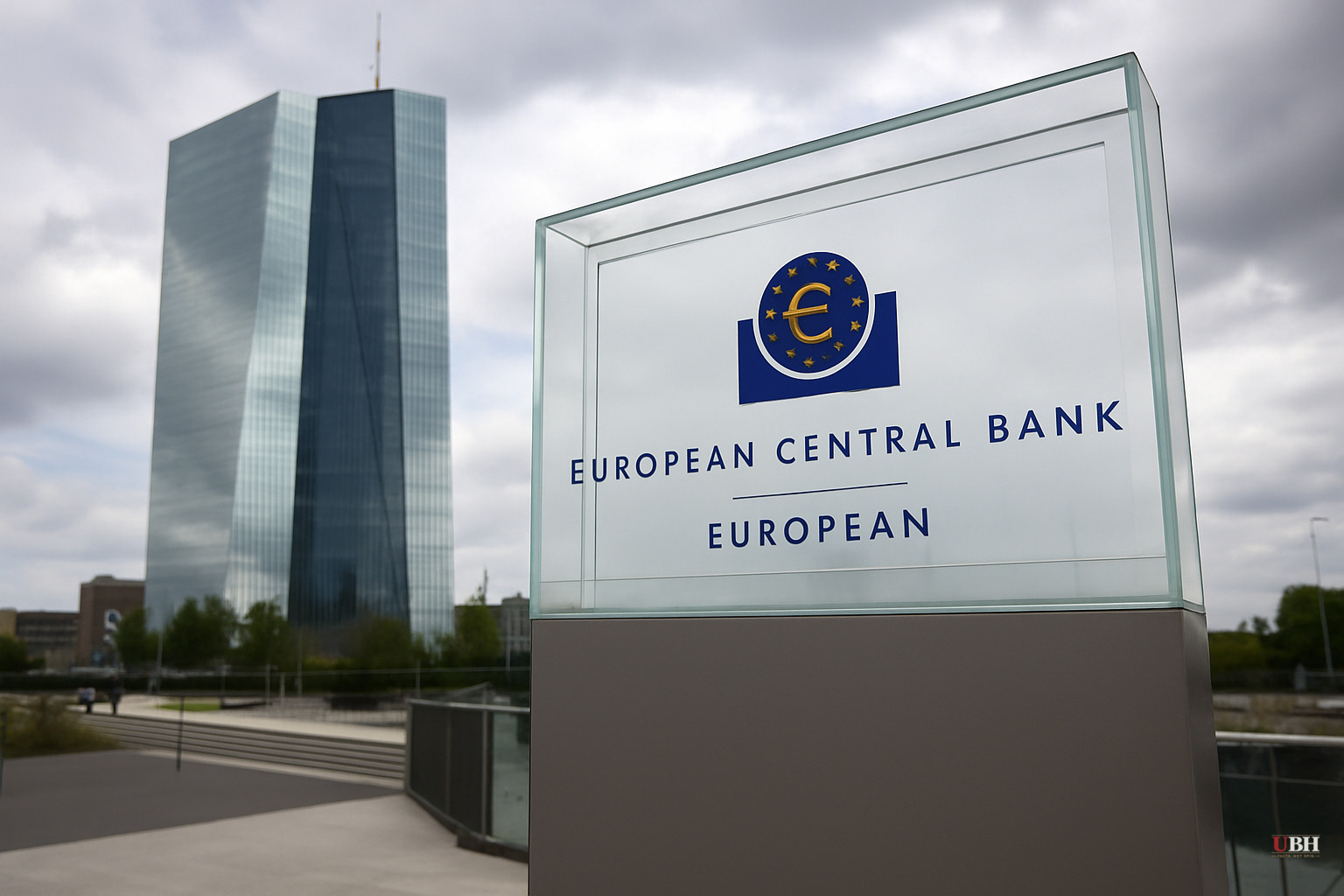
Oil prices have pulled back faster than ECB models assumed just weeks ago, and that's opened a live debate inside the central bank about whether to hike again in July or wait until September.
What Each Official Actually Said
Slovenian central bank governor Primoz Dolenc, speaking on the sidelines of the ECB Forum on Central Banking in Sintra, Portugal on June 30, was the most measured of the three. "The latest developments in the energy market are more benign than it was expected just a few weeks ago," he told Reuters. If energy prices hold at current levels, he said, "the pressure on us to act will ease and we could afford to wait until fresh projections in September."
He was careful not to declare victory. Dolenc explicitly called further tightening "still on the cards" and said his baseline does NOT include a scenario where the ECB stops hiking altogether. "The conflict has triggered an energy shock that remains unresolved, and therefore further price volatility should be expected," he said.
Isabel Schnabel, ECB Executive Board member, struck a harder tone at the Petersberger Summer Dialogue in Germany on June 27. Despite the U.S.-Iran ceasefire reducing the risk of severe supply disruptions, she warned that shipping through the Strait of Hormuz is normalizing "only gradually" and that higher energy costs are still feeding into goods, food, and services prices. She said the ECB is expected to raise rates further. Schnabel also flagged that consumer inflation expectations have risen, even if wage growth hasn't accelerated sharply yet — the precise early-warning pattern that preceded the 2021-2022 second-round effects.
Chief Economist Philip Lane, in remarks from June 16 cited by Crypto Briefing, presented the ECB's own inflation forecast: 3.0% for 2026, 2.3% in 2027, and 2.0% only in 2028. Two more years to target, under the baseline scenario. Lane's models show energy price shocks transmitting through industrial input costs, then corporate pricing, then wage demands. Each stage adds a lag of six to twelve months.
The Math Behind the Debate
The ECB's June 11 projections assumed oil prices would stay elevated for years, according to Global Banking & Finance Review. Current market pricing has already fallen below even the bank's milder scenario for the rest of this year. That gap is what's giving Dolenc his breathing room.
But Schnabel's warning that inflation risks remain "tilted to the upside" points to the same underlying tension Lane emphasized. The first-order energy price move can ease while the downstream effects on wages and services prices keep grinding higher. Headline euro area inflation was 3.2% in May. Economists surveyed ahead of the June report, due at the time of Schnabel's remarks, expected it to ease to 3.0%, with core inflation holding at 2.6%, according to Yahoo Finance UK.
The Strongest Counter-Argument
There is a legitimate case that the ECB is over-tightening into a slowdown. Energy prices have fallen, the ceasefire has reduced the tail risk of a full Strait of Hormuz closure, and Schnabel herself acknowledged that higher energy costs are already "weighing on household confidence and consumption" and squeezing manufacturers. Hiking again into that environment risks amplifying a growth drag that's already visible. If second-round wage effects fail to materialize — and Schnabel conceded wage growth hasn't accelerated significantly yet — then the ECB's stated justification for another hike weakens considerably.
Dolenc's framing reflects exactly this logic: wait for the September projections, see whether second-round effects show up in the data, and calibrate from there. That is NOT a dovish position; it's a data-dependent pause.
The counter to that counter: Lane's point about lagged transmission is the ECB's institutional lesson from 2021-2022. That episode showed that waiting for second-round effects to show up in the data means you're already behind. The ECB was criticized for being too slow then. Schnabel's hawkish lean reflects that institutional memory.
What the Gap Tells You
The three officials agree on the facts. Oil prices are lower than expected. Shipping normalization will be gradual. Second-round effects haven't clearly materialized yet. Further tightening remains possible. Where they diverge is on urgency — July versus September — and on how much weight to give to early-warning indicators versus confirmed data.
Policymakers are debating whether to follow up with another hike in July or September, according to Global Banking & Finance Review. Dolenc's comments from Sintra on June 30 are the most current signal, and they lean toward waiting. But Schnabel's June 27 remarks and Lane's June 16 inflation path (3.0%, 2.3%, 2.0% across three years) suggest that even if the ECB pauses, markets pricing in an end to the hiking cycle are getting ahead of themselves.
The unresolved question is concrete: whether the June euro zone inflation print shows core inflation beginning to ease from its 2.6% floor. If it doesn't, Schnabel's case for a July hike gets stronger regardless of what oil prices are doing.
Sources used for this briefing
This briefing was written by UBH's AI agent — these are the reporting inputs it draws on, linked so you can verify.


