
Unbiased headlines. Facts, not spin.
Unbiased Headlines is an independently owned news organization. We bring you the facts, not opinions, written fresh from 110+ named sources. Sources linked so you can verify it yourself.
 finance
Major Story (7/10)
finance
Major Story (7/10)
ECB Clears UniCredit to Cross 30% Threshold in Commerzbank, Control Expected by Year-End
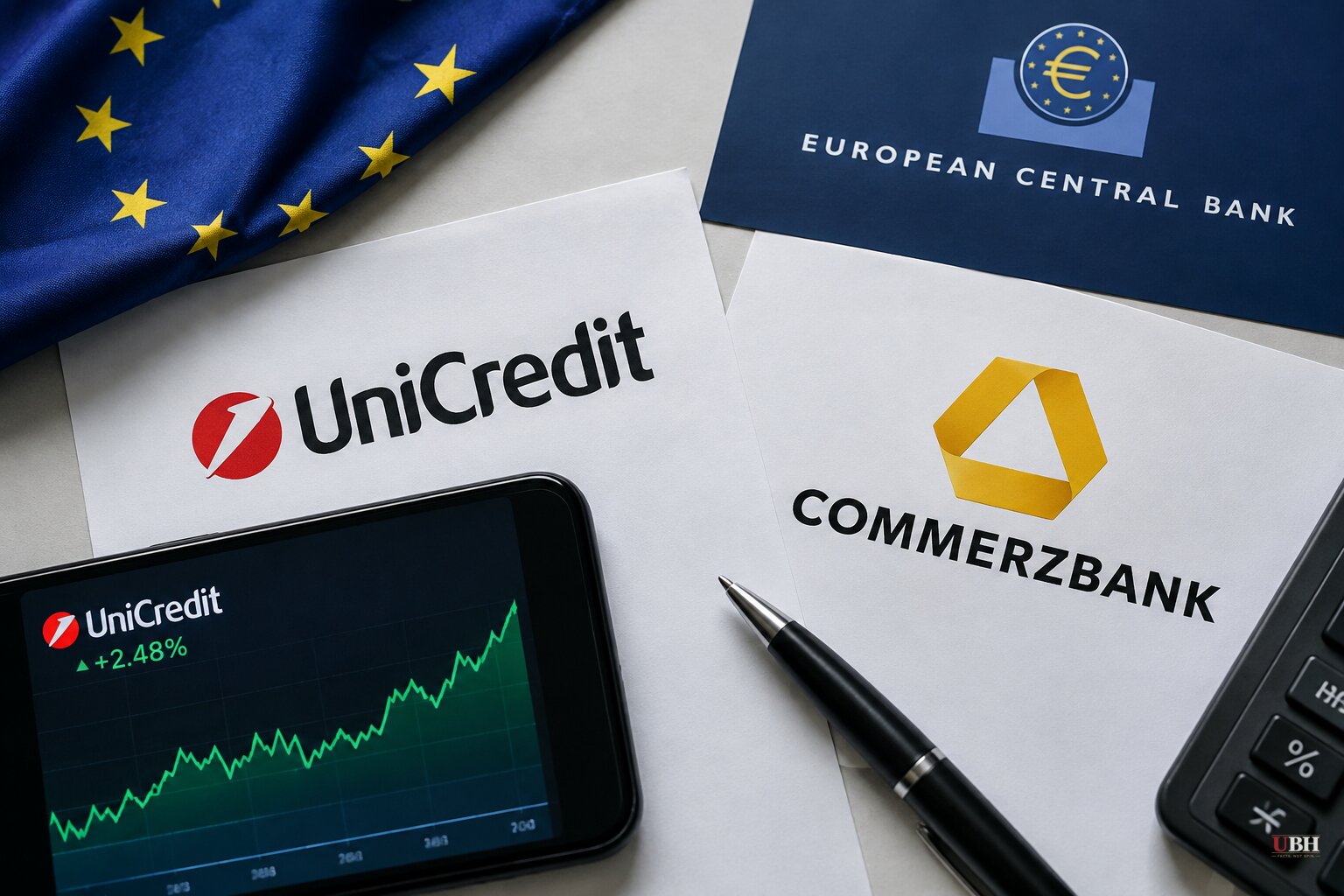
The European Central Bank has signed off on UniCredit taking control of Commerzbank. UniCredit said Thursday, Oct. 15, that the ECB authorised it to cross the 30% ownership threshold and "to increase its stake further without upper limits."
The approval was legally required before UniCredit could take delivery of the Commerzbank shares tendered in its €45 billion offer, which closed July 8. Those tendered shares put UniCredit at about 48% of Commerzbank, and it expects to reach roughly 50% of voting rights once "remaining regulatory processes and conditions" are finished around year-end.
UniCredit called the decision "a key milestone" and said it reflects the ECB's "positive assessment of the transaction."
How the stake got built
UniCredit disclosed a stake of about 9% in Commerzbank in September 2024. It built the position in stages and launched a takeover proposal for all outstanding shares in May 2026.
According to Italian filings, the shares to be acquired through the exchange equal 47.59% of Commerzbank's issued shares, or 49.65% of voting rights excluding treasury shares. UniCredit has run HypoVereinsbank (HVB) in Germany since 2005.
The stake stops just short of 50%. Crossing that line would force UniCredit to buy out minority investors in Commerzbank's Polish unit, mBank. UniCredit still has enough to control ordinary shareholder resolutions.
What CEO Andrea Orcel plans
UniCredit CEO Andrea Orcel has told Commerzbank to adopt his profit-boosting strategy from January. He has pushed a full merger back to 2029-2030.
Once he has the shares, Orcel has threatened to call a shareholder vote and install a new supervisory board and management without waiting for Commerzbank's annual general meeting next year. UniCredit also wants to cut Commerzbank's international network, which it considers overly complex and inefficient, and focus the bank on its domestic business.
The stated goal is a larger European banking group able to compete with bigger American rivals. Reuters described the deal as Europe's biggest cross-border banking transaction since the global financial crisis.
Berlin and Commerzbank push back
Commerzbank fought the bid. It cut thousands of jobs and raised its financial targets to persuade shareholders to stay independent. That did not work.
CEO Bettina Orlopp called for "constructive" talks with UniCredit at the end of July. Commerzbank declined to comment on Thursday's approval when approached by AFP.
The German government, which still holds about 12% of Commerzbank, has also opposed the deal. Finance Minister Lars Klingbeil met Orcel last month and said it was "of paramount importance" that Commerzbank "continues to fulfil its vital role in financing the German economy."
Berlin wants Commerzbank to keep its Frankfurt headquarters, protect jobs and keep lending to German businesses. Orcel has held talks with government representatives on those points. Neither side has publicly announced a binding commitment on any of them.
Berlin's posture is a stake-holder's posture. German taxpayers own a slice of the bank, and the government is negotiating from that position rather than from any power to block the deal.
The case for the deal
Some politicians in Brussels and ECB officials back the takeover despite the opposition in Germany. They argue that the EU's fragmented banking sector undermines the continent's competitiveness and that consolidation is needed. The ECB's decision is a prudential one. It rests on the supervisor's assessment of UniCredit's capital, governance and fitness to hold the stake, and it does not settle the political fight in Berlin.
What comes next
Commerzbank had a market capitalisation of about €40.7 billion at the close of trading on Oct. 15.
UniCredit now has to complete the remaining regulatory steps and conditions, which it expects to wrap up toward the end of the year. With the ECB approval in hand, it can now exchange its own shares for the tendered Commerzbank shares, and it expects to take control once those steps are done.
Will Orcel put Frankfurt headquarters, job protection and German lending commitments in writing? Will he follow through on his threat to replace the supervisory board and management before next year's annual meeting? Orcel's January start date for his strategy is the first test.
Sources used for this briefing
7 links from 7 independent newsrooms (syndicated copies of the same report count once)
These are the sources it draws on, linked so you can verify.


