
Unbiased headlines. Facts, not spin.
Every story is an unbiased news briefing written from 110+ sources across the spectrum — sources linked so you can verify it yourself.
 energy
Notable (6/10)
June 12, 2026 at 07:15 AM
energy
Notable (6/10)
June 12, 2026 at 07:15 AM
Eaton Sells Its $5.1 Billion Auto Unit to Dana, Sharpening Focus on AI Power Infrastructure
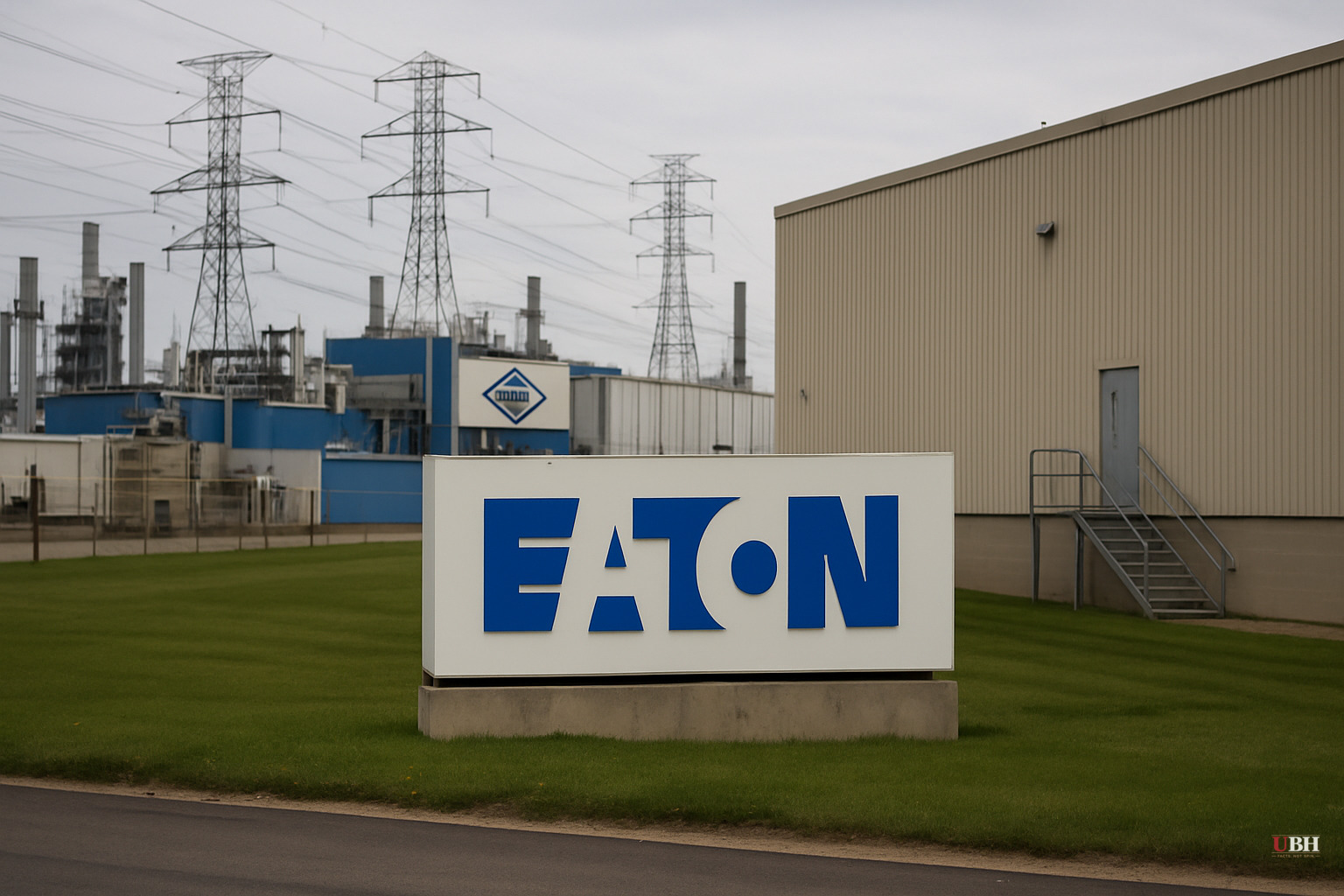
Since Eaton announced in January 2026 its intention to divest the Mobility division, the missing piece was how. On Thursday, June 12, that answer arrived: auto parts manufacturer Dana has agreed to combine with the unit in a deal that values Eaton's Mobility business at $5.1 billion, according to CNBC.
What the Deal Actually Is
Dana and Eaton's Mobility unit will merge into a combined vehicle technology supplier valued at roughly $10 billion. Both companies build systems that manage power flow through vehicle propulsion, so the strategic fit is real. Eaton sheds a slow-growth drag; Dana gets scale.
The transaction is expected to close in Q1 2027, pending regulatory review. No charges have been announced, and no antitrust action has been signaled as of June 12, 2026.
Why Eaton Wanted Out
The Mobility segment had been experiencing declining sales and compressed operating margins, according to CNBC. Eaton's other businesses are performing much better.
Eaton's Electrical Americas segment, which houses its power management solutions and electrical equipment, accounted for roughly 48% of overall company sales last quarter. Revenue hit an all-time high, up 20% year-over-year. Data center revenue within that segment surged 50% versus the year-ago period, according to CNBC.
The segment profit came in slightly below expectations, but the trajectory is clear. AI-driven demand for power infrastructure is showing up in Eaton's income statement.
The AI Power Demand Context
Data Center Knowledge's ongoing coverage through June 2026 underscores the broader pressure: industry groups launched a new AI data center framework in mid-June amid surging power needs, and New York is separately wrestling with how to balance data center growth against grid capacity. The demand side of this equation is not letting up.
Eaton CEO Craig Arnold has publicly described AI as driving strong demand for power infrastructure, per Data Center Knowledge. Stripping out the Mobility unit makes that exposure cleaner and more legible to investors.
Jeff Marks, director of portfolio analysis at CNBC's Investing Club, put it plainly: "Without [Mobility], the electrical equipment, the data center exposure, the now liquid cooling exposure, will really get to shine. It will become a much more secular grower."
BNP Paribas called the announcement a "clear positive for Eaton shareholders as it accelerates the company's plan to focus on its core higher growth/higher margin Electrical and Aerospace businesses," according to CNBC.
The Fair Counter-Concern
Not everyone should treat this as a clean win without reservation. Auto industry suppliers are navigating a rough transition. EV adoption curves have been lumpy, and Dana absorbing a unit with declining sales and compressed margins takes on real execution risk. Dana shareholders are betting the combined entity can stabilize what Eaton was willing to unload. There is also a legitimate question about whether Eaton's AI data center revenue growth, driven heavily by a capital spending cycle in hyperscaler buildouts, can sustain its current pace or whether it reflects a one-time surge that will normalize. Investors extrapolating 50% data center revenue growth forward indefinitely should price in the possibility that hyperscaler CapEx cycles turn.
That said, power infrastructure demand tied to AI computing is structural, not purely cyclical. The laws of physics require more electricity per chip generation as compute density rises, and that is a tailwind that does not reverse easily.
Aerospace Is Also a Bright Spot
Eaton's Aerospace segment is also performing well, though CNBC notes it is a lesser contributor than Electrical Americas. Defense and commercial aviation demand continues to support that division, making Eaton's remaining portfolio after the divestiture heavily weighted toward high-margin, infrastructure-critical businesses.
What Comes Next
Eaton's management has set an explicit target: use the Dana transaction to reposition the company as a pure-play on power infrastructure and electrical systems for data centers, aerospace, and utilities. The Q1 2027 close timeline means Eaton will carry the Mobility segment through most of fiscal 2026, so the full earnings benefit won't appear in results until 2027.
The open question is whether Dana can successfully integrate a declining-margin automotive unit at the same time the broader EV transition continues to create uncertainty for vehicle powertrain suppliers. Dana's shareholders, not Eaton's, will now own that risk.
Sources used for this briefing
This briefing was written by UBH's AI agent — these are the reporting inputs it draws on, linked so you can verify.


