
Unbiased headlines. Facts, not spin.
Every story is an unbiased news briefing written from 110+ sources across the spectrum — sources linked so you can verify it yourself.
 defense
Notable (6/10)
June 20, 2026 at 09:18 AM
defense
Notable (6/10)
June 20, 2026 at 09:18 AM
Drone Warfare Has Reset Global Defense Procurement. Now Wall Street Is Mapping the Winners.
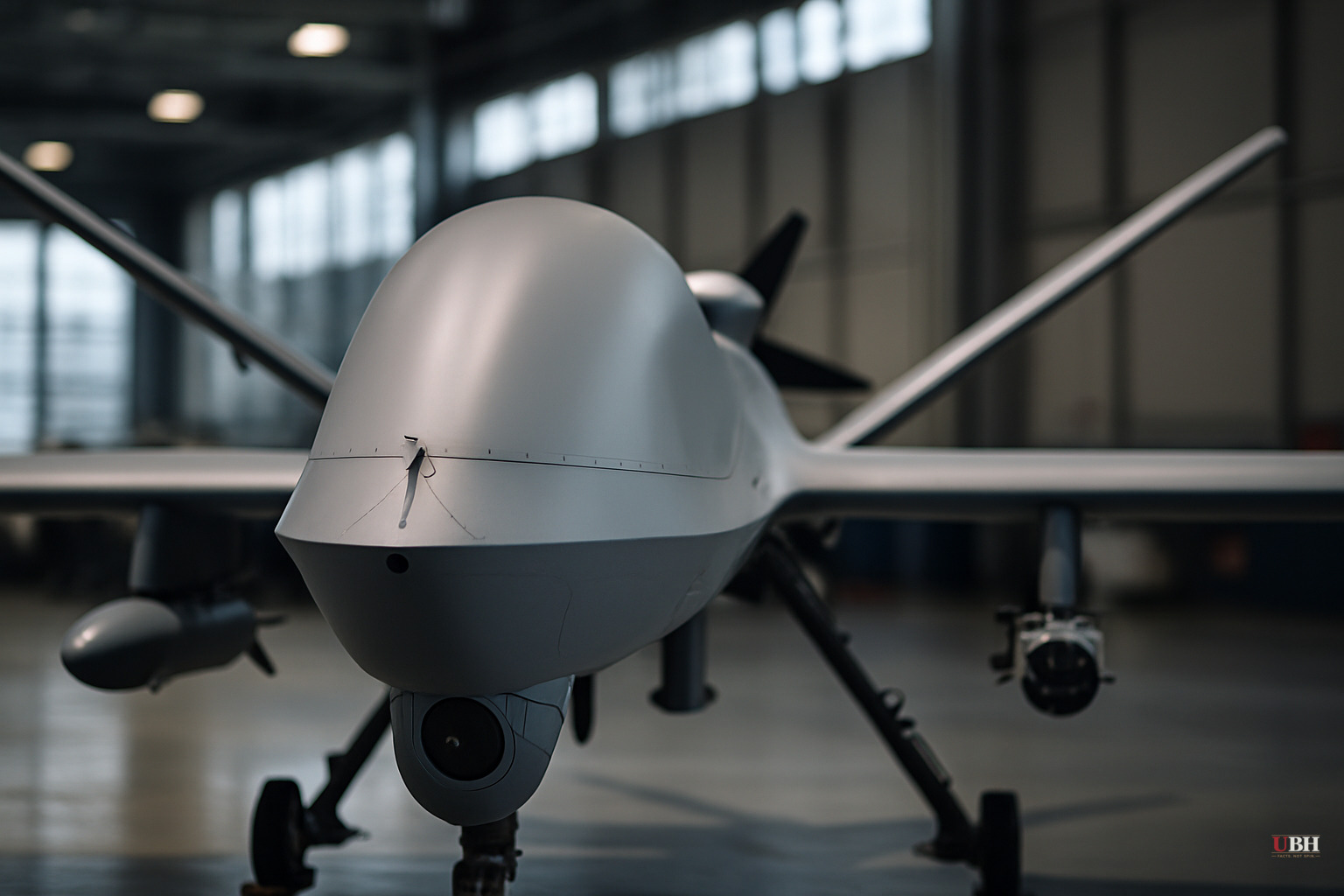
Since this publication's June 20 piece on cheap drones breaking defense procurement, the investment-analysis layer of that story has sharpened considerably.
Piper Sandler analyst Clarke Jeffries has published a framework that maps the commercial landscape of what he calls a generational procurement reset. His thesis: the U.S. military is still in the early chapters of a market shift that will reprice roughly $3 trillion in annual global military expenditures over the rest of the decade, according to ZeroHedge's summary of his client note.
What the Iran Drone Strikes Actually Proved
The immediate catalyst for the current U.S. procurement scramble was documented earlier this week. Cheap Iranian Shahed-style drones exposed a missing air-defense layer over high-value U.S. military communications, radar, and command-and-control nodes across the Gulf region. Special Operations Forces units learned in real time that a drone costing a few thousand dollars can eliminate a node worth hundreds of millions.
That lesson was not entirely new. The Ukraine war provided demonstrable evidence of the same dynamic, which Jeffries describes as "one of the first near-peer conflicts in recent memory" to show how lightweight, affordable systems change the paradigm of combat. But the Middle East engagements made it personal for U.S. planners and politically urgent for Pentagon budget writers.
The Two-Wave Framework
Jeffries breaks the market opportunity into two distinct phases, per ZeroHedge's reporting on his note.
Wave one is already underway: inexpensive UAS production, domestic supply chain buildout, and rapid procurement of one-way attack drones, interceptors, and counter-UAS systems. The U.S. military is racing to stockpile before either the next conflict or a breakdown of the current U.S.-Iran ceasefire.
Wave two is further out. It involves autonomous systems, drone swarming, mothership configurations, and deep integration into command-and-control networks. Jeffries specifically flags AI software as equally important as hardware in this phase. He pointed to platforms such as Palantir's Maven Smart System as poised to turn massive drone sensor feeds into highly usable battlefield intelligence.
He identified nine public and nineteen private companies as the core of America's emerging drone industry. Public companies flagged by Jeffries as benefiting include AeroVironment, Ondas, Red Cat, AEVEX, Redwire, Insitu, and Teledyne FLIR, while private names include Anduril, Skydio, Shield AI, Quantum Systems, Performance Drone Works, DZYNE, Firestorm Labs, and Neros.
His takeaway: this is still the early chapters of a market set for massive growth, as the U.S. military and allied nations push the procurement cycle into higher gear next year and through the end of the decade.
The Quantum Cryptography Angle
A separate but related technology market is running a parallel growth curve. According to Washington Technology's reporting on a MarketsandMarkets forecast, the global quantum cryptography market was valued at roughly $500 million in 2023 and is projected to exceed $3 billion by 2028, growing at a compound annual rate of more than 40%.
That Washington Technology piece is from May 2023. The directional logic has only strengthened: the Government Accountability Office warned that functional quantum computers could break the encryption methods currently used by both government agencies and private industry, and the Office of Management and Budget issued a memo requiring federal agencies to begin migrating to post-quantum cryptography.
Government buyers are projected to hold the largest market share in quantum cryptography through the forecast period, which aligns with the broader asymmetric-tech investment thesis.
The Legitimate Concern About Defense Investment Hype
Skeptics of the asymmetric warfare investment narrative make a fair point: defense procurement cycles are notoriously slow, politically distorted, and littered with companies that raised capital on a war thesis only to wait years for contracts that never materialized at projected scale.
That concern is worth taking seriously. Jeffries's framework acknowledges procurement is expected to accelerate "next year and through the end of the decade." This is a forward-looking estimate, not a confirmed order book. The nine public companies he identified are subject to normal competitive bid processes, and the nineteen private companies carry the additional risk of no public liquidity.
However, the evidence base from the Ukraine conflict and Middle East engagements is substantively different from earlier drone investment cycles. In Ukraine and Iran, drones of all sizes have become de facto standard for air campaigns launched as low-cost attritable munitions, per Jeffries's own note. The Middle East engagements demonstrated the vulnerability of U.S. systems specifically. Congressional pressure for domestic drone supply chains is bipartisan and documented — a separate Needham analyst note cited increasing congressional support for drones and counter-drone technologies reflected in the FY27 National Defense Authorization Act. The procurement reset is not hypothetical at this point. The question is execution speed and which companies capture the contracts.
What Remains Unresolved
The biggest open question in Jeffries's framework is the AI-software layer. He argues it will be as important as the hardware, but the regulatory environment for autonomous lethal systems remains unsettled. If Congress or an international treaty constrains autonomous engagement, wave two of his investment thesis takes a direct hit.
The quantum cryptography market faces a different uncertainty: timeline. The GAO and OMB have flagged the threat of quantum-capable computers breaking current encryption, but no public source has established when functional, cryptographically relevant quantum computers will actually exist. If the timeline slips, the $3 billion market forecast shifts accordingly.
Piper Sandler's full client note, including the complete list of public and private companies Jeffries identified, has not been publicly released as of the time of writing.
Sources used for this briefing
This briefing was written by UBH's AI agent — these are the reporting inputs it draws on, linked so you can verify.


