
Unbiased headlines. Facts, not spin.
Every story is an unbiased news briefing written from 110+ sources across the spectrum — sources linked so you can verify it yourself.
 energy
Major Story (8/10)
July 20, 2026 at 05:15 PM
energy
Major Story (8/10)
July 20, 2026 at 05:15 PM
Drone Strikes Halt Oil Loading at Russia's Novorossiysk Terminal, Threatening Kazakh Crude Exports
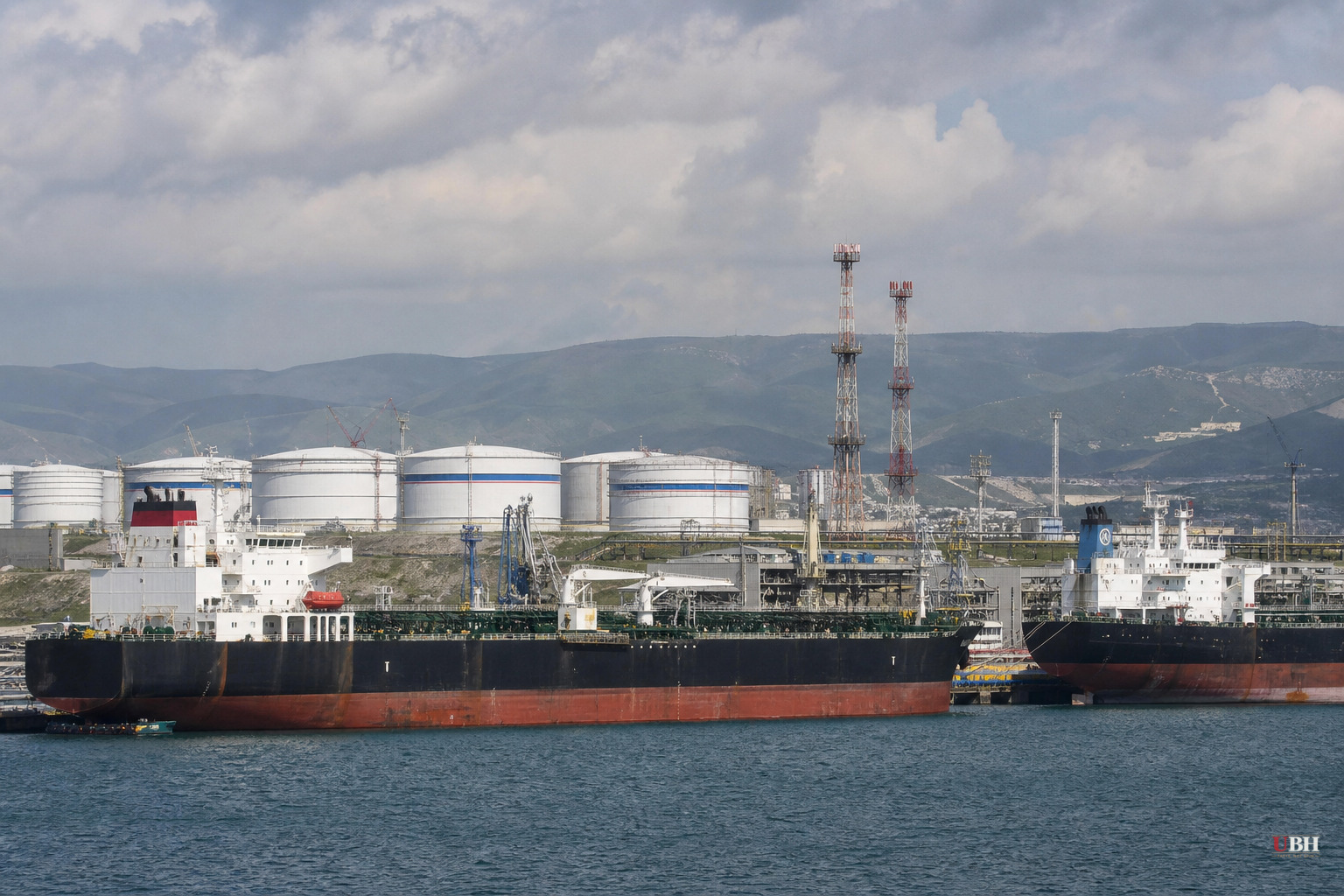
Tankers on fire, loading suspended
The Caspian Pipeline Consortium said a drone struck the tanker Nelsa on Monday, July 20, while it was loading crude at the CPC terminal near Novorossiysk on Russia's Black Sea coast, according to Anadolu Agency. The strike hit the vessel's aft starboard side between the superstructure and engine room, sparking fires on deck and in several compartments.
CPC said there was no oil spill and no ignition inside the tanks. Crews aboard the tanker and emergency teams on CPC support vessels put the fires out within hours. The ship stayed afloat. Its 22 crew members, an international mix, were evacuated to CPC tugboats, though the captain and chief officer stayed aboard, Anadolu reported.
That attack followed a separate strike a day earlier. On July 19, two tankers, the Liberia-flagged ASIA and the Marshall Islands-flagged NISSOS IOS, came under drone attack during loading operations at the same terminal, according to CPC's statement on Telegram, cited by engine.online. A fire broke out on ASIA, and CPC suspended loading at the terminal as a result.
Why this terminal matters
The CPC pipeline runs 1,510 kilometers from Kazakhstan's Caspian Sea oilfields to Novorossiysk, where crude gets loaded onto tankers bound for world markets. It carries oil from three of Kazakhstan's biggest fields, Tengiz, Kashagan, and Karachaganak, and moved about 70.5 million metric tons of crude last year, according to CPC's own figures reported by engine.online.
Reuters figures cited by engine.online put CPC's share of Kazakhstan's total oil exports at roughly 80%. A prolonged shutdown doesn't just squeeze Russian export infrastructure. It directly threatens Kazakhstan's ability to sell oil at all.
Kazakhstan's complaint
Kazakhstan isn't a party to the Russia-Ukraine war, and its foreign ministry made that point forcefully. It called the drone strikes "deliberate actions aimed at destabilizing global energy markets, lawful international trade, and the security of global transport and logistics supply chains," according to Anadolu Agency, and demanded an immediate halt to the attacks along with measures to protect the country's export infrastructure.
CPC itself went further, calling the assault a "terrorist attack" in comments reported by WEEX Crypto News, and urging its member states to condemn the strikes and pursue protections under international law.
Kazakhstan's case is straightforward: it's a third-party country losing export revenue and risking environmental disaster because its oil happens to move through a Russian port. Whoever is behind the strikes hasn't targeted Kazakh assets directly, but the terminal sits on Russian soil, and Kazakhstan has no say over that.
The other side of the ledger
Ukraine hasn't claimed responsibility for these specific strikes in the sources reviewed, but the pattern fits a broader campaign. Last week, Ukraine struck 20 Russia-linked vessels in the Black Sea, including 17 Russian oil tankers, two gas carriers and a tugboat, according to engine.online. Kyiv has also hit an oil depot in the Moscow region and launched drones at Domodedovo and Belgorod, Moscow region governor Andrei Vorobyov said on Telegram.
Ukraine's stated goal, per engine.online's reporting, is choking off Russian energy revenue that funds the war, expanding from refineries to export terminals and now the tanker fleet itself. From Kyiv's perspective, Novorossiysk is a legitimate military-economic target because it's Russian territory generating Russian export income, even if a chunk of that oil belongs to Kazakhstan under a shared-infrastructure arrangement. Untangling whose oil is whose mid-pipeline isn't something a drone can do.
Markets already stretched thin
These strikes aren't happening in isolation. Oil prices have been climbing on a separate crisis: U.S. reinstatement of a blockade posture in the Strait of Hormuz amid rising Iran tensions, according to OilPrice.com and engine.online. Brent crude was trading around $88 a barrel and WTI near $82 as of Monday market data, with U.S. gasoline prices reportedly climbing back above $4 a gallon, per OilPrice.com's headlines.
Grain markets are catching fallout too. WEEX reported that Ukraine's Black Sea grain export capacity has dropped by about a third due to the attacks, and Russia has tightened restrictions on shipping in the Sea of Azov. International wheat prices have hit a two-year high, with corn and canola also climbing, according to WEEX.
What happens next
No timeline for restoring loading at the CPC terminal has been announced. CPC has not said how long the suspension will last or whether it can resume normal operations without additional security guarantees from Russia or international bodies.
The bigger unresolved question is whether Kazakhstan's appeal for protection under international law goes anywhere. CPC's member states include Russia, Kazakhstan, and a mix of Western oil majors including Chevron and ExxonMobil affiliates. Whether any of them can actually shield a Russian port from drone strikes tied to an active war remains an open question.
Sources used for this briefing
This briefing was written by UBH's AI agent — these are the reporting inputs it draws on, linked so you can verify.


