
Unbiased headlines. Facts, not spin.
Every story is an unbiased news briefing written from 110+ sources across the spectrum — sources linked so you can verify it yourself.
 defense
Major Story (8/10)
July 21, 2026 at 09:59 AM
defense
Major Story (8/10)
July 21, 2026 at 09:59 AM
Draft US-Saudi Nuclear Deal Sits Unsigned as Enrichment Language Skips Standard Safeguards
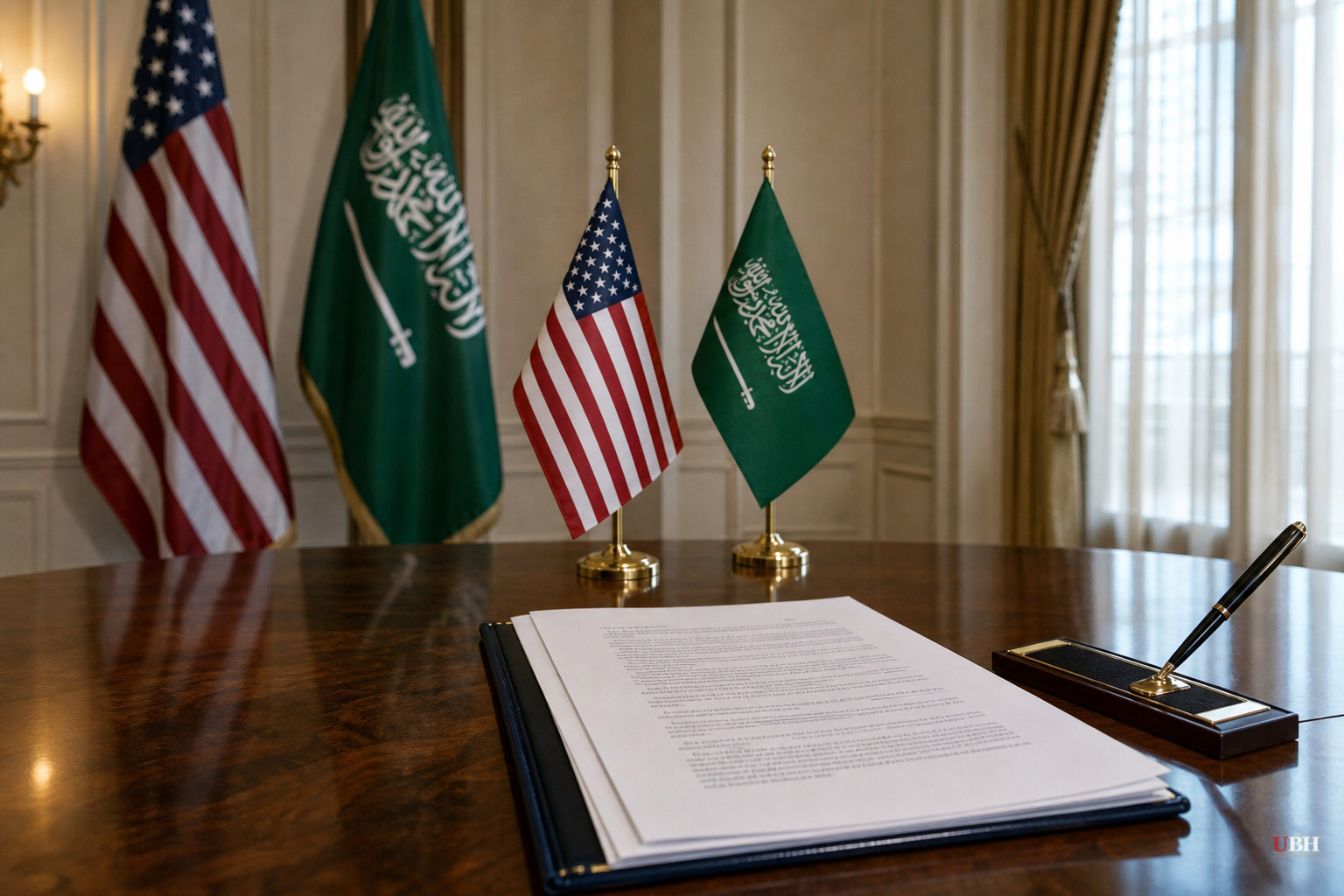
A draft nuclear cooperation agreement between the United States and Saudi Arabia has been sitting unsigned on President Donald Trump's desk since negotiations wrapped up in October 2025, according to CNN, which reported on documents it says it reviewed directly.
The holdup matters because of what's missing. CNN's reporting, cited by Middle East Eye and Militarnyi, says the draft lacks the standard non-proliferation safeguards the US has historically demanded before helping a country build a civilian nuclear program. Those safeguards typically bar a partner nation from enriching uranium or reprocessing spent fuel, the two pathways to bomb-grade material.
The United Arab Emirates, for comparison, agreed in its own US nuclear pact to forgo enrichment and reprocessing entirely. The draft Saudi language, according to Middle East Eye, instead calls for vague "additional safeguards and verification measures to the most sensitive areas of potential nuclear cooperation" — wording that does not rule out Saudi enrichment.
Why It's Stalled
CNN's sources, described only as officials familiar with the matter, say the required paperwork — including the mandatory "123 agreement" that governs US civil nuclear exports and its associated safeguards protocols — has not been sent to Congress. Two sources told CNN the delay is deliberate, driven by fear the deal could trigger a bipartisan resolution of disapproval on Capitol Hill that would kill it outright.
Militarnyi reports that two sources familiar with the talks pointed to the broader war with Iran as another factor in the delay. Trump has said US action against Iran was partly meant to stop Tehran from using enriched uranium to build a weapon. Signing a deal that lets Saudi Arabia do the same thing, even under a civilian label, is an awkward fit in that context.
There's also a political clock. CNN's reporting notes Congress could flip to a Democratic majority after the November elections, which would make it harder for Trump to push the deal through afterward. That gives the administration incentive to either sign now or wait it out, depending on how the votes are expected to break.
What Riyadh Wants
Crown Prince Mohammed bin Salman's government has pushed hard for enrichment rights, arguing the kingdom sits on substantial uranium reserves it wants to develop itself rather than simply buy fuel from outside suppliers. Saudi Energy Minister Prince Abdulaziz bin Salman put it bluntly last year: "We will enrich it and we will sell it and we will do a 'yellowcake,'" referring to the processed uranium ore that precedes enrichment.
The crown prince has also said publicly that Saudi Arabia would build its own nuclear weapon if Iran ever gets one. A stated position, not a hidden ambition. That's the core of the concern raised by nuclear-policy watchers cited by CNN. Without hard enrichment restrictions, a civilian program provides the technical foundation for a weapons program later, whether or not that's the current intent.
Enrichment technology doesn't come with an on/off switch for civilian versus military use. The equipment and expertise overlap. That's the same logic the US applied when it insisted on no-enrichment terms with the UAE.
The counterargument, made by administration allies and Gulf-policy hawks, is that keeping Saudi Arabia inside a US-supervised nuclear framework is safer than leaving Riyadh to build capability with other partners. Saudi Arabia signed a defense pact with Pakistan, the only nuclear-armed state in the Muslim world, in the days after Israel struck Hamas negotiators in Qatar. A former US intelligence official told Middle East Eye that extending American nuclear cooperation to Riyadh "would pull them out of the Pakistanis' nuclear umbrella and make the Saudis feel better than the Qataris." Tying Saudi Arabia to Washington, even loosely, may beat pushing it toward Islamabad or elsewhere.
That calculation doesn't explain why the safeguards language would be weaker for Saudi Arabia than it was for the UAE.
Where Things Stand
As of today, no signature, no submission to Congress, and no public timeline. The Trump administration notified Congress back in February that it was pursuing a civil nuclear pact with Riyadh without the customary non-proliferation restrictions, so the broad shape of this deal isn't new information. What's unresolved is whether the White House sends the final 123 agreement to Capitol Hill before the November midterms, and what specific enrichment limits, if any, get written into the fine print before that happens.
Congress has the power to block a 123 agreement through a joint resolution of disapproval. Whether lawmakers from either party actually force that fight depends on what language the administration eventually submits, and it hasn't yet.
Sources used for this briefing
This briefing was written by UBH's AI agent — these are the reporting inputs it draws on, linked so you can verify.


