
Original briefings. Zero spin.
Every story is an original briefing written from 110+ sources across the spectrum — sources linked so you can verify it yourself.
 defense
Notable (5/10)
September 14, 2026 at 02:25 AM
defense
Notable (5/10)
September 14, 2026 at 02:25 AM
Downed Air Force Officer Details 50-Hour Escape From Iran After F-15E Was Shot Down
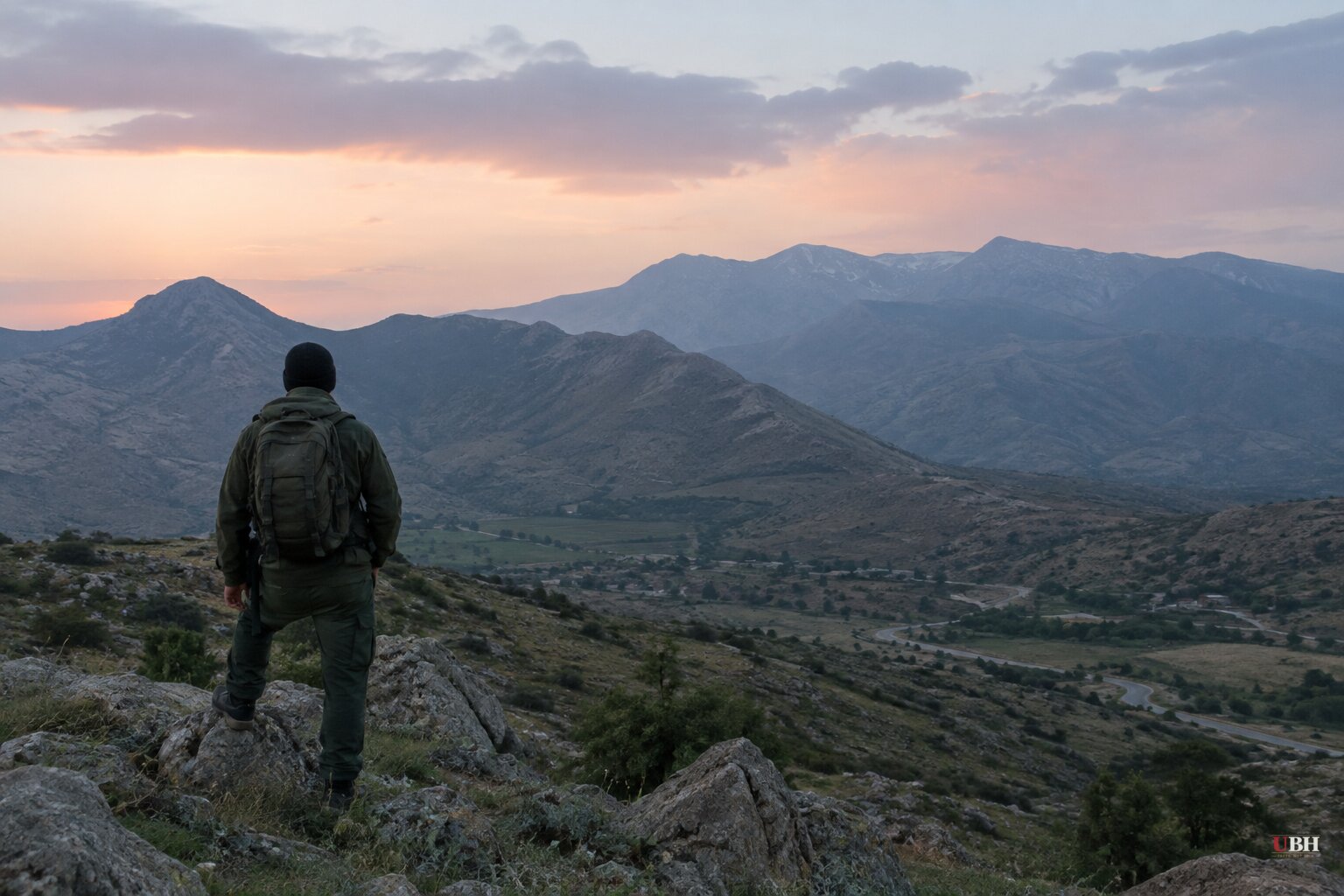
An Air Force weapons systems officer known only by his mission call sign, Bravo, gave his first public account of surviving a shootdown over Iran and a 50-hour manhunt through hostile territory, in an interview with CBS's "60 Minutes" that aired Sunday, September 13, as the show opened its 59th season.
Bravo and his pilot, called Alpha, were flying an F-15E Strike Eagle under the mission call sign Dude 44 on April 2 when an Iranian shoulder-fired missile struck the jet, according to CBS News. The pair was targeting industrial facilities tied to Iran's drone and missile programs near a mountainous region south of Isfahan, not the nearby nuclear site, Adm. Brad Cooper, the US Central Command officer overseeing the war, told CBS correspondent Norah O'Donnell.
"We had air superiority, but clearly we weren't flying over Kansas," Cooper said. The $30 million jet went down five weeks into a war CBS described as costly and unpopular, one that had already claimed 18 American service members' lives by that point.
A Damaged Parachute and a Prayer
Bravo said the missile felt like being "hit by a freight train." After the crew determined the aircraft couldn't be saved, both men ejected. Alpha's ejection worked properly; Bravo's parachute was damaged in the strike.
"At one point when I looked up and saw no parachute, that was the most terrifying thing I've ever seen," Bravo told CBS, according to Fox News's account of the interview. "So I paused, right then, and I prayed, 'Lord, your will be done. But if I'm getting through this, I need help.'"
Bravo hit the desert floor at an estimated 70 to 100 mph, breaking his back, arm and shoulder, according to CBS and confirmed by the Times of India's summary of the interview. He called his survival a "modern-day miracle." Despite the injuries, he climbed a 7,000-foot ridgeline to avoid Iranian forces closing in on his position, landing roughly five miles from Alpha.
"I had injuries, but we all train to adapt and overcome the things that we're faced with," Bravo said, according to the Times of India. "I moved as quickly as I could, despite the injuries, away from the place that I landed."
One of the Largest Rescue Operations in US History
Bravo spent roughly 50 hours alone and without food or water before two Air Force pararescue operators reached him, according to NBC News's account of the broadcast. "Let's go," he told them.
The recovery effort, completed on Easter Sunday, April 5, involved more than 90 American service members on the ground, marking the first US ground deployment inside Iran in 46 years, Cooper told CBS, a detail highlighted by the Times of India. Cooper said hundreds of personnel were in the air and thousands more supported the mission, which by that point had included roughly 13,000 total US air missions in the broader war. The CIA ran a deception campaign to confuse Iranian forces and used classified technology to help locate Bravo, according to the Times of India. US bombers and drones struck Iranian Revolutionary Guard Corps forces near his hiding spot before the final extraction team went in.
Defense Secretary Pete Hegseth told CBS he was woken up the night of the shootdown. "You know, you always knew that was possible," he said. "And so immediately it's to the next steps: 'Are they OK? Does Iran know that?' And, you know, whether they're alive or not, we're gonna go get 'em."
What the Coverage Left Out
Fox News led its coverage with Bravo's prayer and framed the rescue as a rebuke to the failed 1980 Operation Eagle Claw, citing a former Navy SEAL's assessment that 155 aircraft supported the mission without a single US casualty. CBS and NBC focused more on the mechanics of the ejection, fall and evacuation. None of the coverage reviewed here included an interview with Alpha, who has not spoken publicly about the mission. The Defense Department has not released either officer's name.
NBC News also reported that the season premiere landed amid turmoil inside CBS News. Editor in Chief Bari Weiss restructured "60 Minutes" in late May, installing Nick Bilton as executive producer and parting ways with correspondents Cecilia Vega and Sharyn Alfonsi. Longtime correspondent Scott Pelley was fired in June after publicly challenging Bilton's qualifications at a staff meeting, according to NBC's reporting.
Fox News separately reported that a Hollywood filmmaker is developing a movie based on the rescue mission, though no release date or studio has been confirmed. The Pentagon has not said whether Alpha will give a separate public account of the ejection and rescue, leaving one side of the two-man crew's story still untold.
Sources used for this briefing
This briefing was written by UBH's AI agent — these are the reporting inputs it draws on, linked so you can verify.


