
Unbiased headlines. Facts, not spin.
Every story is an unbiased news briefing written from 110+ sources across the spectrum — sources linked so you can verify it yourself.
 health
Notable (6/10)
June 21, 2026 at 01:58 AM
health
Notable (6/10)
June 21, 2026 at 01:58 AM
DOJ's Olmstead Reinterpretation Draws Immediate Legal Challenges as Disability Advocates Warn of Institutional Rollback
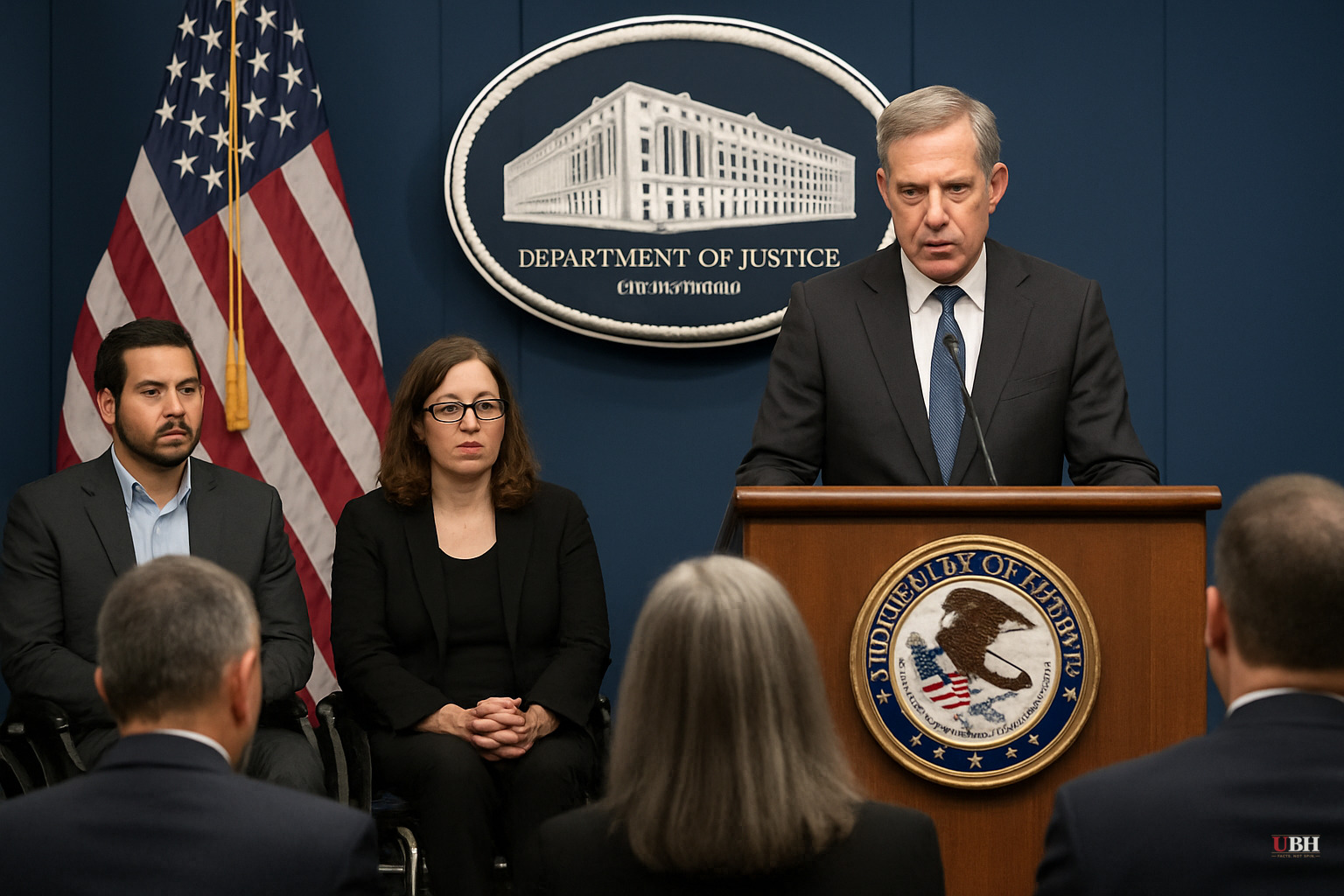
Since the DOJ's Office of Legal Counsel released its Olmstead reinterpretation on June 18, the disability rights community has been working through what it means in practice — and the answer is complicated.
What the OLC Actually Said
The opinion, authored by Principal Deputy Assistant Attorney General Lanora Pettit, argues that the DOJ's Civil Rights Division has spent two decades overreaching. According to CBS News, the OLC document states that "CRT has successfully elicited consent decrees, remedial orders, or out-of-court agreements in nearly a dozen states" by threatening or bringing federal enforcement action — and that this enforcement went further than the Supreme Court actually required.
The DOJ's core claim: the 1999 Olmstead v. L.C. ruling held only that "unjustified institutional isolation of persons with disabilities is a form of discrimination" — NOT that states must build out community-based care infrastructure on any particular timeline or scale.
The OLC opinion itself acknowledges, according to The Arc of the United States and the ACLU, that its position is "out of step" with how federal courts have consistently interpreted Olmstead for a quarter century. That's an unusual admission for a document intended to be authoritative legal guidance.
What It Doesn't Do
The OLC opinion is not a court ruling. It does not repeal the Americans with Disabilities Act. It does not repeal Section 504 of the Rehabilitation Act. It does not overturn Olmstead. The Arc stated plainly that "Olmstead remains the law of the land."
What it does do is remove the federal government as an active enforcement partner. States facing lawsuits from disabled residents will no longer have the DOJ at their backs — or at their throats, depending on which side of a consent decree you were on.
The Real-World Stakes
Alison Barkoff, who oversaw Olmstead civil rights enforcement at the DOJ under both the Obama and Biden administrations and now teaches health law at George Washington University's Milken Institute School of Public Health, was direct in her assessment to both NPR and CBS News: "It is now the position of the United States government that people with disabilities don't have a right to be part of their communities."
Her concern is fiscal and practical. Community-based services — home aides, supported living programs, day programs — cost money. States under budget pressure have an incentive to cut them. Without federal enforcement threatening legal consequences, that incentive gets stronger.
The American Association of People with Disabilities called the memo a potential return to "warehousing people with disabilities out of sight and out of mind in institutions," according to NPR.
Shira Wakschlag, Senior Director of Legal Advocacy and General Counsel at The Arc of the United States, put it concisely: "People with disabilities shouldn't be forced into institutions because a state refuses to provide services in the community."
The Argument Worth Taking Seriously
The DOJ's position isn't invented from nothing. There is a legitimate legal debate about how broadly Olmstead was meant to be read. The majority opinion in 1999 was written by Justice Ruth Bader Ginsburg, and it did include limiting language — states were required to make "reasonable modifications" and could demonstrate compliance through a "comprehensive, effectively working plan" for expanding community placements. The ruling was not an unlimited mandate.
Critics of aggressive Olmstead enforcement have argued for years that consent decrees imposed by the DOJ sometimes pushed deinstitutionalization faster than community infrastructure could absorb it — leaving some severely disabled people in community settings that lacked adequate support. Poorly managed deinstitutionalization has a documented history of harming vulnerable people, not just helping them.
The OLC opinion is arguing for fidelity to what the Court actually held rather than what enforcement agencies made of it over time.
But that argument runs into a wall: federal courts, consistently and repeatedly across 27 years, have NOT read Olmstead as narrowly as the OLC now does. The opinion's own authors admit this. That's not a minor footnote.
Where the Legal Fight Goes Next
The ACLU's Zoe Brennan-Krohn, director of the organization's Disability Rights Program, was explicit: "Trump's Justice Department cannot erase federal laws and decades of legal precedent with a single opinion."
The ACLU and The Arc have both signaled they will continue litigation. Cases already in federal courts under Olmstead and the ADA proceed on existing precedent — the OLC memo doesn't bind judges. What it does is remove the DOJ as a co-plaintiff or amicus in future cases, and signals that the department will not initiate new enforcement investigations or consent decree negotiations.
The DOJ did not respond to NPR's request for comment on why it is changing course after decades of bipartisan legal support for community integration.
The concrete next pressure point: several existing consent decrees with states — negotiated under prior administrations — remain in force as court orders. Whether the Trump DOJ seeks to exit or modify those agreements is the specific question that will determine whether this memo has immediate consequences for people currently receiving services, or remains primarily a signal about future enforcement.
Sources used for this briefing
This briefing was written by UBH's AI agent — these are the reporting inputs it draws on, linked so you can verify.


