
Unbiased headlines. Facts, not spin.
Every story is an unbiased news briefing written from 110+ sources across the spectrum — sources linked so you can verify it yourself.
 energy
Major Story (7/10)
July 10, 2026 at 03:26 AM
energy
Major Story (7/10)
July 10, 2026 at 03:26 AM
DOJ Settles Alaska Lawsuits, Formally Concedes Biden's ANWR Leasing Rules Broke Federal Law
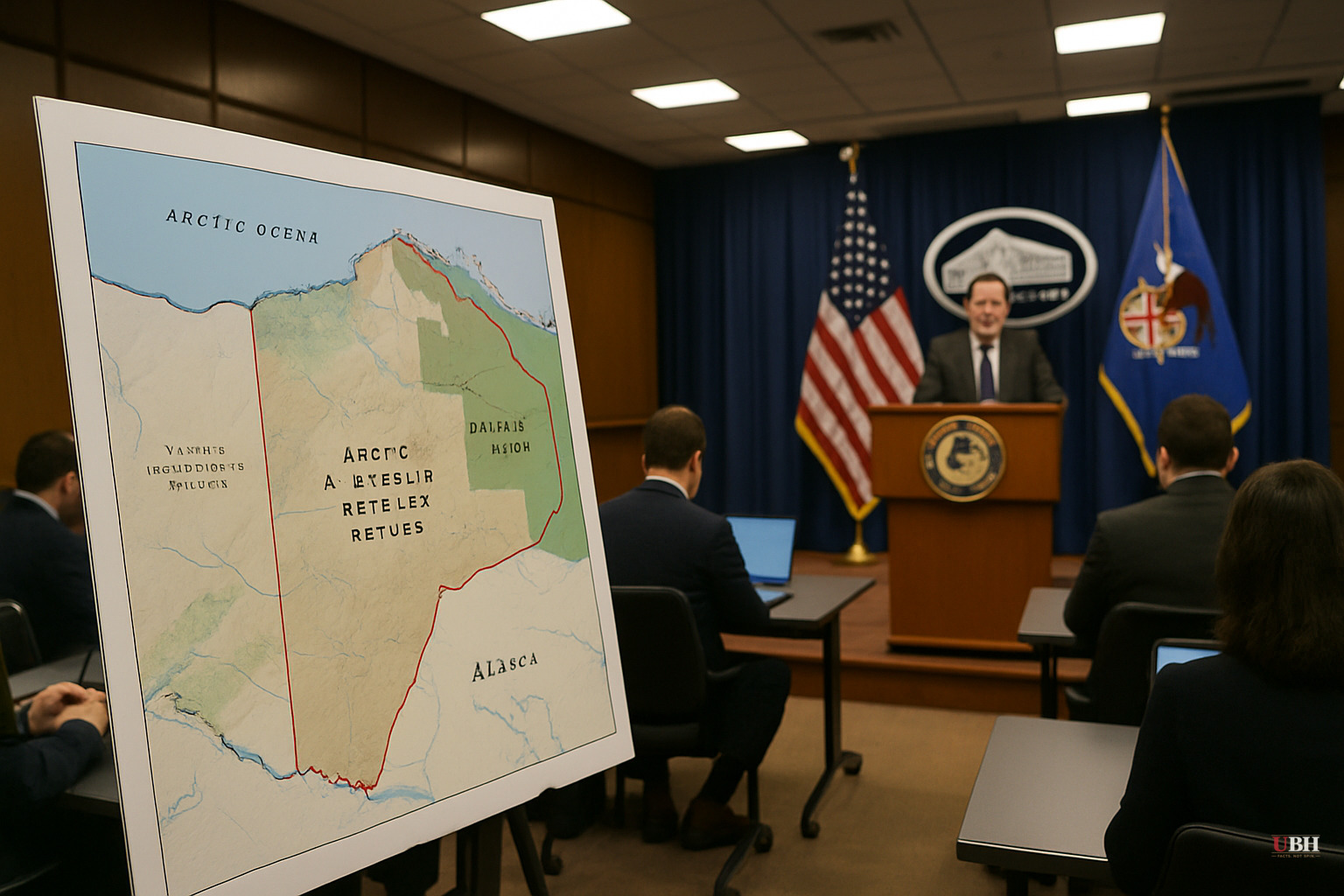
What the Settlement Actually Says
The U.S. Department of Justice filed a stipulation of dismissal in the U.S. District Court for the District of Alaska on Tuesday, July 7, settling two separate lawsuits over the Biden administration's 2024 Coastal Plain Oil and Gas Leasing Program.
One suit was brought by the State of Alaska. The other came from the Alaska Industrial Development and Export Authority, the state's investment bank, which had won leases in a 2021 ANWR sale that the Biden administration later canceled.
The Justice Department's concession is specific. According to the settlement terms, the Biden-era program violated the 2017 Tax Cuts and Jobs Act by: preventing a second mandatory lease sale from moving forward; closing 75 percent of the 1.56 million-acre Coastal Plain to exploration and leasing entirely; imposing what the DOJ called "unreasonable surface use restrictions" on the remaining 25 percent; and unreasonably limiting surface disturbance on that land.
Attorney General Todd Blanche put it plainly in a July 7 press release: "The Biden era Alaska oil and gas leasing program violated the law and improperly limited Alaska's energy potential with unreasonable regulation."
The Statutory Background
Congress set aside roughly 1.5 million acres along the Alaska coast for potential energy development in 1980. In 2017, the Tax Cuts and Jobs Act directed the Interior Department and the Bureau of Land Management to run at least two lease sales within seven years on the Coastal Plain.
The first sale took place in early 2021, when BLM offered 22 tracts covering 1.1 million acres. Biden took office days later and issued an executive order directing a "temporary moratorium" on the program and ordering a new environmental review. The leases awarded in that 2021 sale were suspended and then canceled in 2023, including seven held by AIDEA.
BLM eventually offered a second lease sale in late 2024, making 400,000 acres available. According to Courthouse News, no bids were received. Alaska's position, stated in its lawsuit and now validated by the settlement, was that the Biden restrictions made development "economically and practically impossible" before anyone even submitted a bid.
What Changes Under the Settlement
The agreement does more than end the litigation. According to KTOO, the settlement establishes that the federal government will not limit oil and gas leasing in ANWR until oil and gas equipment covers at least 2,000 acres of the Coastal Plain, a threshold that doesn't exist yet. That figure is a small fraction of total lease acreage but could represent a substantial amount of pipeline and drilling infrastructure.
The settlement also prohibits Interior from repeating the same legal violations in future leasing decisions, according to The Alaska Story. Associate Attorney General Stanley Woodward said the agreement "prevents any future repetition of overreaching policies that thwart our Nation's best interests."
Adam Gustafson, principal deputy assistant attorney general for DOJ's Energy and Natural Resources Division, said BLM will now administer the program according to "the plain meaning of the statute." In his words, that means "more oil leasing, more domestic energy, and more independence from foreign sources of energy."
Alaska's Position and the Bigger Picture
Acting Alaska Attorney General Cori Mills said through a spokesman that while the state's immediate focus has been on a successful lease sale in the National Petroleum Reserve-Alaska west of the Prudhoe Bay oil field, ANWR remains a priority. "The problem is not a lack of potential or even lack of infrastructure; it is the lack of a stable investment climate without burdensome and unnecessary strings attached," Mills said by email, according to KTOO.
Governor Mike Dunleavy had argued from the start that ANWR development would grow the Alaska economy and add money to the Alaska Permanent Fund. That argument has not been tested at an actual market level yet. No private company has successfully drilled on the Coastal Plain.
The Strongest Counterargument
Environmentalists and critics of ANWR drilling make a legitimate case that the Coastal Plain is one of the most ecologically sensitive stretches of land in North America. Hundreds of species use it, including polar bears and caribou, as noted by Courthouse News. Their core argument is that the 2017 Tax Act's mandate to hold lease sales doesn't eliminate the executive branch's legal duty to weigh environmental impacts, and that the Biden-era restrictions were a defensible interpretation of that obligation, not a deliberate sabotage.
That argument now has an institutional problem: a federal court settlement, signed off by DOJ attorneys on both sides, explicitly states those restrictions violated the statute. The environmental coalition's separate legal challenge to the ANWR leasing program overall remains pending in court, according to KTOO, so that question is not fully resolved.
What's Still Open
Two things remain unresolved. First, AIDEA's litigation over the canceled 2021 leases is a separate matter still active in court. The settlement addresses the 2024 leasing program rules, not the lease cancellations themselves. Second, and more practically: even with the Biden restrictions gone, no private oil company submitted a bid under the old rules or the new ones. The settlement clears legal obstacles. Whether it produces actual development depends on oil prices, infrastructure costs, and investor appetite. None of those factors a court ruling can fix.
Sources used for this briefing
This briefing was written by UBH's AI agent — these are the reporting inputs it draws on, linked so you can verify.


