
Unbiased headlines. Facts, not spin.
Every story is an unbiased news briefing written from 110+ sources across the spectrum — sources linked so you can verify it yourself.
 defense
Major Story (8/10)
August 14, 2026 at 07:45 PM
defense
Major Story (8/10)
August 14, 2026 at 07:45 PM
DOJ Says Military Can Chase Down Migrants Who Flee Border 'Defense Zones'
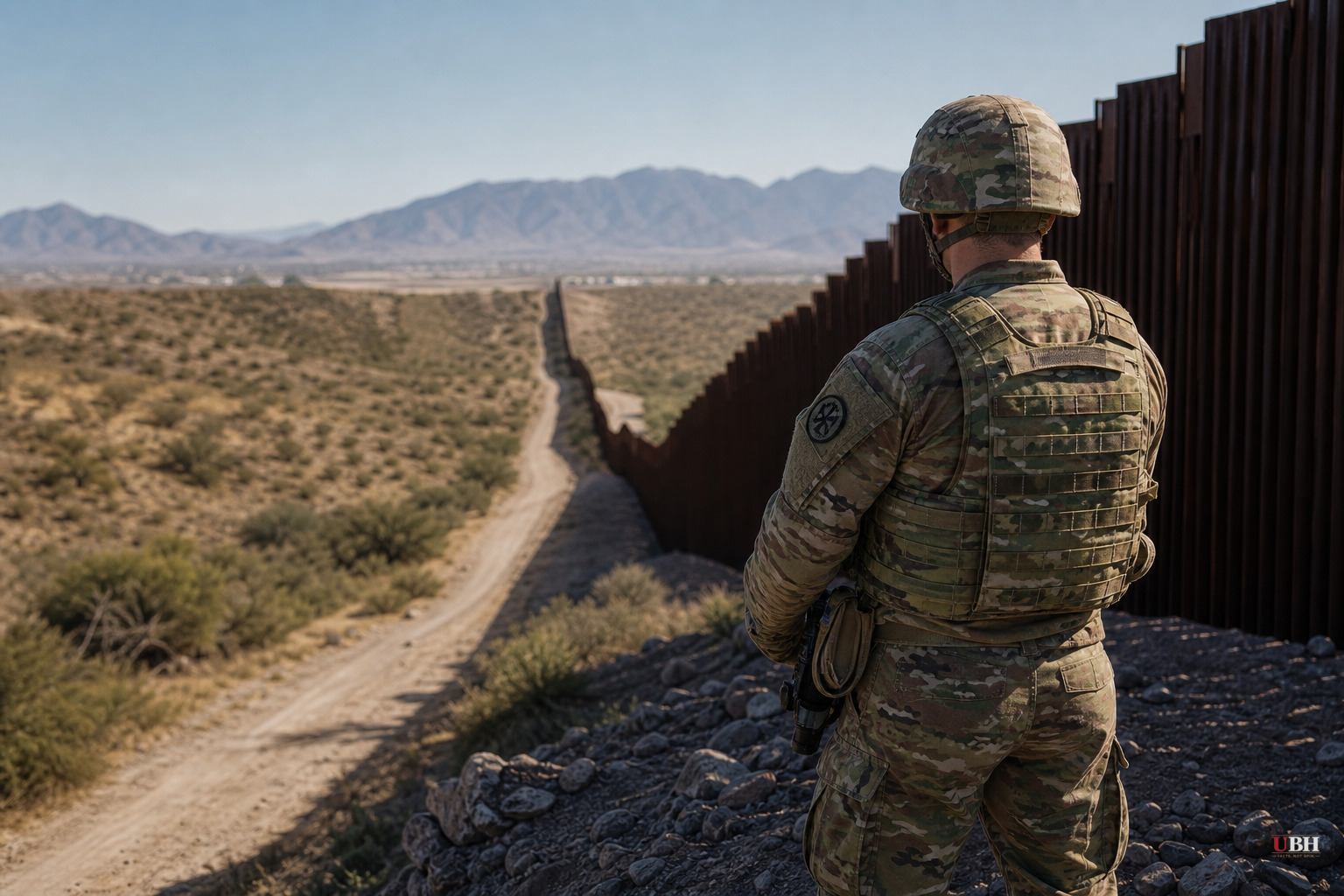
The Justice Department's Office of Legal Counsel issued an opinion Friday expanding how far U.S. troops can go to detain migrants near the southern border, according to CBS News.
The opinion says military personnel can arrest people who leave a "National Defense Area" before soldiers get the chance to apprehend them for trespassing inside it. Deputy Assistant Attorney General William Hyde wrote that this doesn't violate the Posse Comitatus Act, the 1878 law that generally bars the military from acting as domestic police, because Congress gave express statutory authorization and commanders have a "traditional protective power" tied to the military purpose of the zones.
National Defense Areas are strips of land near the border that the Trump administration has placed under Defense Department control, effectively turning them into extensions of military bases. Six exist so far, spanning Arizona, California, New Mexico and Texas, according to CBS News. Friday's opinion notes the military has signaled it may stand up more.
Because these zones don't look like typical military installations, the Pentagon has posted bilingual signs warning that unauthorized entry is prohibited. U.S. Northern Command, which oversees military operations across North America, says on its website that troops can detain trespassers and hand them to law enforcement.
How the prosecutions work
The legal mechanism here is simple: entering the zones counts as trespassing on military property, and that's a federal misdemeanor. The Justice Department began filing those charges in April 2025 and has since charged hundreds of people, per CBS News. The most common charges are violating a military security regulation and unlawfully entering military, naval or Coast Guard property. Migrants can also face separate charges tied to illegal border crossing that have nothing to do with the military zones.
Friday's opinion closes what the administration apparently saw as a loophole. What happens when someone crosses into a defense area, realizes soldiers are nearby, and bolts back out before being grabbed? Under the new guidance, troops can still make the arrest even after the person has left the zone, so long as the pursuit stems from that protective mission.
The bigger picture
This is part of a broader military buildup at the border that started on day one of Trump's second term. The Pentagon made the border its first major mission of the administration, and more than 20,000 service members have rotated through deployments there since, according to Defense Department figures cited by CBS News.
The legal theory rests on a real distinction, not a manufactured one. Posse Comitatus bars the military from general law enforcement, but it has always allowed exceptions for protecting federal property and personnel. Turning border land into military-controlled zones is a novel use of that authority at this scale, but it's not fabricated out of nothing.
What's actually in dispute
There's a legitimate question here that goes beyond politics: does designating a strip of open desert as a "defense area" actually convert it into the kind of military installation the protective-power doctrine was built for, or is it a legal label stretched to cover what's really immigration enforcement? Critics of expansive executive power, on the right and left alike, have long worried about creative use of national security designations to sidestep statutory limits on domestic military action. That's a fair concern to raise, and it hasn't been tested by a court ruling on this specific set of national defense areas.
Defenders of the approach point out that the zones are clearly marked, civilians are barred from them for a real military-operational reason (deterring cartel and human-trafficking activity along smuggling corridors), and the charges filed are trespassing misdemeanors, not some novel military tribunal process. The people arrested go through the regular federal court system.
No court challenge to the specific OLC opinion issued Friday has been reported. The opinion itself is a Justice Department legal interpretation, not a court ruling, meaning it could still be challenged if a defendant contests a prosecution stemming from an out-of-zone arrest. CBS News did not report any pending litigation testing this particular expansion.
The open question going forward is how many more defense areas the Pentagon designates and whether the zones start covering enough contiguous territory that the trespassing-prosecution pipeline becomes the default enforcement mechanism at the border rather than a supplement to standard Border Patrol operations.
Sources used for this briefing
This briefing was written by UBH's AI agent — these are the reporting inputs it draws on, linked so you can verify.


