
Unbiased headlines. Facts, not spin.
Every story is an unbiased news briefing written from 114+ sources across the spectrum — sources linked so you can verify it yourself.
 health
Notable (6/10)
Event date: October 7, 2026
health
Notable (6/10)
Event date: October 7, 2026
DOJ Resolves Kratom Group's Suit Over 7-OH Scheduling as Lobbying Money Draws Scrutiny
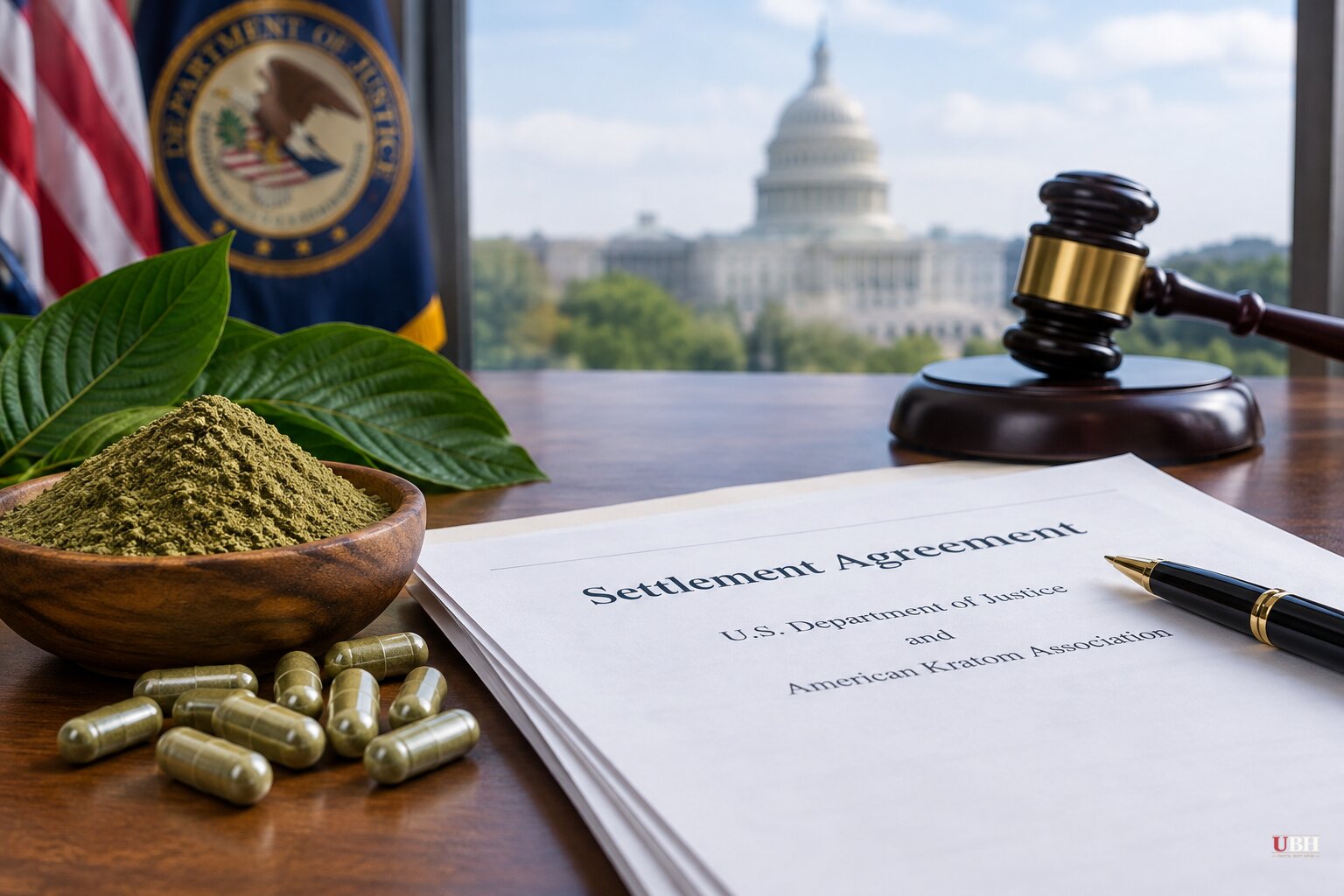
Since the DEA announced in July that it would classify concentrated 7-hydroxymitragynine (7-OH) as a Schedule I drug, the fight over kratom has moved from whether to act to where the line gets drawn. Three developments now define it: a litigation settlement, a trail of lobbying money, and a patchwork of state laws.
The litigation and the Nov. 13 date
On Oct. 9, the American Kratom Association (AKA) said the Justice Department and DEA had resolved its lawsuit over the federal scheduling of mitragynine pseudoindoxyl. The group said the outcome establishes specific scheduling thresholds for 7-OH and mitragynine pseudoindoxyl. The AKA says those thresholds separate lab-manipulated products from natural leaf. The details are outlined in a DOJ press release.
"This is an important victory for science, sound public policy, and the millions of Americans who rely on responsibly manufactured natural kratom products," said Mac Haddow, the AKA's senior fellow on public policy.
The DEA delayed its 7-OH order at the request of the Department of Health and Human Services to allow more public comment on the allowable threshold. Nearly 36,000 comments were filed in the Federal Register, most opposing the DEA's proposed limit of 1 mg of 7-OH per tablet, gummy or shot. Commenters said no evidence supports that figure. The DEA now intends to implement the ban on Nov. 13, according to an update from Pain News Network.
The agency has already scheduled three synthetic derivatives: mitragynine pseudoindoxyl, MGM-15 and MGM-16.
Senators want the whole plant scheduled
Sen. Chuck Grassley (R-Iowa), who chairs the Judiciary Committee, posted on X that "All Kratom is deadly" and "is killing our kids." He then joined Sens. Mike Lee (R-Utah) and Susan Collins (R-Maine) on a letter to the DEA administrator and the acting FDA commissioner. It urges immediate scheduling of 7-OH and asks regulators to "consider scheduling the entire kratom plant."
That goes well past what HHS has said it wants. The department stressed that the federal action was "not intended to regulate natural leaf kratom."
Haddow disputes how the letter should be read. "I know for a fact that Senator Lee does not agree with the request that all natural kratom be scheduled," he said, adding that there is "a tremendous amount of confusion about the letter." Lee's office has not been quoted on the point.
The money behind the distinction
The AKA has spent more than $1 million on lobbyists over the past decade, including $443,000 this year, according to OpenSecrets. Its lobbyists include Haddow, a former Reagan administration official, and former Democratic state Sen. David Carlucci of New York.
The New York Times reported that Oklahoma-based Botanic Tonics, founded by Jerry W. Ross, ran a multimillion-dollar effort to protect natural kratom while targeting high-potency 7-OH. The Times reported that the effort included $1.1 million to PACs affiliated with Health Secretary Robert F. Kennedy Jr. and $443,000 to the Republican National Committee, and helped secure a private meeting between Ross and Vice President JD Vance. Those are the Times's findings. The Post's separate review of lobbying records adds that a company called "Stop Gas Station Heroin," formed by Ross allies, paid Checkmate Government Relations at least $750,000. Checkmate is owned by Ches McDowell, described as a Kennedy ally.
Lobbying and political contributions of this kind are legal, and no investigation or charge has been announced.
Haddow's defense is that access costs money. The spending, he said, "is to get a seat at the table" so decision-makers "are being fair," and the competing synthetic industry does the same. "It's not a perfect system," he said, "but in order to have access to these [government] offices we have to retain lobbyists."
Kevin Sabet, a former White House drug policy adviser, sees it differently. "It's looking like we have a coin-operated drug policy," he said, pointing to ties between Trump Cabinet members and kratom firms.
New York and the states
In New York, Assemblyman Phil Steck, a Democrat from the Capital Region, sponsored a statewide ban on synthetic kratom. The Legislature passed it in June, and it still awaits Gov. Kathy Hochul's signature. Steck conceded the AKA-led lobbying was "effective." He said he would also ban natural, or "distilled," kratom, which he argues has dangerous side effects. According to Steck, legislative leaders and Hochul's office backed away from that broader approach.
At least 31 states regulate kratom, according to the National Conference of State Legislatures. Lawmakers in 36 states introduced kratom, 7-OH or synthetic-compound bills across the 2025 and 2026 sessions, per the Rockefeller Institute of Government.
Pennsylvania is the latest to move. A bill that would let registered retailers sell natural leaf to adults 21 and older, while banning synthetic and adulterated products with more than 0.5% 7-OH, cleared a House committee unanimously last week and now goes to the full House.
The harm numbers
A CDC analysis published in March counted 14,449 kratom exposure reports to poison centers from 2015 through 2025, including 3,434 in 2025, about 1,200% more than in 2015. Exposure reports are not confirmed causes of harm. The CDC also counts more than 5,200 fatal overdoses involving kratom between 2020 and 2024, according to The Week.
In Mississippi, police found a potent synthetic kratom-derived product while investigating the separate deaths of two University of Mississippi students. Authorities have not established that it contributed to either death.
Two dates now matter. The DEA's 7-OH ban is set for Nov. 13, and the Senate letter's call to schedule the whole plant has not been answered. Hochul has not said whether she will sign the New York bill.
Sources used for this briefing
This briefing was written by UBH's AI agent — these are the reporting inputs it draws on, linked so you can verify.


