
Unbiased headlines. Facts, not spin.
Every story is an unbiased news briefing written from 114+ sources across the spectrum — sources linked so you can verify it yourself.
 health
Notable (6/10)
October 10, 2026 at 03:41 PM
health
Notable (6/10)
October 10, 2026 at 03:41 PM
Post probe finds banned synthetic kratom compounds at 8 of 52 NYC shops; federal filing cites three compounds in Ole Miss students
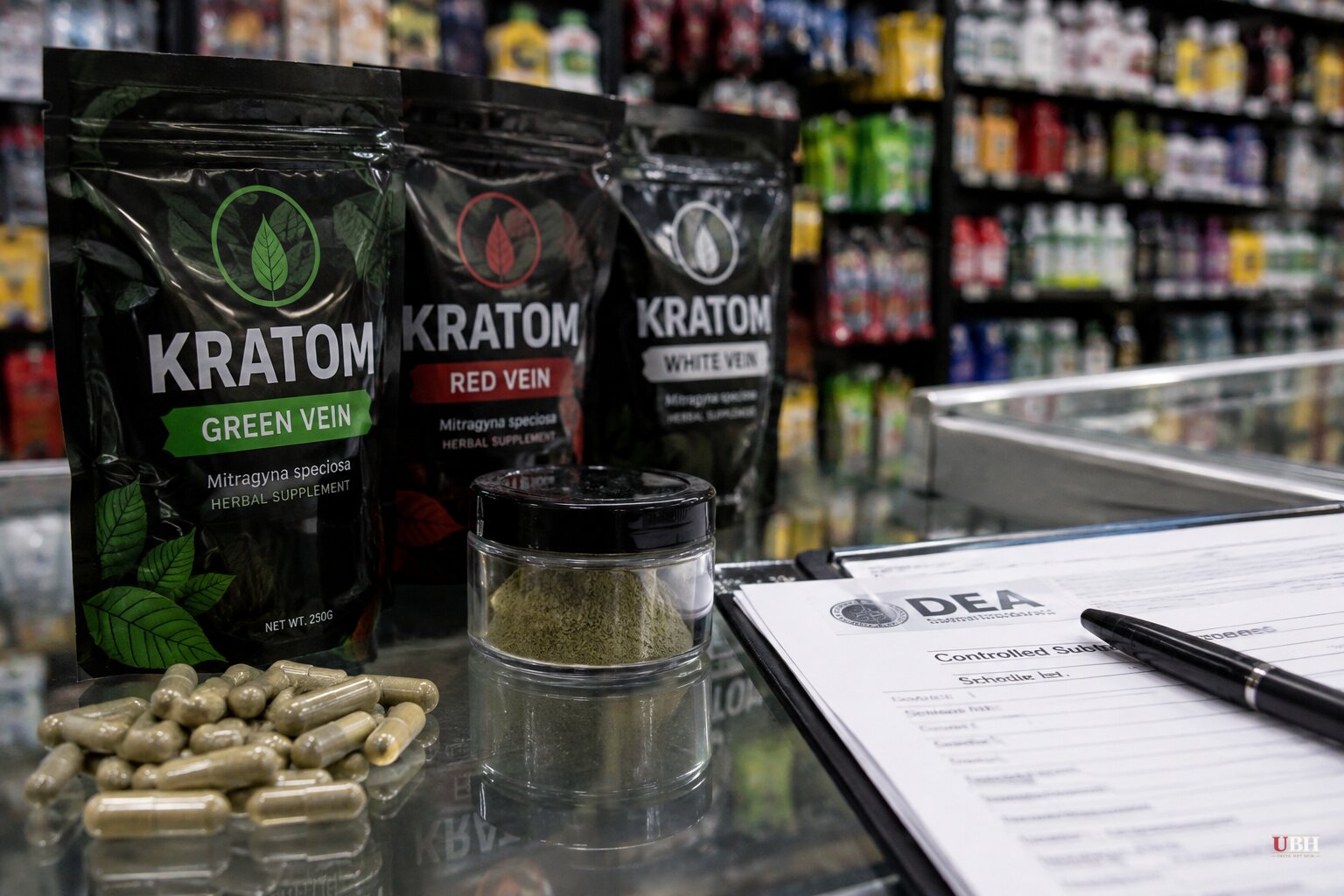
Since two University of Mississippi students were found dead on Sept. 21, scrutiny of semi-synthetic kratom products has spread well beyond Oxford. The latest developments: a toxicology claim in the federal case, a defense counter-argument, and a New York City retail probe.
What the federal filing says
Aidan Hamilton, 18, and Robert Strang, 20, died in separate incidents on Sept. 21. A federal filing in the case says a toxicology report found mitragynine, MGM-15 and MGPI in the systems of both students.
MGM-15 and MGPI (mitragynine pseudoindoxyl) were classified as Schedule I controlled substances for two years by the Justice Department in an August emergency order. Prosecutors say another derivative, MGM-16, is also now Schedule I.
That does not settle what killed them. Authorities have not established that the product contributed to either death, and officials have not attributed the deaths to kratom.
At a court hearing Friday, a defense attorney for one of the charged men said one student died from a combination of substances, including cough syrup. The attorney said the other died from inhalation asphyxiation, according to WMC-TV.
The U.S. Attorney's Office for the Northern District of Mississippi has charged Yahya Mohamed Mosleh, 51, and his son Islam Yahya Mosleh, 18, with possession with intent to distribute controlled substances. The complaint alleges the pair worked at a local vape, tobacco and beer store that sold the derivatives. Officials connected packages found with the students to that store, prosecutors said. The charges are allegations, not convictions.
New York shops
Over two weeks, New York Post reporters visited 52 shops across the city. Eight stores, about 15%, were selling products containing MGPI or MGM-15, according to the Post's investigation.
Anyone caught selling those compounds can face up to 20 years in prison under the federal scheduling order. Every product containing them also contained 7-hydroxymitragynine, or 7-OH. That compound is legal in New York and is called "gas station heroin" by critics. Experts cited by the Post say it is 13 times stronger than morphine.
Post staffers reported that employees at several stores boasted their strongest products contained the banned compounds. The Post did not say whether any retailer has been charged.
A separate Post test checked age verification. Reporter Sidney Blasco, 20, visited 18 smoke shops on 8th Avenue in Hell's Kitchen. New York law requires buyers of kratom-derived products to be 21.
Nine shops asked for ID, and seven turned her away because she could not prove she was 21. Two asked her age but never asked to see ID. Blasco bought nothing from any store.
Rohi Bati, manager of Esmoke on 40th Street, said many small shops sell "whatever they want because they don't have the license or anything." Bati asked Blasco for ID and refused to sell to her.
Rich Marianos, a former ATF official and executive with the Tobacco Law Enforcement Network, said the results did not surprise him. "These guys are such bad actors," he said.
Mayor Zohran Mamdani's office, the NYC Health Department and the Department of Consumer and Worker Protection did not return the Post's requests for comment.
States split on how to regulate
At least 31 states regulate kratom, according to the National Conference of State Legislatures. Lawmakers in 36 states introduced bills on kratom, 7-OH or synthetic compounds during the 2025 and 2026 sessions, according to the Rockefeller Institute of Government.
The central policy question is how to go after potent derivatives without treating traditional leaf the same way. Pennsylvania's bill follows that split. It would let registered retailers sell natural-leaf kratom to adults 21 and older while banning synthetic and adulterated products, including anything above 0.5% 7-OH. It cleared a House committee unanimously last week.
NIDA Director Dr. Nora Volkow told journalists Tuesday the agency is "very concerned" about how easy certain kratom products are to buy, along with other substances with strong opioid effects.
The numbers are rising, but they are blunt. A CDC analysis published in March counted 14,449 kratom exposure reports to poison centers from 2015 through 2025, including 3,434 in 2025, about 1,200% more than in 2015. The data does not show how many involved natural leaf versus synthetic derivatives.
Wendy Chamberlain, founder of Kratom Danger Awareness, lost her son Joseph, 38, to an accidental kratom overdose in 2020. She asked: "When's it going to end?"
The federal ban is already on the books, and the Post's shop visits suggest it is not being enforced on New York shelves. Unresolved: whether the Ole Miss toxicology results will be tied to cause of death. The autopsy findings and the Mosleh case will answer that, and the Pennsylvania bill now goes to the full House.
Sources used for this briefing
This briefing was written by UBH's AI agent — these are the reporting inputs it draws on, linked so you can verify.


