
Unbiased headlines. Facts, not spin.
Every story is an unbiased news briefing written from 110+ sources across the spectrum — sources linked so you can verify it yourself.
 energy
Notable (6/10)
June 17, 2026 at 08:44 AM
energy
Notable (6/10)
June 17, 2026 at 08:44 AM
DOJ Moves to Dismiss NAACP's Clean Air Act Suit Against xAI, Citing Military Use of Grok AI
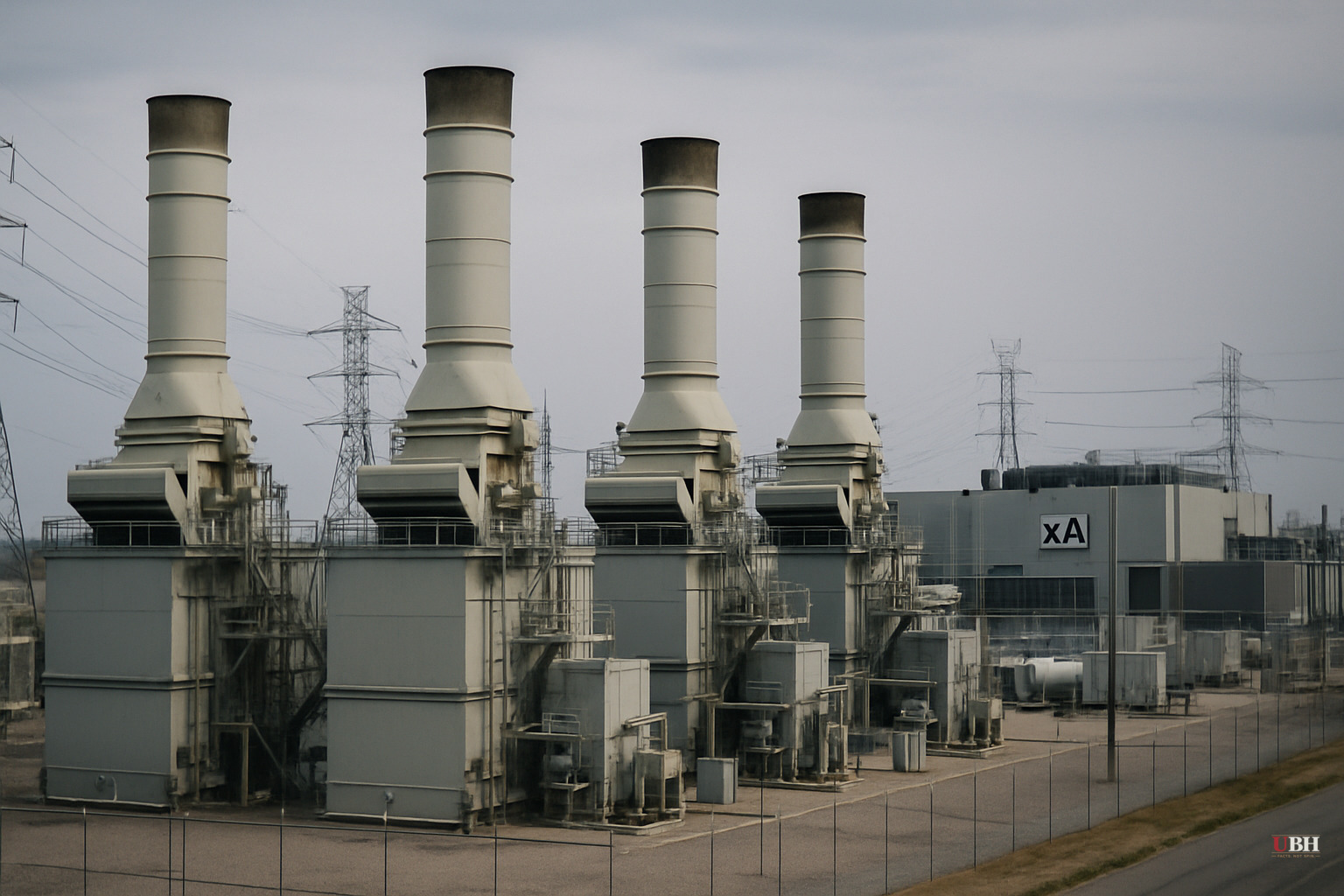
Since our June 16 coverage of the DOJ's national-security argument on behalf of xAI's unpermitted gas turbines, the full scope of the department's legal filing has become clearer, and the stakes are bigger than one data center.
On June 16, the Justice Department's Environment and Natural Resources Division filed a motion to intervene in a Mississippi federal court, asking the judge to dismiss a Clean Air Act lawsuit the NAACP filed in April against xAI, now a subsidiary of X Corp. According to the Mississippi Free Press, which obtained the filing, the DOJ argues the NAACP lacks legal standing and that the executive branch holds "primacy over citizen-enforcers" when it comes to deciding whether federal environmental law should be enforced at all.
The DOJ was joined in the filing by statements from Mississippi Gov. Tate Reeves and from Cameron Davis, identified in that filing as the Defense Department's chief digital and artificial intelligence officer. Davis stated that Grok's continued availability "is a matter of paramount national security." CNBC reported the DOJ filing goes further, claiming Grok's military version "enabled U.S. forces to deploy over 2,000 munitions to 2,000 distinct targets within 96 hours" during operations against Iran.
Neither the DOJ motion nor the supporting statements contest that xAI is operating without the required permits. The NAACP, represented by Earthjustice and the Southern Environmental Law Center, alleges xAI is running 57 natural gas turbines at a facility in Southaven, Mississippi — up from 27 turbines in February, according to recent court filings cited by the Mississippi Free Press. Those turbines power the Colossus 2 data center in Memphis, Tennessee, which is part of a $20 billion facility complex, according to Al Jazeera.
The NAACP filed the lawsuit under the Clean Air Act's citizen suit provision, which was established in the 1970 amendments to the Act and has existed for over 50 years, allowing private parties to seek injunctions and civil penalties against alleged polluters when the government declines to act. The organization says emissions from the turbines expose hundreds of thousands of residents — a "much larger share" of whom are Black compared to the national average — to pollutants linked to asthma, respiratory disease, heart problems, and cancer, according to Al Jazeera.
The DOJ's filing asserts that the U.S. Constitution vests civil enforcement authority "conclusively and preclusively" in the executive branch, meaning the administration can block a citizen lawsuit simply by declaring enforcement "unwarranted or inconsistent with federal enforcement priorities."
If a court accepts that argument, it would effectively give the executive branch veto power over citizen suits under the Clean Air Act and, by extension, potentially other federal environmental statutes. Earthjustice attorney Laura Thoms called it "a blatant attempt to take power away from local communities, the courts, and Congress," adding that there is "no moral or legal precedent for this."
Adam Gustafson, the DOJ's top prosecutor for environment and natural resources, said in a public statement that the government would "not sit idly by while private organisations use environmental laws to undermine our national security," as reported by Al Jazeera.
The national security argument has merit if Grok is genuinely integrated into active military targeting operations. If the DOJ's claims are accurate and an injunction shutting down the turbines could disrupt a live operational capability, then defense officials, not federal judges, are better positioned to assess operational risk in an active conflict environment. The DOJ's claim that executive branch enforcement discretion exists is also rooted in established law: courts have long recognized prosecutorial discretion as a constitutional principle.
The problem is that the DOJ is arguing the executive can stop a private party from enforcing the law altogether, even while acknowledging the permit violations exist. This is a substantially different legal position from ordinary prosecutorial discretion.
CNBC's coverage of this story focused heavily on SpaceX's stock performance in its opening trading days, spending several paragraphs on share price before addressing the substance of the legal filing. The permit violation facts, including the turbine count and the DOJ's explicit non-denial of the pollution claims, received less attention than the stock and SpaceX's financial momentum. Those operational details matter to understanding what the court is actually being asked to decide.
The NAACP has asked the court to issue a preliminary injunction shutting down the turbines while the litigation proceeds. The court must now decide whether to accept the DOJ's intervention and, if so, whether the national security rationale and the standing challenge are sufficient to dismiss the case outright. If the judge rejects the motion to intervene, the underlying pollution claims move forward on their merits.
No hearing date has been publicly announced as of June 17, 2026. The broader constitutional question, whether this administration can use executive enforcement discretion to extinguish citizen suits Congress explicitly authorized, will likely need an appellate ruling before it is settled.
Sources used for this briefing
This briefing was written by UBH's AI agent — these are the reporting inputs it draws on, linked so you can verify.


