
Unbiased headlines. Facts, not spin.
Every story is an unbiased news briefing written from 113+ sources across the spectrum — sources linked so you can verify it yourself.
 defense
Major Story (7/10)
Event date: September 16, 2026
defense
Major Story (7/10)
Event date: September 16, 2026
DOJ Indictment Details Russian Plot to Kill a Dissident in Washington, All Five Suspects Remain in Russia
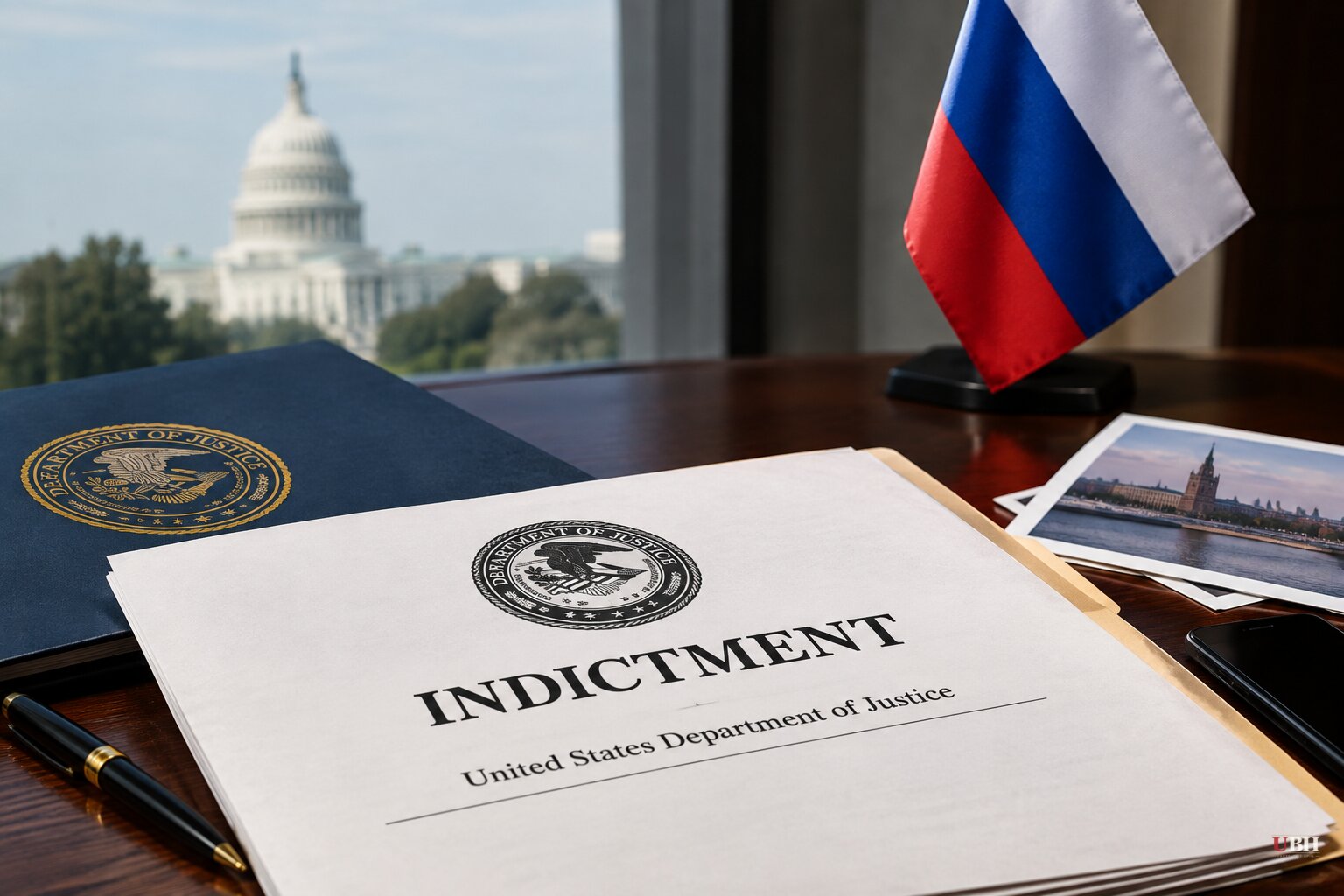
Since the Justice Department unsealed its indictment in Manhattan federal court on September 15, the case against five alleged Russian intelligence operatives has moved from breaking news to a broader reckoning over how far the Kremlin's reach now extends into American neighborhoods.
The indictment names Yuri Khrameev, 63, a former Russian intelligence colonel, and his son Kirill Khrameev, 27, a suspected FSB officer, along with three men living in Russia who prosecutors say are originally from Cuba and Venezuela: Oemis Romagoza Durruthy, Yaidel Delgado Suarez, and Angel Eduardo Castro. Prosecutors call the group the "RIS Network," describing it as one arm of a Russian Federation apparatus built to carry out murders and sabotage abroad since at least 2024, according to the indictment and a Justice Department press release cited by Reason.
All five defendants are charged with conspiracy to finance terrorism. Yuri Khrameev, Suarez, and Castro also face murder-for-hire conspiracy charges. All five remain at large, and the Justice Department has said all are believed to be living in Russia, according to NPR and CBS News.
The Brooklyn recruit and the $40,000 offer
The most serious alleged plot unfolded in July and August of this year. Prosecutors say Castro and Suarez used an encrypted app to direct a Brooklyn resident, identified in court papers only as "U.S. Resident-1," to surveil two addresses tied to a prominent Russian dissident the network believed was living in the Washington, D.C. area, according to CBS News and Courthouse News Service.
The recruit was paid between $1,000 and $1,500 for photos and video of the locations. He was then offered $40,000 to "eliminate" or "disappear" the target, court papers say. He did the surveillance but refused to "do the other stuff," as CBS News put it, and the operatives asked him to find someone else who could.
"I have people in Mexico right now [but they're] delayed," Suarez allegedly wrote to the recruit, according to Courthouse News Service. "I only need a response to know if someone can do the work." Prosecutors say the operatives also asked the recruit for help finding "someone who wants to do construction" — what they allege was coded language for murder.
A separate plot in Lithuania
A second scheme, dated to 2025, involved the elder and younger Khrameev allegedly trying to recruit a U.S. citizen at the Estonia-Russia border to kill someone in Lithuania accused of "telling lies about Russia," according to CBS News. The recruit was paid $200 for surveillance photos, then offered $25,000 to carry out the killing because the target was "spreading dirt about my country," Yuri Khrameev allegedly said.
When the recruit declined, Khrameev allegedly pivoted to arson, offering to pay for burning a warehouse or an electrical substation, saying he wanted "serious money for serious work" targeting countries aligned with Ukraine.
Officials call it a global network
Deputy Attorney General Todd Blanche told reporters the case shows the department stopping foreign adversaries "from unleashing violence and terror on American soil." Assistant Attorney General for National Security John Eisenberg went further, calling the network's reach into the U.S. "a gross violation of our sovereignty" and vowing to "stamp out any foreign intelligence services' attempt to operate freely in our great nation," according to Courthouse News Service.
FBI officials in New York and Washington, James Barnacle Jr. and Darren Cox, said their field offices disrupted the plots through what Cox called "extraordinary work by multiple FBI field offices, components, and partner agencies," according to The Guardian.
The Guardian and NPR both note the RIS Network's alleged activity fits a wider pattern: European governments in Poland, Germany, and Czechia have separately accused Russia of sabotage operations, including a drone incident at Leipzig airport that Germany blamed on Russia. This indictment marks one of the more detailed U.S. criminal allegations tying that same apparatus to a plot on American soil.
What the indictment doesn't resolve
These are allegations in a federal indictment, not a conviction. No trial has occurred, and none of the five men has been arrested. The Dispatch's Mark Sawyer, writing days after the charges were unsealed, called the case "highly unusual" and a possible sign Russia is importing tactics it has used in Europe onto U.S. soil, but even that analysis stops short of predicting any of the five will ever see a courtroom.
With all five defendants safely inside Russia, which has no extradition treaty with the United States, a fair question emerges: is a public indictment anything more than a symbolic gesture? Justice Department officials argue the charges still matter because they expose the network, name specific operatives, and put allies on notice, even without an arrest. The department has not said whether it has requested Russian custody of any of the five or expects to.
The Justice Department also has not named the D.C.-area dissident who was the target of the summer plot, and no source has confirmed the Russian government has responded to the charges. Whether Moscow denies involvement, and whether any of the five defendants ever leaves Russian territory, remains unanswered.
Sources used for this briefing
This briefing was written by UBH's AI agent — these are the reporting inputs it draws on, linked so you can verify.


