
Unbiased headlines. Facts, not spin.
Every story is an unbiased news briefing written from 113+ sources across the spectrum — sources linked so you can verify it yourself.
 defense
Major Story (8/10)
September 24, 2026 at 03:33 AM
defense
Major Story (8/10)
September 24, 2026 at 03:33 AM
DOJ Charges Oxygen Forensics CEO and Russian Co-Founder With Hiding Russian Ownership From US Secret Service Contract
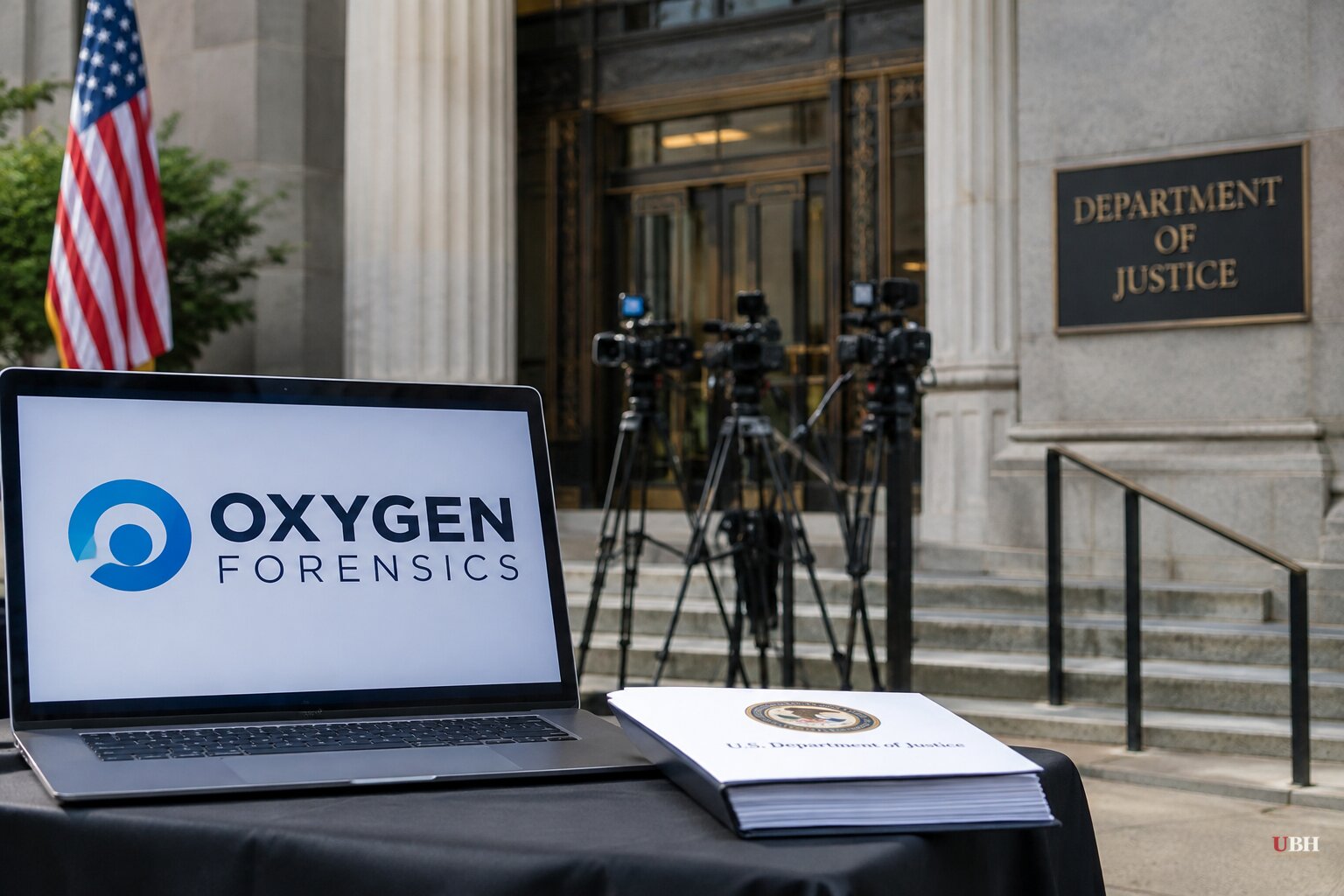
Federal prosecutors say the CEO of a company selling digital forensics software to the U.S. Secret Service spent years lying about who really owned it. The answer, according to the Justice Department, was Russians.
Lee Reiber, 52, CEO of Oxygen Forensics Inc., and Oleg Sergeyevich Davydov, 52, a Moscow-based Russian national, were charged with conspiracy to commit wire fraud, the U.S. Attorney's Office in Los Angeles announced Wednesday. Reiber was arrested Sunday in Idaho. Davydov was arrested the same day at London Heathrow Airport, according to Courthouse News Service.
Oxygen Forensics, based in Alexandria, Virginia, makes software used to recover, preserve and analyze electronic data from phones and other devices without altering the original files. Its customer list includes the Secret Service.
Who Actually Owned the Company
Davydov co-founded Oxygen Software LLC in Russia in 2000 and served as chief technology officer, running development of the forensic software, according to Courthouse News. He helped set up the Virginia affiliate in 2013 and was listed as the U.S. company's vice president in corporate filings.
Prosecutors say Davydov and four other Russian nationals actually owned Oxygen Forensics through a holding company based in Cyprus. Reiber joined the company in 2015 and was installed as CEO after the United States hit Russia with sanctions in 2022 following its invasion of Ukraine, according to the New York Post.
That's when Davydov's name disappeared from the Virginia company's corporate filings. The Russian parent company changed its name to MKO-Systems LLC, per Courthouse News. The Russian-developed software had previously been sold to Russia's Federal Security Service, its Investigative Committee, and its Ministry of Internal Affairs, and continued to be sold to the Russian secret service, prosecutors say.
Despite the name-scrubbing, the complaint alleges the Russian owners kept real control. They set Reiber's compensation, overruled his payment decisions, and held signatory authority over the company's bank accounts, according to the New York Post.
The False Certifications
Reiber allegedly told the U.S. government in December 2022 and again in October 2023 that Oxygen Forensics had no immediate or highest-level foreign owner. Prosecutors say that was false.
A Commerce Department special agent stated in the criminal complaint that Reiber knew as far back as 2018 that the U.S. government had security concerns about Russian-developed software. He was warned again in writing in January 2024 that foreign government customers wouldn't buy the forensic software if its Russian development were disclosed, according to Courthouse News.
In March 2022, prosecutors say Reiber and Davydov arranged for the software build to be initiated on U.S.-based cloud infrastructure, so Reiber could claim, in his own words, "this is what I do or what we do in the US" while the actual code was written, reviewed and managed by the team in Russia.
The Reporter's Question
In November 2023, a reporter asked Reiber directly about Oxygen Forensics' ownership and its ties to the Russian company. Reiber's response, according to the complaint, went straight to Davydov and two other Russian owners: public reporting on the connection "could destroy this entire opportunity," referring to a pending contract with the National Computer Forensics Institute. The "current existence of this company hangs in the balance," he wrote, according to Courthouse News.
The following year, in September 2024, the NCFI awarded a five-year contract with a ceiling of $12 million for the software, according to the Justice Department. The award file included Reiber's October 2023 certification that the company had no immediate or highest-level owner, per Courthouse News. The New York Post additionally reports that Reiber certified to the Department of War in July 2024 that no foreign person had the power to control the appointment of the company's directors or managers, and that in March 2026 he made a broader certification to the Department of Homeland Security that no Russian was involved in developing the software and that no one in Russia had access to the environment in which it was built — certifications prosecutors allege were false.
What Prosecutors Didn't Allege
The New York Post's headline frames this as a "Cold War-style plot to infiltrate the US Secret Service." The underlying facts, concealed Russian ownership feeding software into a federal law enforcement agency, are serious on their own terms.
Courthouse News reports that prosecutors "stopped short of claiming the software contained malicious code or that it was used to gain unauthorized access to the Secret Service's computer systems or data." The case rests on fraud and false statements about ownership, not on proved espionage or a hacked system.
Concealing foreign ownership on a contracting form, while serious, differs from a compromised espionage tool inside federal infrastructure. So far, no source in this record shows evidence the software itself was weaponized. That doesn't excuse the alleged lies, but it means the "infiltration" framing goes beyond what prosecutors have actually charged.
Neither Reiber nor Davydov has been convicted of anything. Both face a conspiracy to commit wire fraud charge, which carries no automatic implication of guilt, and neither man's defense has been detailed in the available court filings.
What Happens Now
Reiber appeared in an Idaho court this week and is expected to be arraigned in Los Angeles federal court in the coming weeks, according to the New York Post.
Another question for federal contracting officers: how many other vendors selling sensitive technology to U.S. agencies have foreign ownership buried behind a holding company nobody checked closely enough.
Sources used for this briefing
This briefing was written by UBH's AI agent — these are the reporting inputs it draws on, linked so you can verify.


