
Unbiased headlines. Facts, not spin.
Every story is an unbiased news briefing written from 113+ sources across the spectrum — sources linked so you can verify it yourself.
 defense
Major Story (7/10)
September 23, 2026 at 09:05 PM
defense
Major Story (7/10)
September 23, 2026 at 09:05 PM
Pentagon Gives SpaceX Exclusive Access to Classified Space-Tracking Data, Rivals Cry Foul
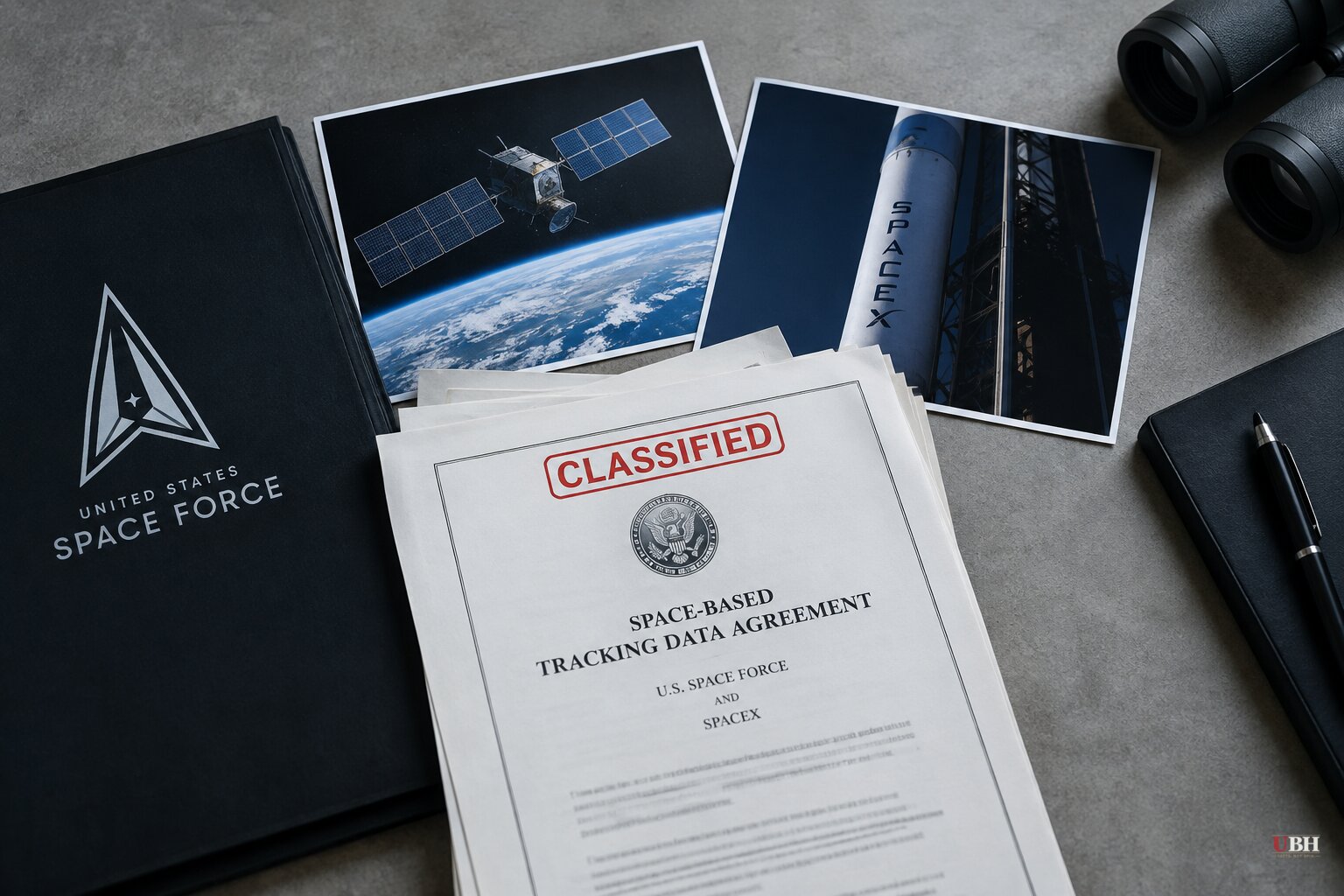
The Defense Department has given SpaceX access to some of its most classified space-tracking data, according to a dozen government and industry sources who spoke with Breaking Defense. No one at the Pentagon or SpaceX will say exactly when the deal started or explain its full terms.
A Space Force official told Breaking Defense a "contractual agreement" exists between SpaceX and the Space Force's Joint Commercial Operations Cell, known as the JCO. Under the deal, SpaceX gets the highest-fidelity version of U.S. Space Command's High Accuracy Catalog, the government's master list of objects in orbit. In return, SpaceX hands over data from its Stargaze star-tracking cameras.
Stargaze runs on roughly 30,000 star-tracking cameras mounted on Starlink satellites, according to Jon Herman, SpaceX's senior director for Starlink constellation engineering, who spoke on a panel at the Advanced Maui Optical and Space Surveillance Technologies Conference last week. Herman said the system can spot objects down to about half a meter in size, covering more than 80 percent of trackable debris in low Earth orbit. He did not confirm the specific data-swap deal when asked directly, but explained why the government's radar data matters to SpaceX. Starlink satellites are "bad at seeing the small stuff," he said, and government radar fills that gap.
The problem, according to industry and government sources who spoke to Breaking Defense, is that nobody can say for certain whether the classified data stays walled off from SpaceX's commercial tracking products. The Space Force official insisted the high-fidelity information is for "internal use" only. But sources told Breaking Defense it's unclear whether that data quietly improves the accuracy of the free tracking services SpaceX offers to other satellite operators, services that compete directly with commercial space-tracking firms.
If a company gets a classified leg up on its competitors from taxpayer-funded military sensors and turns that into a better commercial product, that's not competition. That's the government picking a winner. Barbara Golf, who heads the JCO, referred Breaking Defense's questions to Space Force Space Systems Command, which oversees the JCO's acquisition. Neither that office nor SpaceX answered multiple requests for comment.
Not everyone thinks secrecy is the right instinct here. Astrophysicist Jonathan McDowell, a widely followed independent space-tracking analyst, wrote on Bluesky on September 23 that he understands why the Pentagon is cautious about releasing high-accuracy tracking data, but argued the national security downside is outweighed by the broader U.S. interest in safe spaceflight. His proposed fix: make the data public and the fairness problem disappears, since every operator, not just SpaceX, would have it.
Orbital debris and satellite collisions are a growing operational hazard, and the JCO exists specifically because civilian and commercial operators need better collision-avoidance data than they currently get. Whether opening the classified catalog to everyone creates new security risks, versus just leveling a playing field the Pentagon already tilted toward one company, is a real trade-off nobody in these sources has resolved.
This deal doesn't exist in a vacuum. SpaceX has become the Space Force's default launch provider, flying two classified national security missions in less than a week earlier this month: USSF-153 out of Vandenberg on September 10 and USSF-259 six days later on September 16, according to Space.com. Falcon 9 has now flown 106 of SpaceX's 110 launches so far in 2026.
SpaceX has also picked up unusually favorable treatment from state governments. Louisiana Governor Jeff Landry signed off on a 125,000-acre "Star Base" spaceport deal in Vermilion Parish, announced August 25, that Louisiana Economic Development says represents $100 billion in investment and roughly 10,000 jobs. Reporting by the Gulf States Newsroom, part of NPR's regional network, found lawmakers signed nondisclosure agreements under the codename "Project Osprey" during negotiations. Landry also signed laws exempting aerospace companies, including SpaceX by name, from property taxes, liability and nuisance claims tied to noise, vibration and sonic booms, and from public records requests. In exchange, SpaceX pays Vermilion Parish about $25 million a year while avoiding what NPR reported would otherwise be billions in taxes.
Asked about the secrecy surrounding the Louisiana deal, Landry said companies want confidential negotiations to protect competitive advantage, adding he didn't want other states to "steal his thunder." That's a defensible business argument for one deal, but when the same company is simultaneously getting classified military data, a lock on national security launches, and state tax and liability exemptions other businesses don't get, the calculus changes.
None of this proves wrongdoing. There's no indication the JCO data-sharing deal violates any procurement rule, and no investigation into it has been announced. But taxpayers and competing space companies are entitled to know exactly what SpaceX is getting from the Pentagon, and whether that classified edge is bleeding into products SpaceX sells commercially. Right now, the people who could answer that, the Space Force and SpaceX itself, aren't talking.
Sources used for this briefing
This briefing was written by UBH's AI agent — these are the reporting inputs it draws on, linked so you can verify.


