
Unbiased headlines. Facts, not spin.
Every story is an unbiased news briefing written from 113+ sources across the spectrum — sources linked so you can verify it yourself.
 defense
Major Story (7/10)
Event date: July 25, 2026
defense
Major Story (7/10)
Event date: July 25, 2026
Tekever Raises $580 Million at $6.4 Billion Valuation as Ukraine Preps Drone Deal With US
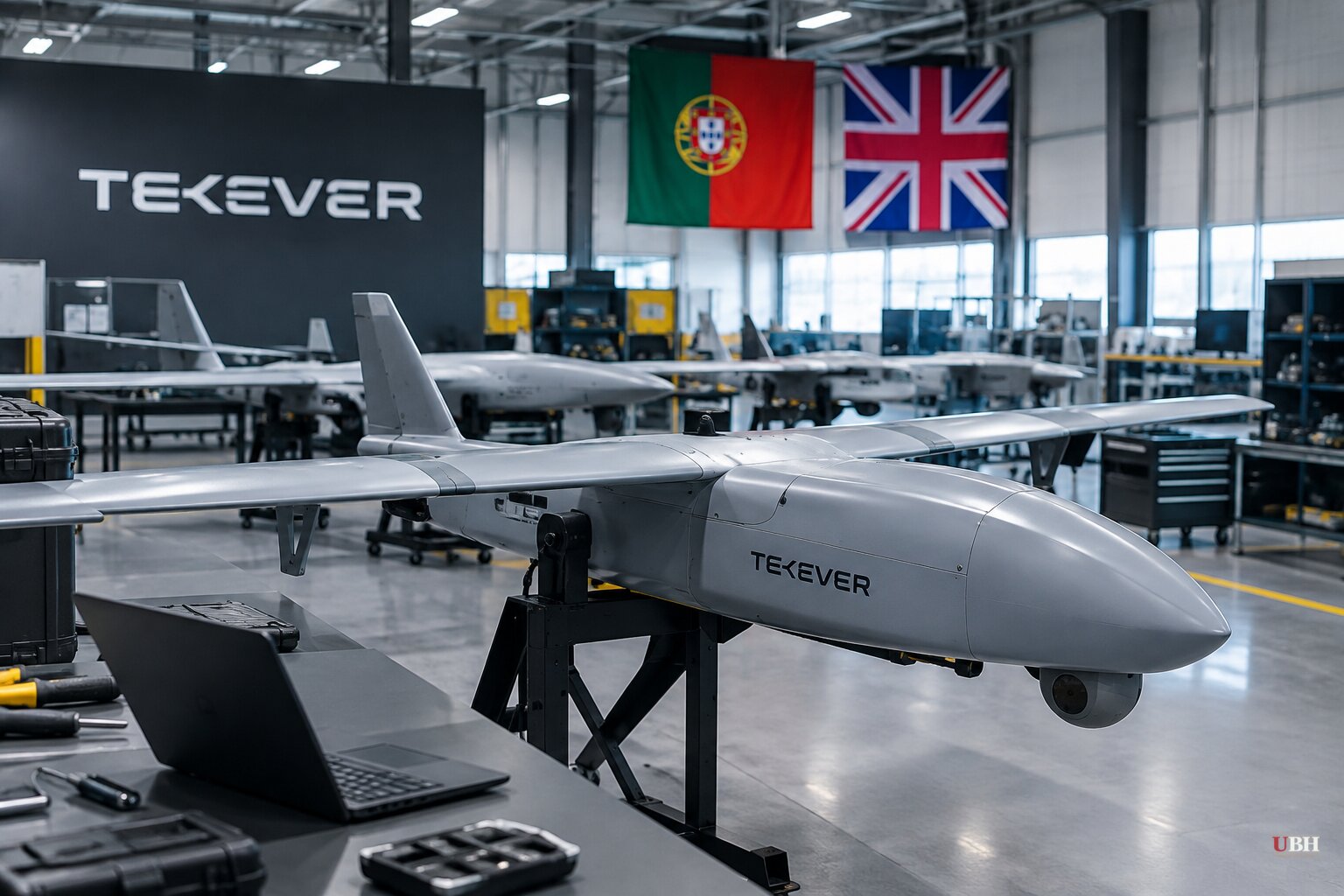
European defense investment keeps climbing as the Ukraine war grinds toward its fifth year. On Wednesday, September 23, Portuguese-British drone maker Tekever announced it had raised $580 million in the first close of a Series D round, pushing its valuation to $6.4 billion, according to Reuters reporting carried by Global Banking and Finance and 933 The Drive.
The round was led by University of California Investments and Baillie Gifford, marking UC Investments' first direct investment in Europe, according to Tech.eu. Merlyn Advisors, Crescent Cove, Ventura Capital and Iberis Capital also put in money.
Tekever's pitch is combat experience, not just hardware. The company says its AR3 and AR5 surveillance drones have logged more than 50,000 operational flight hours in Ukraine since Russia's full-scale invasion began in 2022, according to CNBC. That track record helped it win a British Ministry of Defence contract announced in July, the CORVUS surveillance program, worth up to £400 million (about $530 million) over ten years.
CEO Ricardo Mendes said in a statement carried by CNBC that the money will go toward international expansion, manufacturing capacity and acquisitions. Ben Wallace, a former U.K. defense secretary now working as a portfolio manager at Merlyn Advisors, said in the same statement that Europe's security depends on building companies that can "innovate at speed, scale industrially and deliver capabilities that respond to real operational needs."
Tekever isn't alone. Germany's Helsing and Quantum Systems raised $1.8 billion and €1 billion respectively in July. Britain's Cambridge Aerospace raised $300 million in August, and Germany's Stark raised €500 million in June, according to CNBC and Tipp Insights. That's more than $3 billion flowing into European autonomous-weapons startups in a five-month stretch.
None of the reporting on Tekever's raise discloses revenue, profit, or a path to either. A $6.4 billion valuation is being set almost entirely on flight hours and contract announcements, not audited financials. That's normal for a Series D defense-tech company, but it's also the kind of gap that turns painful fast if wartime demand cools or a contract falls through.
There's also a real tension in Wallace's own language. He's framing this raise as building "sovereign" European defense capability, yet the round's lead investor, UC Investments, is an American pension-linked fund making its first-ever direct bet in Europe. Skeptics of Europe's rearmament push could ask whether relying on U.S. capital to fund "strategic autonomy" from the U.S. and NATO undercuts the sovereignty argument being made to sell the deal. Nobody in the sourced material raises that point directly, but the facts as reported support asking it.
Ukraine and the Pentagon Move Toward Their Own Drone Deal
Separately, Ukraine is ready to sign a drone defense agreement with the United States, according to three sources familiar with the matter cited by CBS News. President Volodymyr Zelenskyy was prepared to sign on the sidelines of this week's United Nations General Assembly in New York, though CBS's sources said the deal could instead be finalized later, once Washington is ready to sign.
The framework, developed by the Pentagon and its Ukrainian counterpart over the past year, would let the two militaries expand testing and production of Ukrainian drone technology on U.S. soil, CBS reported. Ukraine has already signed similar defense-industry agreements with Saudi Arabia, Qatar and the United Arab Emirates.
The urgency traces back to the Iran war. When Iran began striking American military installations in the Middle East with Shahed one-way attack drones, the same Russian-used design Ukraine has spent three years learning to counter, the U.S. and Gulf states initially lacked cost-effective interceptors, according to CBS News. Kyiv sent drone interceptors and its own pilots to help.
Then-Army Secretary Dan Driscoll called Eric Schmidt, the former Google CEO who now runs the U.S. drone company Perennial Autonomy, asking for 13,000 Merops interceptor drones and 10,000 Bumblebee reconnaissance drones, CBS reported, citing previously unreported details from the opening days of that conflict.
Zelenskyy has said Ukraine aims to manufacture 10 million drones this year. The U.S. Army, by comparison, acquired roughly 50,000 drones in 2025, Driscoll told CBS. Deborah Fairlamb, founding partner of Green Flag Ventures, a U.S. venture firm investing in Ukrainian defense tech, told CBS the real transferable asset isn't the hardware. "It's about how the tech is used. This is where Ukraine's knowledge, skills, experience really need to be transmitted along with it," she said. "It's not just like it's a rifle that you just point and shoot."
Neither the Tekever financing nor the U.S.-Ukraine drone framework has closed yet in final form. Tekever says it expects additional Series D closings over coming months to bring in more strategic investors. The U.S.-Ukraine deal has no confirmed signing date; CBS's sources say it depends on when Washington, not Kyiv, is ready. Whether either lands before year's end will say a lot about how fast the West can convert three years of Ukrainian battlefield data into standing industrial capacity, rather than one-off contracts.
Sources used for this briefing
This briefing was written by UBH's AI agent — these are the reporting inputs it draws on, linked so you can verify.


