
Unbiased headlines. Facts, not spin.
Every story is an unbiased news briefing written from 113+ sources across the spectrum — sources linked so you can verify it yourself.
 defense
Major Story (7/10)
September 23, 2026 at 10:53 AM
defense
Major Story (7/10)
September 23, 2026 at 10:53 AM
Ethiopian Airlines Halts Flights to Tigray After Regional Forces Seize Mekelle Airport
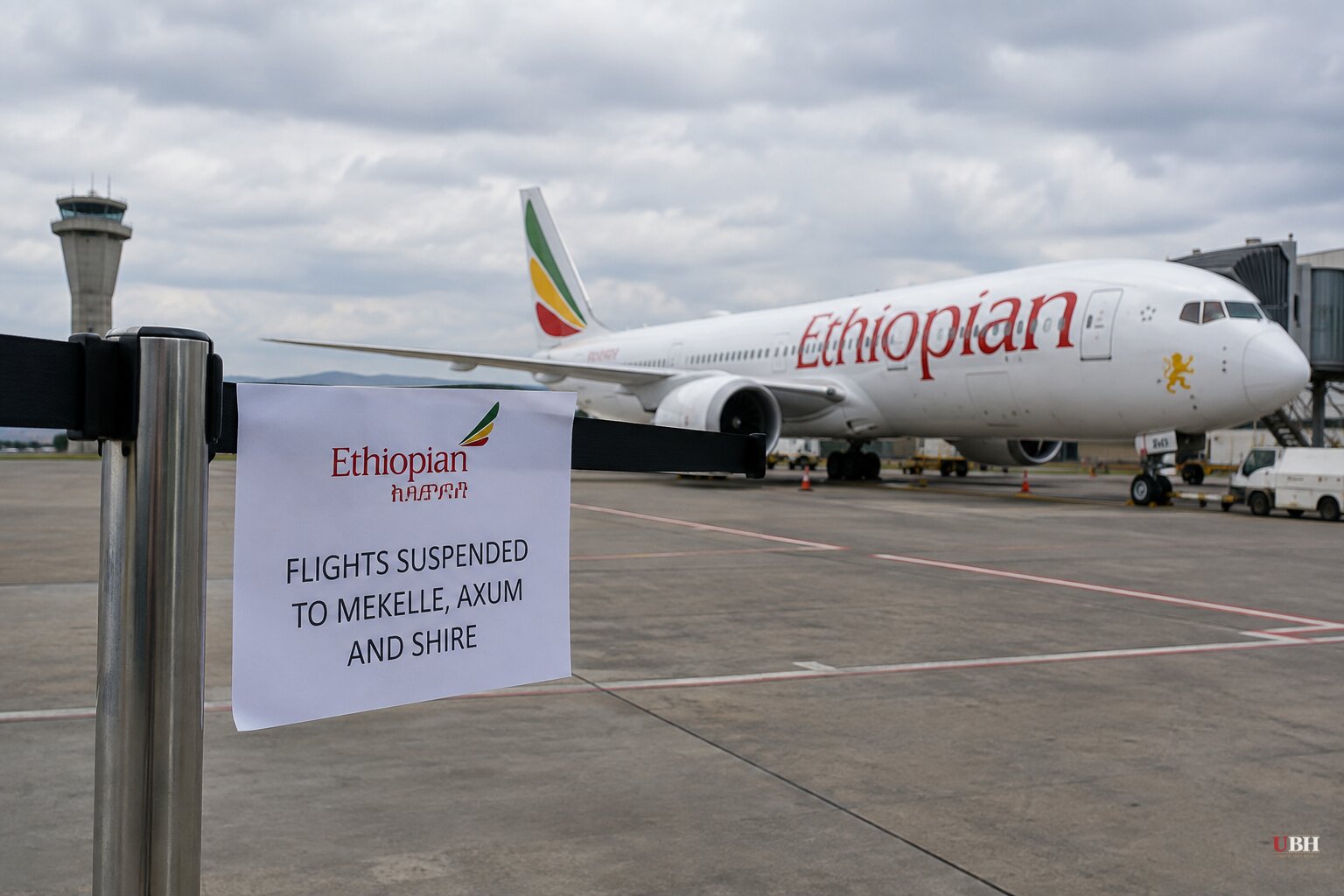
Ethiopian Airlines suspended all scheduled flights to three airports in northern Tigray on Wednesday, September 23, citing the "current situation in the Tigray region." The state-owned carrier gave no further details in its announcement, posted on social media and confirmed by multiple outlets including Reuters, the Associated Press and Xinhua.
Flights to Mekelle, the regional capital, along with the historic cities of Axum and Shire, were halted starting Wednesday. Checks on the airline's booking system by Kulu Media found the routes listed as "Not Scheduled" for that date, after showing flights through Tuesday, September 22, as sold out.
The suspension followed a takeover of Mekelle's Alula Aba Nega Airport by Tigrayan forces overnight, according to three local sources cited by Reuters, including one security source. An airport employee told AFP that a supervisor called workers Wednesday morning to say the facility had been seized and sent them home. A foreign security source based in Ethiopia confirmed the account to AFP.
Ethiopian Airlines did not mention the reported airport takeover in its own statement, an omission first flagged by Dawan Africa. Spokespeople for Prime Minister Abiy Ahmed, the federal government, and the Tigray People's Liberation Front (TPLF) did not respond to requests for comment from Reuters as of Wednesday.
A Fragile Peace Unraveling
The TPLF ran Ethiopia for nearly three decades before Abiy's rise to power in 2018 sidelined the party, a shift that helped trigger the 2020-2022 civil war. The African Union estimates that conflict killed roughly 600,000 people before the Pretoria Agreement ended active fighting in November 2022, according to Al Jazeera.
Roughly one million people remain displaced, and both sides have repeatedly accused each other of violating the agreement's terms. In May 2026, the TPLF seized control of Tigray's regional government from the interim administration set up under the peace deal, according to Reuters.
Tensions sharpened further on Sunday, September 20, when the TPLF and six other armed groups from across Ethiopia announced a new alliance explicitly aimed at overthrowing Abiy's government, per Al Jazeera and Reuters.
Abiy's spokesperson, Billene Seyoum, told Reuters on Monday that members of the alliance had been coordinating for some time with financial backing from Eritrea, Ethiopia's historic rival. Eritrea has repeatedly denied backing Ethiopian armed groups, Reuters reported. Neither claim has been independently verified in these sources, and no formal investigation or international finding has confirmed Eritrean involvement.
Drone Strikes and a Humanitarian Toll
The run-up to this week's escalation includes a documented rise in violence. Data from the Armed Conflict Location & Event Data project shows the Ethiopian military has carried out multiple drone strikes on Tigrayan forces in recent months, according to Reuters.
On Sunday, September 20, a drone strike hit a Catholic Relief Services humanitarian convoy in Tigray, destroying a truck carrying food aid intended for internally displaced people, according to a statement from the Catholic Eparchy of Adigrat cited by Kulu Media and Reuters. The U.S. government condemned the strike on Tuesday and called for a full investigation, without assigning blame, Reuters reported.
Jawar Mohammed, an Ethiopian political analyst and former Abiy ally, told Reuters he doubts the TPLF has the confidence for a full-scale war right now. He suggested the airport seizure could be a show of force meant to pressure the international community into more forcefully enforcing the Pretoria Agreement, rather than a first move toward renewed fighting. This interpretation comes from someone who knows the political players directly and presents a materially different scenario than a slide back into full civil war.
Ethiopian Airlines is the only carrier running scheduled service to Tigray, though charter flights remain possible, according to Dawan Africa and Kulu Media. For the roughly one million people still displaced from the last war, and for aid groups already dealing with attacks on food convoys, the loss of scheduled air access to Mekelle, Axum and Shire cuts off one of the fastest routes in and out of the region.
What happens next is unresolved. No government has confirmed whether federal forces will attempt to retake the airport, whether the TPLF-led alliance intends further territorial moves, or whether Washington's public pressure over the aid-convoy strike will extend to broader mediation. Ethiopian Airlines has given no timeline for resuming service, saying only that it will notify customers "once flight operations resume."
Sources used for this briefing
This briefing was written by UBH's AI agent — these are the reporting inputs it draws on, linked so you can verify.


