
Unbiased headlines. Facts, not spin.
Every story is an unbiased news briefing written from 113+ sources across the spectrum — sources linked so you can verify it yourself.
 defense
Major Story (7/10)
September 23, 2026 at 11:24 PM
defense
Major Story (7/10)
September 23, 2026 at 11:24 PM
Navy Confirms Eight Suicide Attempts Across USS Abraham Lincoln Strike Group During Iran Combat Deployment
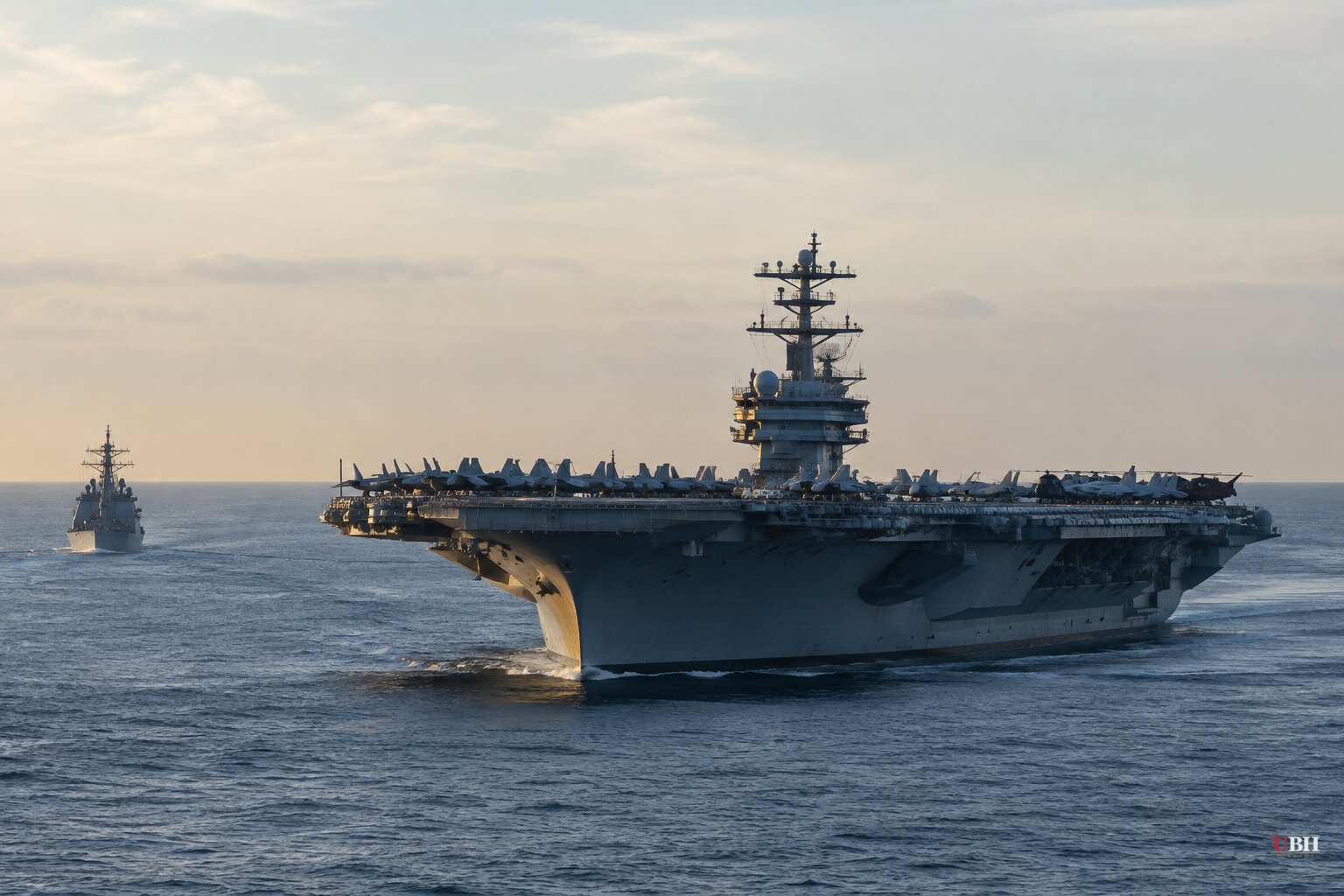
Under Secretary of the Navy Hung Cao disclosed in a letter dated Tuesday, September 22, that eight sailors assigned to the USS Abraham Lincoln carrier strike group attempted suicide during its deployment, which included combat operations against Iran, according to The Hill and CNN, both of which obtained the letter.
Cao wrote that no service members died by suicide during the deployment. The figure covers roughly 6,000 to 7,000 sailors across the carrier, its air wing, escorting destroyers, destroyer squadron staff and embarked aviation squadrons, per CNN's reporting.
The letter was Cao's response to a set of 12 questions Sen. Kirsten Gillibrand (D-N.Y.), a member of the Senate Armed Services Committee, sent Defense Secretary Pete Hegseth on August 15. The Guardian published the full exchange, confirming the number came in answer to Gillibrand's fifth question, which asked whether there had been any suicides or self-harm incidents aboard.
The USS Abraham Lincoln left San Diego on November 21, 2025, and went on to set a modern record for time at sea, according to Newsweek, which put the deployment at more than 260 days. CNN reported the carrier went more than six months without a single port call while conducting a high rate of combat operations against Iran.
Two Competing Numbers, Same Data
CNN's reporting includes an important tension. The outlet compared the eight attempts to Pentagon-wide 2024 data, where the Navy recorded 356 suicide attempts among roughly 337,000 active-duty sailors, and said the Lincoln strike group's rate was 'roughly consistent' with that fleet-wide average.
But CNN also quoted an unnamed U.S. military official calling the number 'incredibly high' relative to other carrier deployments specifically, noting recent carrier strike group deployments have typically seen one or two suicide attempts a year. 'The strain of combat ops is much higher than normal deployments. No port calls, constant alerts, etc.,' the official said.
Both figures come from the same CNN report and aren't in outright conflict, since a strike group deployment is a small slice of the entire fleet. But readers should know the story contains two different baselines, one from Navy-wide annual data and one from comparable carrier deployments, and they point in different directions on how alarming eight attempts actually is.
What the Navy Says It Provided
Cao's letter detailed the mental health resources aboard the Lincoln: five chaplains, one embedded integrated prevention counselor, a psychologist, a clinical social worker, three behavioral health technicians and one expeditionary facility dog. Each escort ship in the strike group also carries its own chaplain, per the letter.
Cao also confirmed two overboard incidents previously reported by CNN. A sailor assigned to the air wing went overboard in early August and was 'quickly recovered' and treated by the Lincoln's medical department. Another sailor attempted to go overboard in March and was stopped by shipmates before receiving immediate care, according to Cao's account as reported by ABC 17 News, KRDO and KTEN, all of which carried CNN's original reporting.
Cao also acknowledged that combat operations and limited resupply opportunities forced the Lincoln to cut its main entree options from two to one during regular meal hours for a 'short time,' which he said was implemented out of necessity, not neglect.
The Political Fight Over the Deployment
Gillibrand, in a statement to the Guardian and Newsweek, said the disclosure vindicates earlier warnings her office and reporters raised. 'What Trump and Secretary Hegseth dismissed as "fake news" turned out to be serious and deteriorating conditions for our service members,' she said, adding that the administration 'can find endless taxpayer dollars for bombs, ballrooms, and billionaires, but cannot take care of our service members.'
Hegseth, for his part, defended the deployment's length last month by saying, 'we make sure that every ship, every crew, every captain has everything we can provide them at every single moment,' according to The Hill, and praised the sailors' performance 'in those high seas and those austere conditions with less port calls.' Cao echoed that framing in his letter, writing that 'operational decisions to extend deployments are never made lightly' and are driven by 'dynamic global security environments and absolute necessity of protecting U.S. national security interests.'
That is a fair point on its own terms. The Lincoln strike group was conducting live combat operations against Iran, not a routine patrol, and extending a carrier's presence in a hot theater is a real operational tradeoff commanders have to weigh against crew fatigue. The Navy did not hide the ball once Gillibrand asked directly, and it put real clinical staff and chaplains on board before the crisis became public.
The Pentagon has not released comparable mental health data for other extended deployments so lawmakers can judge whether the Lincoln's numbers reflect a genuine outlier or the predictable cost of combat operations without port relief. Gillibrand's office has not said whether it will pursue a Senate Armed Services Committee hearing on the matter, and the Navy has not said whether it will change its deployment-extension policies going forward. The Lincoln is now returning to the United States, according to The Hill.
Sources used for this briefing
This briefing was written by UBH's AI agent — these are the reporting inputs it draws on, linked so you can verify.


