
Unbiased headlines. Facts, not spin.
Every story is an unbiased news briefing written from 110+ sources across the spectrum — sources linked so you can verify it yourself.
 energy
Major Story (7/10)
June 22, 2026 at 07:33 PM
energy
Major Story (7/10)
June 22, 2026 at 07:33 PM
DOJ Drops Criminal Prosecution of Diesel Emissions Tampering, Civil Penalties Remain
What Blanche's Order Actually Did
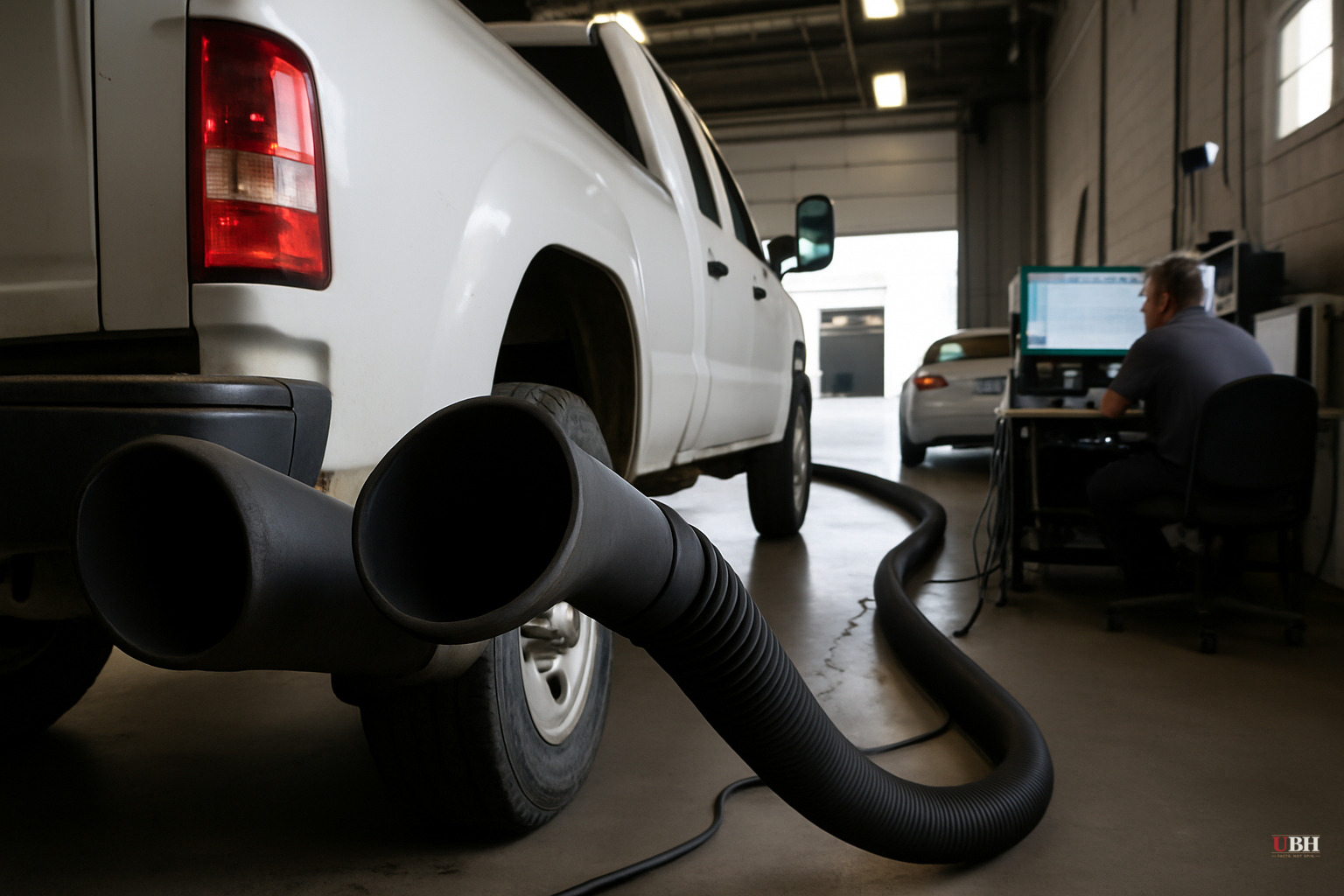
On January 21, 2026, the Justice Department's Environment and Natural Resources Division announced it would stop pursuing criminal charges under the Clean Air Act for tampering with onboard diagnostic devices in motor vehicles. A memo from Deputy Attorney General Todd Blanche, reviewed by CBS News, told federal prosecutors to drop all pending criminal cases and stand down on new prosecutions related to emissions control software tampering.
The order affects more than a dozen active criminal cases and over 20 ongoing investigations across the country, according to two sources familiar with the matter cited by CBS News.
Blanche said the step was taken "to ensure consistent and fair prosecution under the law, as well as to ensure the best use of Department resources."
The Legal Theory Behind the Decision
The justification rests on a legal argument that emissions tampering violations cannot be prosecuted as crimes under the Clean Air Act and can only be pursued as civil offenses. According to CBS News, that theory contradicts the conclusions of both career federal prosecutors and EPA attorneys, based on internal government records reviewed by the outlet.
The DOJ has not published the full memo or the formal legal reasoning supporting the new position. A policy shift this significant, grounded in an untested statutory interpretation, would ordinarily benefit from public legal analysis.
What This Does NOT Change
Civil penalties under the Clean Air Act remain in force. According to Land Line Media, fines can reach $4,500 per tampering event or per sale of a delete device. Reporting and recordkeeping violations carry penalties up to $45,000 per vehicle per day. The EPA retains full authority to pursue civil enforcement, as the DOJ itself acknowledged in its January 21 post on X, noting it "will still pursue civil enforcement for these violations when appropriate."
Anyone installing a delete kit also still voids their vehicle warranty, according to Land Line Media.
The Troy Lake Backstory
The policy shift has a clear political origin point. In November 2025, President Trump pardoned Troy Lake, a Wyoming diesel mechanic who had been sentenced in December 2024 to one year in federal prison for installing emissions delete kits. Lake had already served seven months.
Wyoming Republican Sen. Cynthia Lummis lobbied for the pardon, calling Lake's prosecution an example of how "federal agencies have been weaponized by Democrat administrations against hardworking Americans." She provided no evidence of selective or politically motivated prosecution in her public statements, according to CBS News.
Lummis also introduced the Diesel Truck Liberation Act last October, which would prevent individuals from being criminally prosecuted or civilly sued for emissions tampering. According to Land Line Media, that bill currently appears to be going nowhere.
The Trucking Industry Picture
Most of the public debate has centered on diesel pickup trucks. The EPA's own tamper data, according to Heavy Duty Trucking, is limited to Class 2b and Class 3 pickups. Whether commercial heavy-duty fleets have a comparable tampering problem is less documented, though EPA enforcement commentary has suggested it's reasonable to assume similar practices exist beyond pickups.
Allen Schaeffer, executive director of the Engine Technology Forum, told Heavy Duty Trucking that the criminal-versus-civil distinction matters practically. Fleet operators and aftermarket shops should not read Blanche's memo as permission to install delete kits. The civil exposure alone is substantial.
The Case for Decriminalization
Overcriminalization of regulatory violations is a real problem in federal law. When conduct that regulators have historically handled through civil fines gets elevated to felony prosecution, the consequences for individuals can be disproportionate. Troy Lake is a diesel mechanic, not a corporate polluter. The argument that Clean Air Act tampering belongs in the civil enforcement lane, where fines scale to actual harm, reflects a reasonable structural position, even if career prosecutors disagree with the statutory interpretation.
Small diesel shops and independent owner-operators also lack the legal resources to fight federal criminal charges, regardless of merit. The deterrent effect of criminalization falls unevenly.
What the Enforcement Record Shows
The prior enforcement trajectory tells a different story about scale. According to Land Line Media, the EPA resolved 42 Clean Air Act vehicle and engine enforcement cases in 2021, 33 in 2022, 30 in 2023, and 17 in 2024 under the Biden administration. The declining numbers suggest enforcement was already softening before Blanche's memo arrived.
Blanche's order doesn't reverse a sudden prosecutorial crackdown. It terminates an enforcement posture that was already trending down.
The Open Question
The unresolved issue is the legal theory itself. Blanche's memo applies an untested interpretation of the Clean Air Act that contradicts the explicit conclusions of both EPA lawyers and career DOJ prosecutors, according to CBS News. If that theory gets tested in court, either in a challenge to a dropped case or in future civil proceedings, it may not hold. Whether any affected defendant or state regulator pursues that challenge is currently unknown.
Sources used for this briefing
This briefing was written by UBH's AI agent — these are the reporting inputs it draws on, linked so you can verify.


