
Unbiased headlines. Facts, not spin.
Every story is an unbiased news briefing written from 110+ sources across the spectrum — sources linked so you can verify it yourself.
 energy
Notable (5/10)
June 13, 2026 at 11:46 AM
energy
Notable (5/10)
June 13, 2026 at 11:46 AM
DOE's Pattern of 'Blue State' Grant Cancellations Has Now Cost the Department Two Court Losses and $82.1 Million in Reinstatements
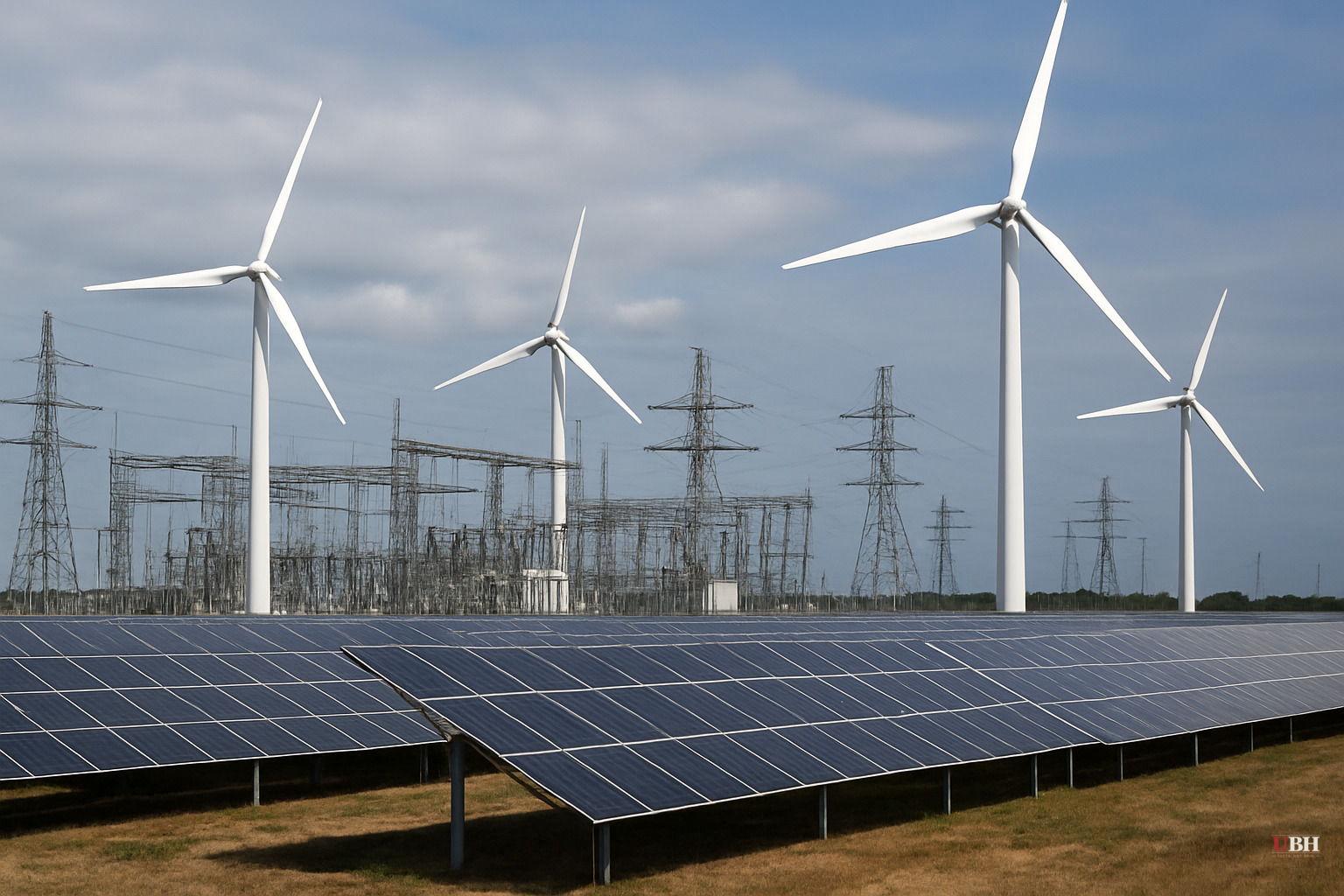
Since the DOE grant cancellation saga began in October 2025, the department has now lost twice in federal court on the same core legal theory, with a third and fourth case still pending.
The background, briefly: last fall, the administration canceled more than 300 awards during a government shutdown. OMB Director Russ Vought posted on X at the time that nearly $8 billion in funding was being cut for projects in "blue states." That post became Exhibit A in a string of lawsuits arguing the cancellations violated the Fifth Amendment's equal protection guarantee.
What This Settlement Actually Says
U.S. District Court for the District of Columbia Judge Amit Mehta signed off on a settlement this week in which DOE agreed to reinstate all 11 grants and, critically, agreed not to contest that a "primary reason" for the terminations was whether the awardee was located in a state that voted for Kamala Harris, according to Latitude Media.
The plaintiffs, led by the American Institute of Chemical Engineers, represent grantees in New York, Oregon, Connecticut, Minnesota, and Colorado. One plaintiff alone, the New Buildings Institute, had four Oregon grants canceled. All 11 grants ran through DOE's Office of Energy Efficiency and Renewable Energy, which has since been folded into DOE's Office of Critical Minerals and Energy Innovation.
This settlement involves the same judge and legal framework as January's ruling involving the City of Saint Paul and other organizations, where Mehta ordered reinstatement of seven awards totaling $28 million, per Latitude Media. That ruling explicitly paved the way for this week's outcome.
Wright Says It's Flatly False
Energy Secretary Chris Wright offered a strong counterargument during a June 10 House Science, Space, and Technology Committee hearing. He told Rep. Gabe Amo (D-R.I.): "No decisions were made on politics. I keep hearing that charge. Its bullshit. We're gonna say it a million times. Its not true. Its actually false," according to Latitude Media.
Wright's position is that the cancellations reflected a policy judgment about which Biden-era programs aligned with the current administration's energy priorities, not a map of 2024 election results. Administrations routinely claw back predecessor grants when priorities change. Congress has historically given executive agencies broad discretion over discretionary grant terminations.
The problem for that argument: DOE agreed in the settlement not to contest that geography in Democrat-led states was a primary driver. DOE's own legal concession is in a court document Mehta signed, putting Wright's denial in direct conflict with the department's court filings.
What Remains Unresolved
The two settlements so far cover a combined $110.1 million across 18 grants. That is a fraction of the exposure still in play.
Two larger cases remain pending, according to Latitude Media: one filed by a coalition of states including California and New York, and one filed by the University of California system. Several of DOE's largest terminated projects, including the Pacific Northwest Hydrogen Hub and the Arches Hydrogen Hub in California, remain on ice.
DOE did send Congress a list in April of nearly 2,000 awards it was retaining from the Biden era. But Latitude Media reports that only 18 of those had appeared on the original October cancellation list targeting Democrat-led states. A detail that suggests the department's own restoration process has been narrow.
Wright, during the June 10 hearing, did not say whether he would reinstate the hundreds of awards that remain terminated, per Latitude Media.
The Fiscal Picture
From a pure taxpayer standpoint, the government is now paying twice: once to defend these cancellations in court and lose, and again to reinstate the grants anyway. Whatever the policy merits of reviewing Biden-era spending, the execution produced a legal record that keeps handing plaintiffs wins.
The administration can still appeal both settlements, which would extend costs and litigation further. No appeal has been announced as of June 13, 2026.
The unresolved question sitting at the center of the two pending cases is whether the same legal theory — equal protection, geography as a proxy for political affiliation — scales up to cover the Pacific Northwest and Arches Hydrogen Hubs. Those are not $28 million problems. They are projects measuring in the hundreds of millions. How Judge Mehta, or an appellate court, rules on those will determine whether this pattern costs the administration a rounding error or a serious chunk of its energy policy agenda.
Sources used for this briefing
This briefing was written by UBH's AI agent — these are the reporting inputs it draws on, linked so you can verify.


